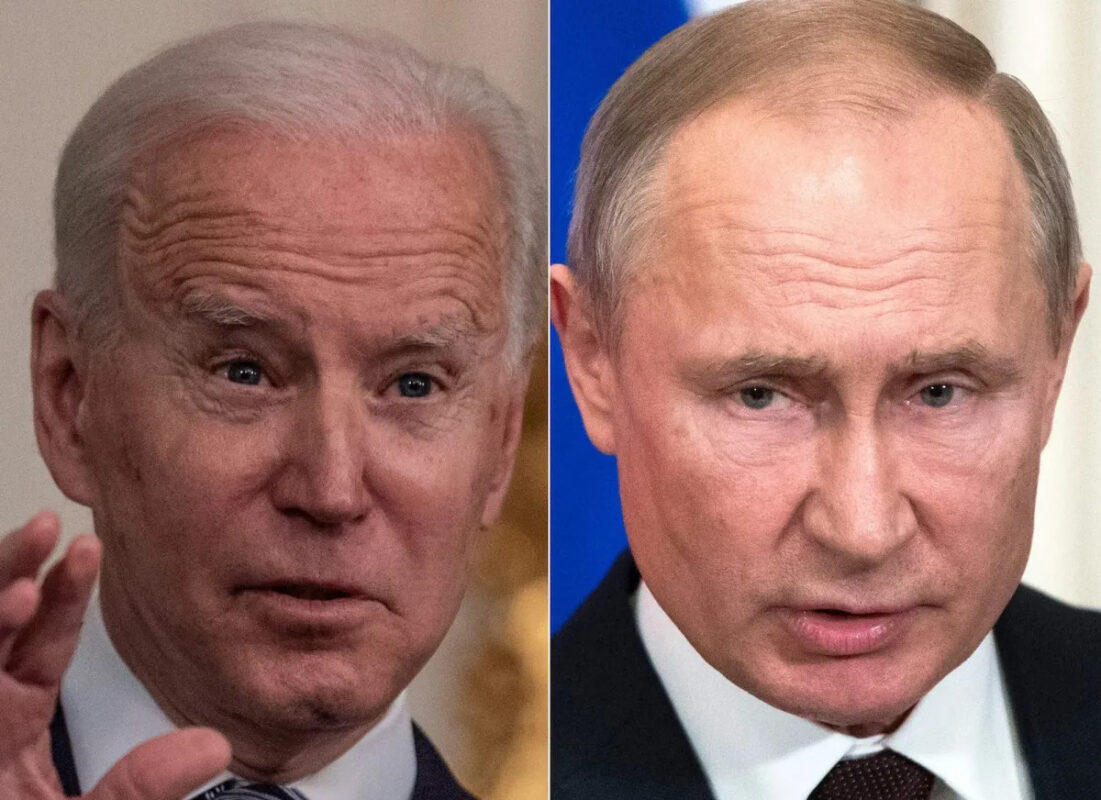
Suppose that the U.S. were at war with Canada. Don’t laugh; South Park devoted an entire episode to just such a conflagration; if they, with their usual keen insight, could depict such an eventuality, it could indeed actually occur. Also posit that Russia took the side of our neighbor to the north in this altercation. No, Moscow did not declare war on Washington DC, but it did everything else short of that to support Ottawa: it mobilized all of its allies in support of the True North, Strong and Free. Together, they sent tanks, warplanes, ammunition to Canada in order to help this country fight off what they thought of as unjustified aggression from America.
How would the US likely react? It is difficult to be sure. Alternative history of this sort is fraught with difficulties. Nevertheless, we are going to take a stab at this challenge; we are going to engage in a leap of the imagination. We are going to speculate that the US leadership would not be a bunch of happy campers. Far from congratulating the Russians for their support of the underdog, for what they regarded as an entirely North American matter, they would be rather resentful. They would think that this purely local matter was simply no business of the Russian bear.
Happily, we do not have to totally rely upon our imagination to reach this conclusion. We have an actual historical event upon which to ground our speculations: the Cuban missile crisis. There, it was clear that the US did not at all look upon the Russians placing missiles 90 miles from our shores with any great favor. Indeed, the very opposite was the case. The US was so ill at east with this development that it placed a naval blockade around that entire country. In at least some legitimate lexicons, this is an actual act of war.
Yes, it is difficult to face matters through the eyes of our opponents. It takes a special act of will, and no mean intelligence, to do any such thing. But it is clear that the Russians view the US and its allies arming of and otherwise supporting Ukraine in much the same manner as we would see the reverse, namely, the Russian backing of Canada in our hypothetical war with that country.
When the USSR disbanded in 1991 the Warsaw Pact was also dissolved. What should have then occurred was the end of the Cold War and also the dissolution of NATO. This, indeed, was the promise made by the west. To say the least, nothing like this occurred. Instead, there was an inexorable eastern march of NATO. Ukraine is far closer to Russia than Cuba is to the US. What the latter country is now doing is too close for comfort to an actual act of war. If the US were honest, and acted in accord with its Constitution, it would now issue a declaration of war against Russia. Happily, this country is not at all honest. Good. A nuclear war can ruin your entire day.
Rand Paul, the most libertarian member of the senate, should offer a declaration of war on the part of our country against Russia to congress. Not, of course, God forbid, to bring about such a horrid state of affairs; rather, to reduce its likelihood. How so? In so doing, he would make the point in the most dramatic way possible that this is precisely what US policy now amounts to. If the warmongers had the courage of their convictions, hopefully they do not, they would vote in favor of such an initiative. Then, the American people could see these people for what they really are. Maniacs.
Remembering Edward Lozansky, Towering Prophet of Sanity, Decency and Peace
Soviet and American physicist and political figure Edward Lozansky dies in Moscow, on April 30, 2025.
Edward Dmitrievich Lozansky was born in Kiev on February 10, 1941. He graduated from the Kurchatov Institute of Atomic Energy with a degree in theoretical nuclear physics. He was a researcher at the Kurchatov Institute of Atomic Energy and the Joint Institute for Nuclear Research in Dubna. At the same time, he taught at the Malinovsky Armored Forces Academy.
In 1976, he moved to the United States, became a US citizen, and lived in Washington, DC. In 1990, he founded the American University in Moscow (now Moscow International University).
In recent years, he actively participated in the work of the Assembly of the Peoples of Eurasia and Africa and was the US moderator of the international public forum “The Spirit of the Elbe: A Bridge of Trust, Friendship, and Cooperation,” which was held with great success on April 15, 2025. A word of remembrance from Martin Sieff, joined by the entire editorial staff of the Pluralia project.
○
2 mins read
Open Appeal to Presidents Trump and Putin
We kindly invite you to review and sign the Open Appeal to President of the United States Donald Trump and President of Russia Vladimir Putin
○
1 min read
International Forum “Spirit of the Elbe: A Bridge of Trust, Friendship, and Cooperation”
The organizers of the International Forum “Spirit of the Elbe: A Bridge of Trust, Friendship, and Cooperation” invite media, public figures, and representatives of culture, science, and business to participate in a landmark event taking place on April 15, 2025. The Forum will be held in a hybrid format: in-person at the Conference Hall of the Assembly of the Peoples of Eurasia in Moscow and via Zoom conference (up to 200 participants, approximately evenly split between Russia and the USA). The event begins at 5:00 PM Moscow time (10:00 AM Washington, D.C. time).