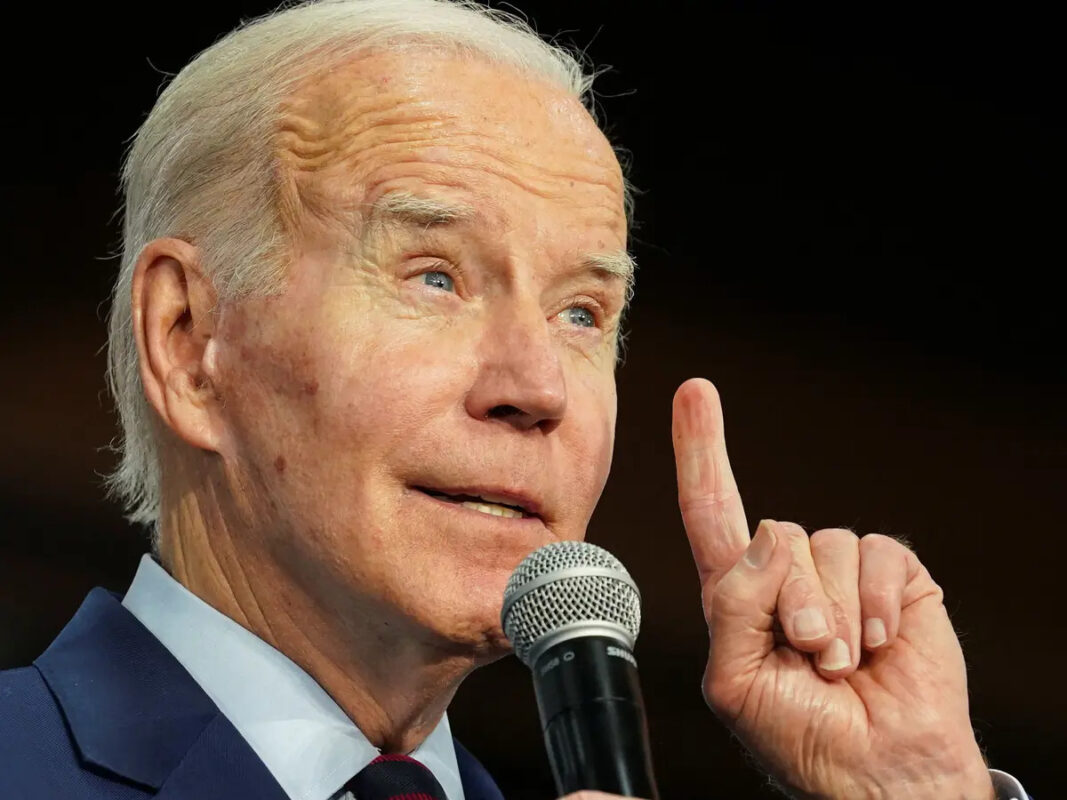
It is the “rule of law” that governs America which Washington kept proudly declaring domestically and to the world, but nowadays it looks more and more like the “rule of lies” would be a more appropriate definition. I am not necessarily speaking here about “lying Joe”, although the lies often coming from his mouth should be noticed, but about lies generated by the whole government system.
Australian journalist Caitlin Johnstone puts it bluntly that “When you live under an empire that’s held together by lies, you’ll be asked to believe a lot of intensely stupid bullshit.”
Caitlin mentions the top ten, from her point of view, “dumbest things the propagandists of the U.S.-centralized empire try to get us to swallow.” I will not repeat them as those interested can easily find them here.
However, I believe she misses a few more, including crucial ones that are directly related to the U.S. 21th Century wars and current proxy war in Ukraine that has a high potential to escalate into nuclear WW3.
“NATO is not moving one inch eastward.” – This lie, according to George Kennan, the eminent architect of the Soviet “containment” strategy and a former ambassador to the Soviet Union, would be a “fateful error” because it would “inflame the nationalistic, anti-Western and militaristic tendencies in Russia and therefore was “a fateful foreign policy error.” New York Democratic Senator Daniel Patrick Moynihan added that “It would open the door to the nuclear war.”
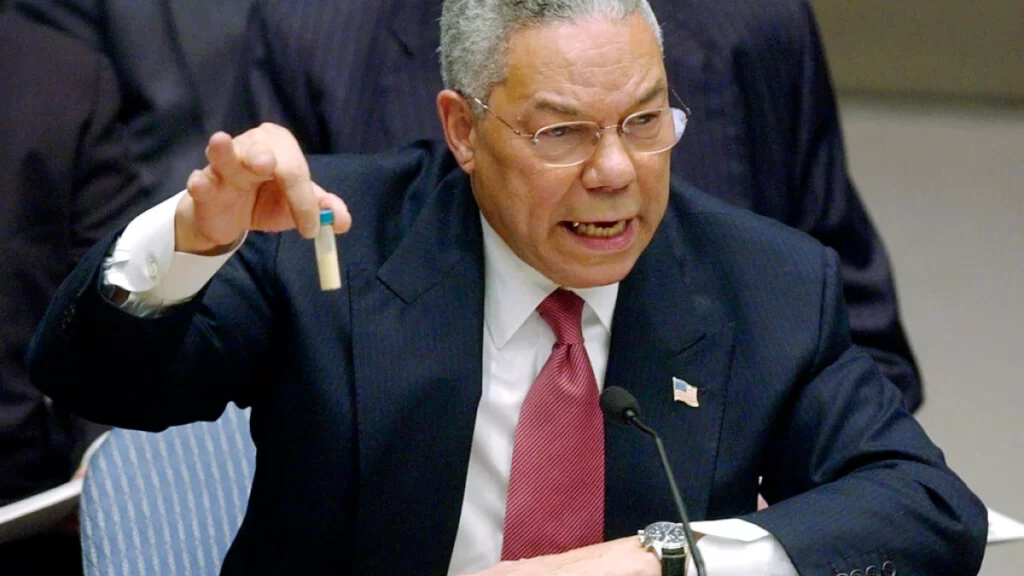
“Weapons of Mass Destruction in Iraq.” This whopper led to endless Middle East wars resulting in huge human and material losses, as well as the rise of ISIS. According to the Brown and American University research “The Costs of War” it led to over 940,000 deaths due to direct war violence; an estimated 3.6-3.8 million people who have died indirectly in post-9/11 war zones, plus 38 millions of war refugees and displaced persons. The U.S. federal price tag for the post-9/11 wars is over $8 trillion.
“Trump-Putin Collusion”, so-called Russiagate fake story which was actually collusion between lying politicians, intelligence officials, and media who tried to get Hillary Clinton into the White House. This lie succeeded in destroying Trump’s presidency along with its declared goal of improving U.S.-Russia relations.
“Hunter Biden’s laptop has all the classic earmarks of a Russian information operation” was the lie promoted by Biden’s 2020 presidential campaign manager Anthony Blinken, 51 top US intelligence servicemen, and the media which helped “the Big Guy” get elected.
Military and financial backing of Ukraine “for as long as it takes” is meant to support that country’s democracy, when in reality the goal was to weaken Russia who dared to reject the U.S. claims for global hegemony.
However, the most outrageous and endlessly repeated lie is that if Putin wins in Ukraine he will then move further West, and eventually to the U.S.
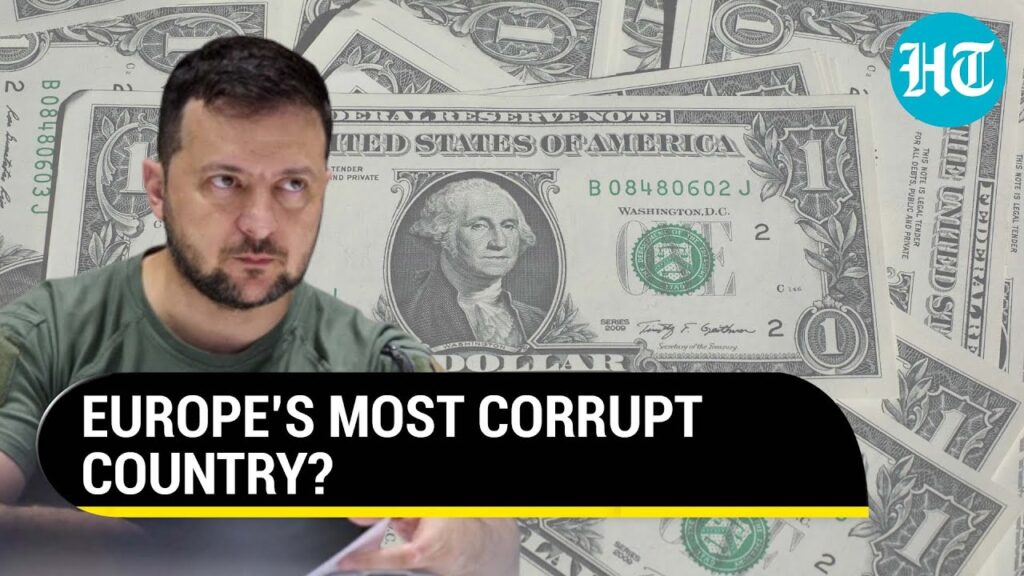
There is no intelligence, no proof, no desire and no means on the Russian side to do that, only accusations by Zelensky who is using this scare tactic to get more money and weapons, and by his backers in Washington and Brussels.
In reality, all Russian leaders starting with Mikhail Gorbachev to Vladimir Putin were ready for the full economic and even military integration with the West, including joint U.S. – Russia missile defense and joining NATO, only to be rebuffed.
After collapse of the USSR the overwhelming majority of the Russian people desired the rapprochement with the West, and particular with the U.S., but Washington squandered this historic opportunity.
As we see now, the claims for the global hegemony was an obviously a pipedream as the multipolar world order is rising before our eyes. Many Americans feel that the country is going in the wrong direction. Even New York Times which usually follows the Democratic party line in its recent poll admits that majority of Americans with or without political affiliations agree that “we are failing as a Nation, and share a sense of doom.”
So, the obvious question is what to do?
For us who are not in the government, and, especially, the younger generation, here is a helpful quote from the late William Polk, who helped to steer a wise and just foreign policy for the United States, including serving on JFK’s three-man crisis management team during the Cuban Missile Crisis. This is how he concluded his speech to graduating students at Bennington College in 2008: “Refuse to be marginalized,…You are national assets. And you owe the country the best you have. Do your jobs as citizens. Demand that your candidates tell you the truth and act with intelligence…Participate. You cannot afford to sit back and do nothing. If you do, you are almost certain to pay for your laziness. A democracy is not a holding company to be run by a board of directors. You are stockholders. Your life and your well-being are at stake. If you care about them, protect them. After you inform yourself, make your voice heard and put your actions where your mouth is. Be a leader. Get your generation into action. Together you are strong. Our future is in your hands. This is your country, your world, and your time.”
Donald Trump Should Not Repeat Woodrow Wilson’s Failure
April 30th is an important date in American politics. This is the day 100 for the American President in the White House, and all attention will be on the reports of his achievements and failures. But nothing can be more critical than Peace…
○
6 mins read
A Holocaust perpetrator was just celebrated on US soil. I think I know why no one objected.
Russia’s invasion has made ordinarily outspoken critics of antisemitism wary of criticizing Ukrainian Nazi collaborators
○
1 min read
Qi Book Talk: The Culture of the Second Cold War by Richard Sakwa
Richard Sakwa has for many years been one of the most distinguished and insightful observers of relations between the West and Russia, and one of the leading critics of Western policy. In this talk with Anatol Lieven, director of the Eurasia program at the Quincy Institute, Sakwa discusses his book, The Culture of the Second Cold War (Anthem 2025). The book examines the cultural-political trends and inheritances that underlie the new version of a struggle that we thought we had put behind us in 1989. Sakwa describes both the continuities from the first Cold War and the ways in which new technologies have reshaped strategies and attitudes.