“No room! No room!” they shouted when they saw Alice. "There's a lot of space!" said Alice indignantly." L. Carroll. "Alice in Wonderland".
Since the dawn of mankind, population size has been the most important factor for survival and socio-economic development. The history of mankind is a history of wars, and numerous peoples had more opportunities to protect themselves from enemies and conquests. Human resources were crucial in the development of agriculture, industry, technology and culture.
Be fruitful and multiply
“And God said: Be fruitful and multiply, and fill the earth and subdue it.” (Genesis, 1:28.) This is one of the few commandments that people of different nations, beliefs, and aspirations have strictly followed throughout human history. Moreover, in addition to the Testament, people are endowed with a powerful instinct for procreation, sexual potency and desire, and a clear understanding that a large family is a guarantee of well-being and security. The Bible repeatedly refers to the number of tribes and nations. From time to time, God demanded a census – a recount of the population. In cases of victories, defeats and heavenly punishments, the victims and survivors were carefully counted.
The increase of a family, a tribe, a nation is presented in the Bible as a blessing. For his firm faith and righteous life, God promised Abraham that his descendants would be as numerous as the stars in the sky. The promise came true – Muslim descendants of Ismail, the exiled son of Abraham, are multiplying everywhere to this day. At the same time, many nations disappeared, not always leaving a historical memory of themselves.
Historians of the Ancient World Herodotus, Plutarch, Tacitus, Suetonius, Josephus Flavius scrupulously described the number of peoples, armies, and social groups. Many of their data are confirmed by modern research, which makes it possible to very accurately determine the demographic picture of the world in different eras. The world population grew steadily, although there were periods of decline during famines and pandemics, and over 300 thousand years by 1800 it reached one billion. Today there are more than 8 billion people in the world. Since 1950, the world’s population has tripled. According to UN calculations, the world’s population will reach 10 billion in 2057. But according to forecasts, the number of people will begin to decline this century.
Currently, the most populous countries are India, China, USA, Indonesia, Pakistan, Nigeria, Brazil, Bangladesh, Mexico. In many countries there is a shortage of labor resources, in others there is mass unemployment.
International assistance allows many countries to bridge the gap, but there are many countries where colossal financial resources, reforms, and educational assistance have not brought results for decades.
At the same time, benefactor countries do not always deserve gratitude and are accused of neo-colonialism, political and economic dictatorship. There are especially many accusations against the white race, although Western civilization is losing ground and weakening its influence. Before the 18th century, the white race made up about 40% of the world’s population, currently less than 10%, and its share will only decrease.
Until recently, after the end of the Cold War, the dominant idea was that globalization – cooperation and collaboration in the economic, political, cultural spheres would defeat nationalism, establish multiculture, overcome international wars and conflicts, and because of advantages of the international division of labor, free movement of people and capital, and an open world market no one will be left behind, everyone will benefit.
Western investment in less economically developed countries has allowed for greater profits at lower costs. An hour of labor in industrial production in America is 60 dollars, in the third world it is three to five. The West saw in globalization not only economic advantages, but also an opportunity to rebuild the world in its own image.
Not only the West, many countries have received enormous advantages along this path. China has become the second economically developed country in the world; India, Indonesia, Brazil, Mexico, Kazakhstan, and Azerbaijan have made great progress. But at the same time, many countries became competitors of the West, strengthened politically and militarily, and gained great influence in the world. Instead of mutually beneficial cooperation, trade wars, sanctions, and diplomatic conflicts arose. This was especially evident in the West’s relations with Russia and China. Globalization has led to a sharp decline in the West, especially in the United States, of industrial production and the inflation of the financial and speculative sector to a parasitic level. Many types of services have gone abroad. Purchases and banking operations are most often carried out with the help of foreign service staff, who do not necessarily know English well and understand the needs of the client.
Terrorism, hacking, and industrial espionage have become a by-product of globalization. The war on terrorism cost 8 trillion. dollars, to this we must add the colossal costs of internal security. Hacking costs the state and citizens 100 billion annually. Copyright theft – from high technology to copying Hollywood films – is another problem costing billions of dollars.
The attractiveness of Trump’s call to “Make America Great Again” for millions of people is explained primarily by the desire to return stable, qualified, well-paid jobs, reduce dependence on global chaos, and preserve the traditions of their way of life. America still remembers the time when the best and really necessary things were produced in America, and the salary of a worker, teacher, policeman, postal worker made it possible to feed a family of four, buy a house and a car and not think too much about health insurance and education for children.
“America First” is perceived as a need to put one’s house in order and improve the living conditions of Americans. A particularly broad and active response is the call to stop the degeneration of the country under the influence of illegal immigration and the aggressive demagoguery of “progressives” who dictate their ideas about rights and justice to society.
By now, the idea of globalization is largely associated not with mutual benefit, but with the widening gap between poor and rich countries and social groups, threats of loss of sovereignty and cultural characteristics, and the growth of nationalism.
The colossal increase in migration leads to the loss of labor and intellectual resources in poor countries. In many countries, globalization is perceived as Americanization, the assertion of the power of transnational corporations. Conspiracy theories about a secret global government, control of thinking and behavior, and even mortality and childbirth, have acquired a massive scale.
At the same time, the West is rapidly losing its identity; the adaptation of millions of people of another culture leads to large financial costs, racial and ethnic divisions, and increased social tension and crime.
The attitude towards globalization in the world is ambiguous, for example, in Malaysia 72% assess it positively, and in France only 27%. Since the Covid pandemic, positive attitudes towards globalization have decreased by an average of 10%.
Globalization has had contradictory effects on population dynamics. In developed economic countries, growth is slowing down, in poor countries the birth rate is not decreasing, and in some it is increasing.
Too much
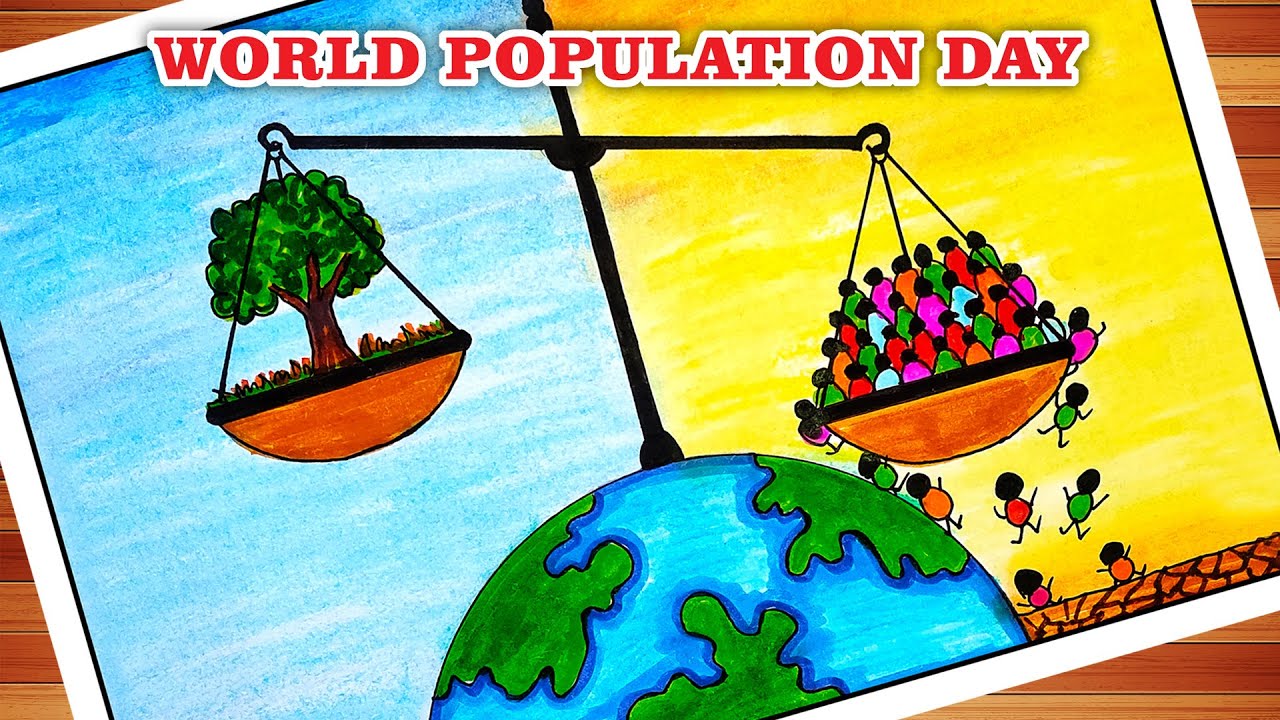
The learned monk Thomas Malthus in the 17th century came to the conclusion that the planet’s population is growing in geometric progression, and the production of subsistence in arithmetic progression, and this will lead the world to poverty, hunger, and wars. The progressive world considered these views misanthropic. But in 1968, Paul Ehrlich and Anne Ehrlich confirmed these fears in the book “The Population Bomb”, which became a global bestseller, and proposed immediate measures to stop the increase in the number of people on Earth. In 1972, the Club of Rome report “The Problems of Humanity” was published, presenting a model for the disappearance of natural resources as a result of the growth of the human population.
In 1973, economist Ernst Schumacher’s book Small is Beautiful – An Economy Where People Matter was published. The author offered an alternative to the dominant belief in the world: “More is better.” The book was recognized as one of the most influential in the post-war era. Schumacher substantiated the possibility of satisfying rational human needs not through classical capitalism, but through “Buddhist economics” – moderation and reasonable behavior. The book has become the gospel of anti-globalizationists, but in the world of both the poor and the rich, everything is still moving along the path of expanding consumption.
Recently, 50 Nobel laureates in the fields of economics, physics, chemistry, medicine, and psychology answered the question “What is the biggest threat to humanity?” Overpopulation was named first. Experts see overpopulation as the most important factor in catastrophic climate change. Population growth requires a constant increase in production, which leads to disastrous consequences for the environment.
Countries with the highest population growth lack the ability to reduce consumption and reduce pollution, although they bear the main responsibility for demographic problems. In Nigeria and Kenya, where there are an average of 6-7 children in a family, there is a shortage of land, water, and food. Poor countries reject calls to reduce production and consumption according to their logic and interests: rich countries are home to 14% of the world’s population, but they account for 83% of the planet’s pollution. USA – four percent of the world’s population – 20% of the pollution. There is six to seven times more pollution per American than in India. The richest 1% of the world’s population causes more environmental damage than the bottom 50%. But rich countries do not want and cannot change their way of life, this would mean the collapse of the economy and a social explosion.
Under these conditions, the theory has spread that the world behind the scenes is trying to use pandemics, vaccinations and chips to stop population growth. These ideas are present not only in the minds of paranoids.
Problems of demography are extremely politicized, and here both private interests, a nationalistic, racial approach, and a liberal, cosmopolitan attitude, optimism and a gloomy vision of the future are fully manifested.
Protests against the privileges of the “golden billion” are combined with growing social contradictions within rich countries. America has lost most of its industrial production to foreign countries. In total national production, the share of the manufacturing sector is only 24%; only 15 million people are employed here.
Instead for stable jobs came the “gig economy” – long hours of disenfranchised, unskilled labor without social protection and prospects. Companies like Uber, Lift, Amazon, where this model dominates, have firmly established themselves in the market and are actively followed by other businesses – restaurants, hotels, food delivery and other products. In colleges and universities, most teachers are disenfranchised, underpaid part time-workers. Millions of “freelance” journalists, authors, actors, musicians, artists, designers, contractors are in an equally disastrous, unprotected position.
Only 11% of Americans today belong to unions that protect workers’ rights. In the forties and fifties, when America was the undisputed world industrial leader, the majority of American workers were unionized.
One of the reasons that allows to constantly reduce the rights and compensation of workers is the army of immigrants, ready for any conditions and deprived of legislative protection. It is not out of the goodness of hearts that USA borders remain open – it is a pragmatic and cynical policy aimed at strengthening the political position of Democrats and filling unattractive jobs.
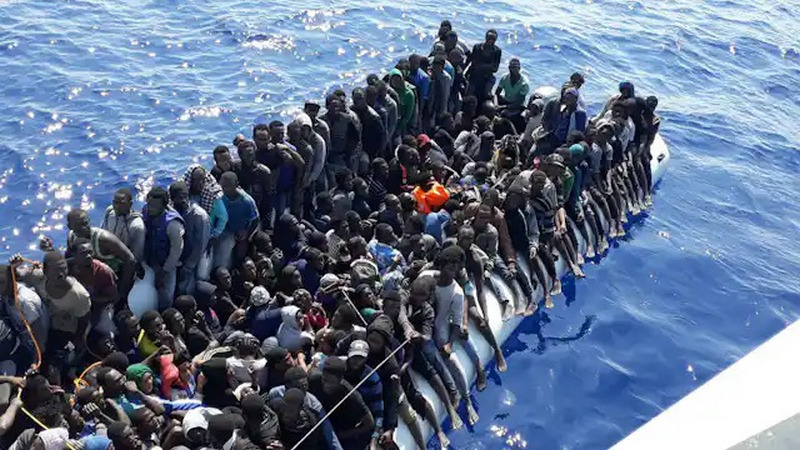
But the current chaos on the border is only a prelude to the imminent great migration of peoples, when huge regions of the south will become uninhabitable due to climate disasters.
Less is even worse
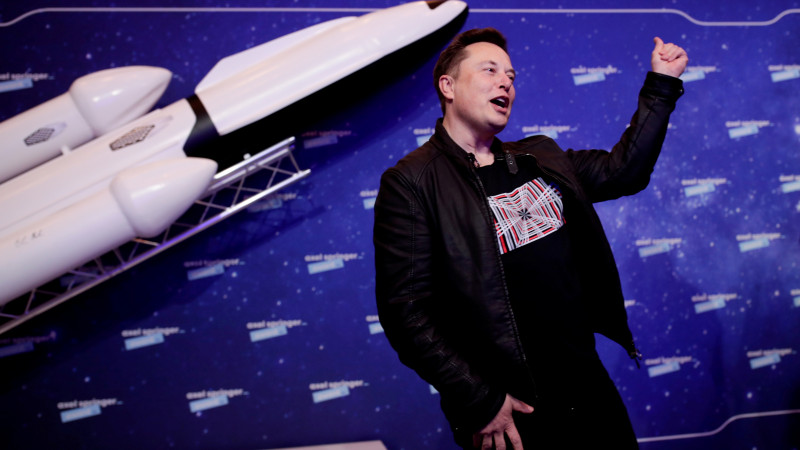
No matter how you feel about Elon Musk, but, as befits a genius in the role of the savior of humanity, he never speaks platitudes, although many of his statements cause a shock reaction even among his fans. Here is one of his recent tweets: “Population collapse is the main risk for the future of civilization.” He cites World Bank data showing that the world’s birth rate is at its lowest level since 1960. Before 1990, population growth was more than 90 million annually; now it is 64 million.
Today, among the countries where the population has decreased significantly are Portugal, Italy, Hungary, Poland, Japan, China, Romania, Belarus, Croatia, Moldova, Albania, Serbia, Ukraine, Bulgaria, Russia, China, Georgia, Slovakia, Estonia, Cuba, Hungary, Armenia, South Korea, Lithuania, Latvia.
The situation in China is of particular concern because, given the country’s role in the global economy, it is not just a domestic issue. 40 years ago, China, fearing overpopulation, established a demographic policy of one child per family. Today, the aging of the population requires the renewal of labor resources, but people have become accustomed to a new model of life and are in no hurry to burden themselves with the obligations of childbearing. Last year, despite government efforts, China’s birth rate fell by 500,000. Serious research, writes the Wall Street Journal, shows that the country’s population will decline from 1.4 billion to 525 million by the end of this century.
In Soviet times, with endless anti-American propaganda, citizens were afraid not so much of a war with America as of a great Chinese invasion into the empty expanses of Siberia and the Far East. The Soviet Union laid minefields on the border and increased production of ballistic missiles and nuclear weapons. Today, the threat of a Chinese invasion can no longer be feared.
Political and socio-economic conditions in countries where the decline in fertility and aging populations are especially noticeable vary greatly; it is hardly possible to generalize the reasons.
But these processes are clearly noticeable in many post-Soviet states and countries of the former socialist camp. Here this can be explained by a radical change in the socio-political system and conditions of life. But in Japan, conditions and traditions are different, and at the same time the birth rate is declining at an even higher rate. In a strange way, the attitude towards the family has changed. Among many young people, sexual relations are perceived as relics of the past, an indicator of low culture, the lot of the lower classes. This transformation of consciousness cannot be explained solely by women’s desire to build a career.
In the West, interest in sex has not disappeared, but changes in relationships between men and women, the possibility of meetings without obligations through speed dating services, and the boom in pornography have led to a radical change in sexual behavior and ideas about family values and obligations.
In the European Union, the population is not decreasing, but the reason for this is the flow of immigrants from Africa and Asia. At the same time, the white population is declining. The picture is similar in the United States, where the population is growing, but also mainly due to immigration.
Elon Musk has not made it clear what exactly he sees as a disaster. He is a pioneer and conductor of super-new technologies that replace not only physical, but also mental labor. Living labor is rapidly being replaced, and people are no longer needed even for exploitation. A critical question arises, if not for Musk, then for economists: how can a capitalist economy exist without a mass solvent consumer?
With a declining population, the use of labor-saving technologies and artificial intelligence becomes not a choice, but an imperative. Since the industrial, agricultural, scientific and technological revolutions, mechanization, automation, and robotization have replaced millions of manual workers. Today, “Rapidly developing artificial intelligence threatens white-collar workers, destroying millions of computer jobs,” and “a college education is no cure,” writes the Wall Street Journal.
Many professions of mental work: doctors, teachers, architects, engineers, designers, managers, consultants, the list goes on for a long time, are doomed to disappear. Artificial intelligence will write a novel, create a film, or a popular song in accordance with market demand. Even today, even an expert cannot always identify the imitation of Bach, Beethoven in composition, or Richter and Heifitz in performance. In chess and other intellectual duels, man loses to technology. The question arises: is it necessary to preserve universal suffrage, take into account the opinions and demands of social dependents, educate and treat them if they are only a burden for the brave new world?
Yuval Harari writes about the consequences of progress: “People will lose their economic and military importance, and the economy and political system will no longer value them… The system will value some individuals, and this will create a new elite of supermen to replace the mass population.”
It’s unclear why Musk is alarmed by this prospect. He fully shares the idea of people who, due to their special merits, deserve the right to decide the fate of the planet and the Galaxy, and advises those who disagree, demanding equality and freedom: “Humble yourselves,” this is the reality.
Democratic countries, being more economically and technologically developed, having concentrated the world’s intellectual elite, will be ahead of the process of total elimination of living labor with all the ensuing consequences.
Karl Popper and his followers saw the main threat to democracy in totalitarianism. And to this day, such ideas form the basis of political struggle in the Western world. But the future, if it comes according to the apparent scenario, will completely eliminate the role of the masses, and a decrease in their numbers is not a tragedy for the kings of the Universe. Probably, they will be able to maintain and increase power and wealth without mass production and consumption, refuting both the communist Marx and his theory of surplus product and profit, and the capitalist Adam Smith, who assigned the decisive role in the production of wealth to the quantity of labor.
300 years after the father of liberal democracy, John Locke, called it the best possible system of organizing society, 30 years after Francis Fukuyama predicted the triumph of liberal democracy throughout the world in The End of History, doubts about the viability of maintaining this system are expressed not only by supporters autocratic rule.
The power of a small group of social elites, concentrating finance and new technologies in their hands, will result in social lawlessness and suppression of civil liberties. Even if the elite takes care of the unnecessary and powerless, provides them with housing, food, entertainment, cannabis and fentanine, pays for gender reassignment and vasectomy, the degradation of people and social relations will be inevitable.
We can talk about other apocalyptic scenarios – if artificial intelligence gets out of the control of even the elite. Today these are still futurological speculations, the authenticity of which no one can vouch for. But what is quite realistic is Musk’s prediction that “2024 will be even crazier,” and demographics and new technologies will make a decisive contribution to the implementation of this forecast.
Donald Trump Should Not Repeat Woodrow Wilson’s Failure
April 30th is an important date in American politics. This is the day 100 for the American President in the White House, and all attention will be on the reports of his achievements and failures. But nothing can be more critical than Peace…
○
6 mins read
A Holocaust perpetrator was just celebrated on US soil. I think I know why no one objected.
Russia’s invasion has made ordinarily outspoken critics of antisemitism wary of criticizing Ukrainian Nazi collaborators
○
1 min read
Qi Book Talk: The Culture of the Second Cold War by Richard Sakwa
Richard Sakwa has for many years been one of the most distinguished and insightful observers of relations between the West and Russia, and one of the leading critics of Western policy. In this talk with Anatol Lieven, director of the Eurasia program at the Quincy Institute, Sakwa discusses his book, The Culture of the Second Cold War (Anthem 2025). The book examines the cultural-political trends and inheritances that underlie the new version of a struggle that we thought we had put behind us in 1989. Sakwa describes both the continuities from the first Cold War and the ways in which new technologies have reshaped strategies and attitudes.