Issues of linguistics in the era of liberal democracy
Issues of linguistics in the era of liberal democracy
○
17 mins read
By Leonid Goldin
"The project required the complete abolition of words... to preserve health and save time." Jonathan Swift. "Gulliver's Travels".
Language is a living and developing organism, reflecting reality and its dynamics; it is constantly replenished and updated. Some part of the language becomes outdated, loses its meaning and becomes a source of logical contradictions and misunderstandings, unproductive disputes and sometimes acute social conflicts.
By now, a great deal of such evidence has accumulated. The truth is in the language of the speaker, but the listener has his own truth. The list of words that everyone understands and interprets in their own way can be continued for a long time.
Here are some examples when dictionary and semantics will not help to find a common language and agreement: freedom, equality, justice, democracy, totalitarianism, humanism, human rights, communism, socialism, capitalism, imperialism, globalization, independence, morality, civilization, progress, racism , nationalism, integration, aggression, genocide, apartheid, corruption, privileges, left, right, extremists, radicals, reactionaries, fascists, Nazis, terrorists…
Concepts and definitions that are unambiguous in the perception of some often have the opposite meaning for others. But this vocabulary is actively used in political manipulation, social demagoguery and propaganda.
To this must be added a sharp decline in the culture of language and thinking. The speeches of politicians are filled with outright rudeness, tactlessness, and absurdities.
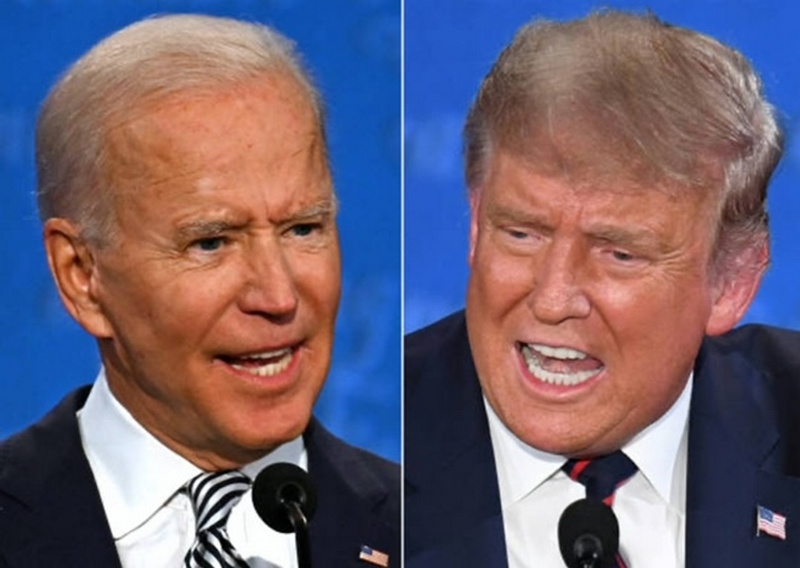
Trump and Biden contributed to the popularity of the American idiom “foot in mouth” – when something particularly stupid and rude is said in public. Trump uses such language consciously and knows what he is saying to his audience, Biden is not able to control the use of his language, and this is a serious problem for his supporters.
The political vocabulary is not only becoming outdated, but it is being updated; double standards, fakes, scoundrels, son of a bitch, terrorist states, war criminals, murderers and child killers (about government leaders)… Domestic consumption has its own vocabulary: old senile, nursing home patient, sleepy Joe, liar, fraudster, corrupt official, narcissist, megalomaniac, abuser… Psychiatrists and psychologists collectively make clinical diagnoses of presidential candidates in the press.
In an academic environment, a dissident is not a bearer of other beliefs and opinions, but an enemy of freedom, democracy and national interests. Simpler people, when expressing political opinions and participating in discussions on these topics, usually resort to profanity.
But even with good intentions and practical necessity, the devaluation of language and concepts becomes a dead-end obstacle. A friend of mine, a high-ranking diplomat with extensive experience in resolving international conflicts, says that linguistic problems have become a serious obstacle to the work. Many concepts used by one side, such as aggression, attack, occupation, war, ethnic cleansing, victims, war crimes, civilians, are completely unacceptable to the other side, which has its own definitions of the same phenomena and events. In negotiations and documents, these concepts have to be avoided and resort to euphemisms. My friend is a well-educated historian, but a special philological education would hardly have made his tasks easier.
Political interests dominate journalism, which has become propaganda and a weapon in information wars. The resources of language are used to denigrate and condemn the opponent; facts and information are adjusted to a predetermined attitude, to the worldview and expectations of reader and listener. But consumers of information also have no desire to know the opposite point of view.
In a democratic society, everyone has the right to their choice and opinion, but according to the social contract, the law prevails, presumably not allowing for misinterpretation and speculation, and judges are independent of authorities, parties, sponsors, lobbyists, public pressure and ideological prejudices.
But even the Supreme Court shows that liberal justices view law and justice differently than their conservative counterparts, and the strict language of the Constitution does not reconcile disagreements about gun sales, abortion, free speech, minority rights, immigration, institutional and corporate accountability, and a host of other issues on which judges have different opinions.
Discrepancies in the perception of words and meaning are manifested in literature and art, which at all times reflected social conditions and worldviews. The other day I saw a performance of Deb Margolin’s play “This Is No Time for Peace.” The times of Joseph McCarthy, one of the saddest periods in American history, witch hunts, anti-communist paranoia, political persecution and lack of rights, denunciations, censorship, blacklists, crippled destinies, violation of freedom of speech. Reading the New York Times made one suspicious.
At the center of events is a prominent scientist, the developer of a secret project, accused of collaborating with Soviet intelligence. According to the prosecution, he passed on information constituting state secrets to a Soviet colleague. He really said a lot of unnecessary things, but the daughter believes in her father’s innocence and tries to help him, at the same time, she cannot sort out her relationship with her husband and lover. The first collision has nothing to do with the second, I would like to suggest to the script author – well, let him make the lover an FBI informant or somehow connect the storylines. The Soviet scientist looks and speaks in a caricatured, unconvincing manner, although at that time there were indeed many successful Soviet intelligence officers in America.
McCarthy and the stage compilation of the senator’s speeches about internal enemies sounds quite adequate to its time and at the same time explains the appearance of the play on the modern stage.
If the play had been performed not only for a liberal Broadway audience, but also in the wider expanse of an America torn apart by irreconcilable political struggle, the assessment of McCarthy and his beliefs would have been different. What for some sounds like pathological conspiracy theory, a threat to democracy, for others will be prophetic warnings about the threat of the country being taken over by the current enemies of the American way of life, who have penetrated into all spheres of society and are crowding out true patriots.
Polyphony and discordance
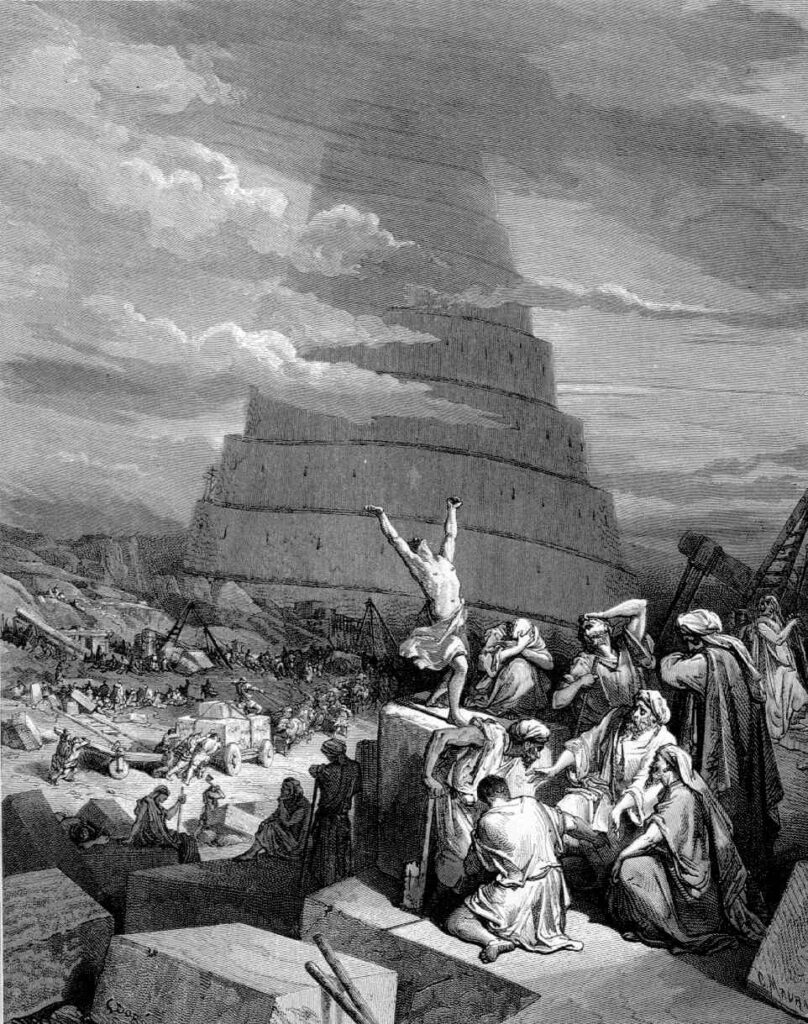
According to Genesis, initially all people spoke the same language, which made it possible to understand each other and cooperate successfully. But when they decided to build a tower as high as the heavens, God stopped this daring project by dividing the builders into many linguistic groups, so that they were unable to understand and act together. Judging by the modern picture of the world, this story explains not only the origin of multilingualism, but also the conflicts of the present day.
There are more than 7,000 languages in the modern world. Many languages have disappeared, new ones have appeared. The oldest languages include the languages of the Sumerians and Egyptians, they are 4600 years old, but these are dead languages. There are new languages that arose less than a hundred years ago, one of them in Australia in 1980, it is spoken by 350 people.
Of particular note is Esperanto, a language created in 1887 in order to improve international relations and overcome isolation and nationalism, but it has not become widespread.
Among the new languages is modern Hebrew, recreated at the turn of the 19th-20th centuries. Jews spoke Hebrew 1,200 years ago in Israel, Judea and Samaria, an important argument for the Israelis in discussions about the disputed territories.
The fate of a language depends on social and political conditions. Not all languages can be used freely. National discrimination usually includes restrictions on the study of a language, its use in the press and the public sphere.
Some consider multilingualism a blessing that enriches culture, others that it creates problems in the formation of social unity. These problems have become especially acute in the West in the context of massive illegal immigration. In many cases, immigrants do not strive to learn the language of the new country, adapt and integrate, and withdraw into ethnic communities, maintaining their usual way of life, which is not always compatible with the social environment. Instead of the expected mutual enrichment of cultures, friendship and cooperation, nationalism, social and everyday conflicts and divisions are growing.
Once in the West in big cities, it is difficult to understand what country you are in. The idea of internationalism and cosmopolitanism is good, but until huge protests, fires, clashes with the police, and an increase in crime darken hopes and rid us of illusions.
English is the most widespread and rich language in the world, but in America, England, and Canada, the share of the population using it as a native language is decreasing year by year. There are more than 200,000 words in the English language, with up to a million technical terms. The average American speaks up to 30,000 words, 10,000 are used in everyday communication, you can get by with one thousand, but for many this is an impossible task after decades of living in the country.
Russian is in second place in terms of vocabulary, followed by Spanish, Chinese, and Italian. There are different calculation methods. According to others, Korean and Japanese are ahead of everyone in the number of words.
The frequency features of language use are interesting. They say that the French have up to a hundred definitions of cheese, and even more definitions of wine. The Eskimos have several dozen definitions for the shades of snow. Americans have a rich vocabulary that defines success, well-being, and high self-esteem. But most peoples have more pessimistic words than optimistic ones, literature is evidence of this.
The Russian language is ahead of the rest in the variety of profanity. There are less than 10 basic words of Russian swearing, but suffixes and prefixes increase them to many hundreds. I read that there is a dictionary of a three-letter word that comes in a thousand modifications.
I have not studied this area of the language and make do with normative vocabulary; according to my observations, the Americans have a much poorer arsenal in this area, only two words, but the frequency and ubiquity of their use is discouraging. In joy and sadness, in friendly conversation and skirmishes on the road and in transport, from the stage, in popular literature, celebrities and inhabitants of urban ghettos use this vocabulary more often than OK and Hello.
The language is degrading due to low speech culture, literacy, and a reduction in active vocabulary. This is a global phenomenon, its manifestation is noticeable not only in everyday communication, but also on television, radio, in the press, and in teaching. Almost half of American schoolchildren, after completing their education, do not know how to properly read and write, construct a competent phrase, or name the authors and works of literary classics.
The computerization of education and social networks have caused severe damage to the culture of the language. Perhaps this is an irreversible process, which further development of technology only exacerbates.
The degradation of language inevitably affects thinking and behavior. Since the time of Aristotle, it has been recognized that language plays a vital role in cognition and intellectual development. The greatest philosopher of our time, Ludwig Wittgenstein, wrote in the Tractatus, in which the ordinary reader will not understand 99% of the content, but the meaning is obvious: “The limits of my language are the limits of my world.” The world’s most famous linguist Noam Chomsky substantiated the theory of the innate nature of language as a universal tool of thinking. The theory is consonant with the idea of Martin Heidegger: “We do not speak with language, language speaks with us.”
Language is a powerful means of consolidating society, social and cultural development, but it can also serve destructive, antagonistic forces. The biblical parables say: “Life and death are in the power of the tongue,” “He who speaks a lot will receive consequences.” “The tongue is fire, the world of evil,” says the New Testament.
Language has always been a tool of ideology and influence on public consciousness. Soviet citizens remember the discussion about the nature of language in which Stalin took part. He published an article in Pravda, “Marxism and Issues of Linguistics,” which particularly emphasized the danger of the absence of a single language in conglomerates of tribes and nationalities. The class approach was decisive in the assessment of people and phenomena, but it did not extend to the use of language, although the fight against the “clogging” of the language with foreign vocabulary and bourgeois influence was carried out tirelessly.
The Russian language played a consolidating role in a multinational state, but it was also fully used to suppress national cultures and self-awareness. Today, in many former Soviet republics with large concentrations of Russian populations, language issues have become the subject of acute national conflicts.
Politics and ideology widely use newspeak (George Orwell’s neologism) – a perversion of concepts when a dictionary meaning is used contrary to its meaning for propaganda and stupefying the mind. What for Orwell was a subject of satire and seemed absurd has become common practice among political strategists and social scientists.
It is impossible to see language problems as the root cause of aggravated internal and external contradictions. But in everyday life, family, at work, in state and international relations, the culture of language, which determines the culture of thinking and behavior, plays an extremely important role.
You can once again turn to Jonathan Swift: “They reason very poorly and always object with impatience,” he wrote about the Laputans with whom the mythical Gulliver had to deal, but similar evidence is abundantly presented in our lives.
Freedom and enlightenment
Common sense suggests that high education eliminates totalitarian thinking and prejudice. In practice, modern elite universities are citadels of totalitarian thinking, suppression of dissent, selection of teachers and assessment of student knowledge according to ideological criteria, affirmative action requirements and commercial considerations.
In recent times, the main obstacle to free thinking and worldview has been conservatism, which guards a reactionary ideological monopoly, and liberalism has been perceived as the bearer of progress, tolerance, pluralism and respect for the opponent. Liberalism, existing in fantasies and utopias, is guided by Voltaire’s maxim: “I hate your beliefs, but I will give my life so that you can express them freely.”
Sounds great in theory. In fact, only a few percent of conservative-minded teachers, focused on fundamental disciplines and classical educational requirements, remain in elite universities. The rest are liberals and those who are trying to avoid political battles so as not to jeopardize their careers. The social atmosphere is shaped by “progressives” and “Awakening” activists.
Many current problems cannot be the subject of open discussion if there is a threat to liberal ideology. The real picture of social life and its contradictions has been replaced by utopian ideas about man and society. Research and publications on racial issues, gender relations and differences, genetics, upbringing and education are subject to strict, albeit unspoken, censorship and self-censorship. It all began with a revision of the history of the country and Western civilization, the classical canon in the social sciences, literature, art, and reached its climax in anti-Israeli, anti-Semitic obscurantism, presented as a fight against Zionism, white racism and colonialism.
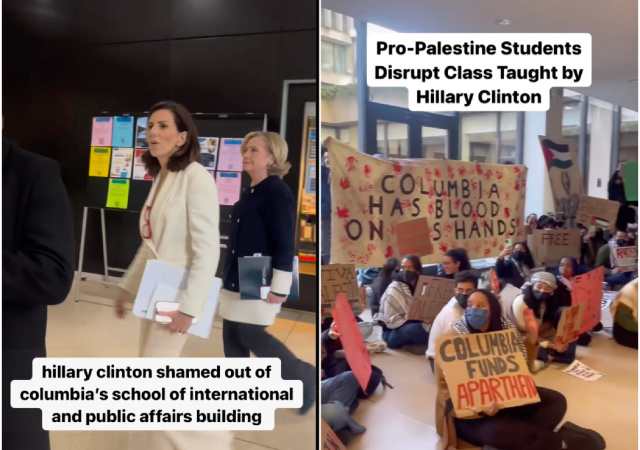
In this atmosphere, even Hillary Clinton, until recently a liberal icon, could not properly conduct a class at Columbia University when, after October 7th, she condemned terrorists and their supporters and recognized Israel’s right to self-defense. Students boycotting her lecture claim that “Responsibility for the war and casualties lies undeniably with Israel and other Western governments, including the United States.” If Clinton had not had government security, she would have faced much worse consequences, like other teachers who dared to say a word in defense of Israel.
Columbia professor Shaya Davidal spoke at a meeting in memory of the victims on October 7. He and his wife are staunch liberals, participants in pro-Palestinian demonstrations, support an economic boycott of Israel, and advocate the creation of a Palestinian state and the cession of Israeli territories. None of this helped. His online friends blocked him, he receives hundreds of emails a day full of hatred, threats of physical harm, calls for his murder. None of his colleagues dared to support him publicly.
The correct political orientation is required not only from social scientists, but also from teachers of natural sciences. New York University professor Dr. Benjamin Neal, a world authority on cancer research, was fired after posting online his support for Israel in the war against Hamas. He went to court, but the university insists on its decision.
In David Grossman’s novel A Horse Walks into a Bar, the stand-up comedian argues that if an Israeli doctor found a way to permanently defeat cancer, there would be protests around the world in support of cancer’s right to exist. The book was published ten years ago, and what until recently sounded like black humor and absurdity is now a reality. The cancer of terrorism is widely justified and supported.
One of the reasons for the anti-Israel atmosphere on college campuses is that at elite universities, more than a quarter of the students are foreigners, many from Muslim countries. University management is interested in expanding the number of foreigners, since paying for their education and sponsorship by foreign governments and donors is an important factor in the financial well-being of universities. Active political activity of foreign students is not prohibited, although in other cases it is quite possible to obtain the status of a foreign agent. But prohibitions are a vicious path; it only drives the problem deeper. The main issue is not about foreign extremists, but about young Americans and their teachers who support obscurantism.
Under pressure from Congress, where resistance to progressives is still possible, some university leaders have resigned, and attempts are being made to protect Jewish students and teachers through legal means and to limit the activity of anti-Semites. In response, anti-Semites present themselves as victims and often find defenders.
Jack Matlock was ambassador to the Soviet Union from 1987-1991. We knew each other, although it was still dangerous and there were troubles, I often visited his residence in Spaso House. I organized an exhibition of photographs of his wife Rebecca at the Moscow Conservatory. In conversations with Matlock, I tried to convince him that Gorbachev and his perestroika would not last and that Russia would not become America. Matlock replied that I was too pessimistic, it takes time for change.
After finishing his diplomatic career, Matlock became a professor at Columbia University. He recently published an article in which he talks about the evolution of his views on American democracy. He recalls the early nineties, when America was an example, defending rights and freedoms throughout the world. Now he laments that his country does not adequately support the people of Gaza and the West Bank and the students at Columbia University who express solidarity with the Palestinians. The article was written after October 7 by a highly experienced diplomat, historian, and linguist; he cannot be accused of insufficient awareness, misunderstanding of the situation, or low language culture.
Once upon a time in Moscow, even if there was disagreement, it was possible and interesting to argue and listen to another opinion. But what can we talk about today, what other arguments are needed after massacres, sexual violence, hostage-taking – old people and babies. Professor Matlock sees a different picture. Surely, Matlock would not be interested in my opinion now. We could speak both Russian and English, remember the past, share teaching experience, but the conversation would bring nothing but disappointment.
This is not a problem of language, knowledge, or intelligence. “People are always against reason when reason is against them.” (“On the Mind”, Claude Adrian Helvetius.) It is difficult to find an exception to this rule.
Donald Trump Should Not Repeat Woodrow Wilson’s Failure
April 30th is an important date in American politics. This is the day 100 for the American President in the White House, and all attention will be on the reports of his achievements and failures. But nothing can be more critical than Peace…
○
6 mins read
A Holocaust perpetrator was just celebrated on US soil. I think I know why no one objected.
Russia’s invasion has made ordinarily outspoken critics of antisemitism wary of criticizing Ukrainian Nazi collaborators
○
1 min read
Qi Book Talk: The Culture of the Second Cold War by Richard Sakwa
Richard Sakwa has for many years been one of the most distinguished and insightful observers of relations between the West and Russia, and one of the leading critics of Western policy. In this talk with Anatol Lieven, director of the Eurasia program at the Quincy Institute, Sakwa discusses his book, The Culture of the Second Cold War (Anthem 2025). The book examines the cultural-political trends and inheritances that underlie the new version of a struggle that we thought we had put behind us in 1989. Sakwa describes both the continuities from the first Cold War and the ways in which new technologies have reshaped strategies and attitudes.