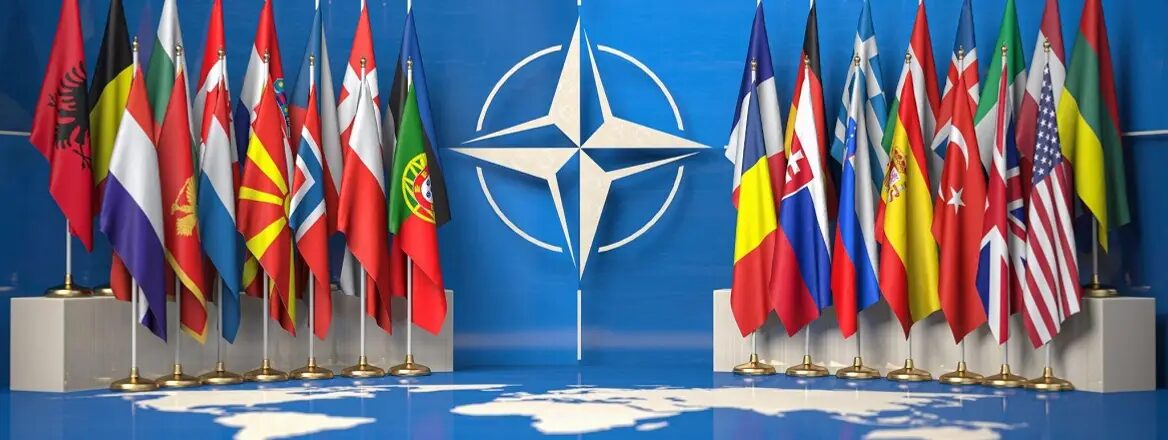
NATO will mark its 75th year at a three day summit in Washington this week. President Volodymyr Zelensky of Ukraine is scheduled to attend the proceedings, during which the alliance is expected to offer, in lieu of membership, what has been described by Biden administration officials as a “Bridge to NATO.”
In other words, a promise of accession, not unlike the one proffered by the alliance 16 years ago at the NATO summit in Bucharest.
We believe that prioritizing Ukraine’s NATO membership is dangerously misguided. It is unarguable that the human costs of the war in Ukraine–and the concomitant costs to the European economy and the American treasury–have been enormous. Proposals to end the hostilities have been met with stubborn silence from Ukraine’s sponsors in the West.
If NATO had the security interests of its member states as its highest priority, the alliance would convene in Washington to discuss a “Bridge to Peace” rather than yet another round of NATO expansion. After all, NATO exists to ensure the security of its members—to act as a force for regional stability. Yet, the project of expanding NATO right up to Russia’s borders has undermined that mission.
The war in Ukraine has been a catastrophe for the Ukrainian people; it is therefore crucial that we learn the lessons that may prevent such tragic conflicts in the future.
NATO should take the opportunity of the week’s summit to take a cold eyed look at itself; at its record; and at its mission—and begin the hard work of self-evaluation.
The Board of Directors, The American Committee for US-Russia Accord
Donald Trump Should Not Repeat Woodrow Wilson’s Failure
April 30th is an important date in American politics. This is the day 100 for the American President in the White House, and all attention will be on the reports of his achievements and failures. But nothing can be more critical than Peace…
○
6 mins read
A Holocaust perpetrator was just celebrated on US soil. I think I know why no one objected.
Russia’s invasion has made ordinarily outspoken critics of antisemitism wary of criticizing Ukrainian Nazi collaborators
○
1 min read
Qi Book Talk: The Culture of the Second Cold War by Richard Sakwa
Richard Sakwa has for many years been one of the most distinguished and insightful observers of relations between the West and Russia, and one of the leading critics of Western policy. In this talk with Anatol Lieven, director of the Eurasia program at the Quincy Institute, Sakwa discusses his book, The Culture of the Second Cold War (Anthem 2025). The book examines the cultural-political trends and inheritances that underlie the new version of a struggle that we thought we had put behind us in 1989. Sakwa describes both the continuities from the first Cold War and the ways in which new technologies have reshaped strategies and attitudes.