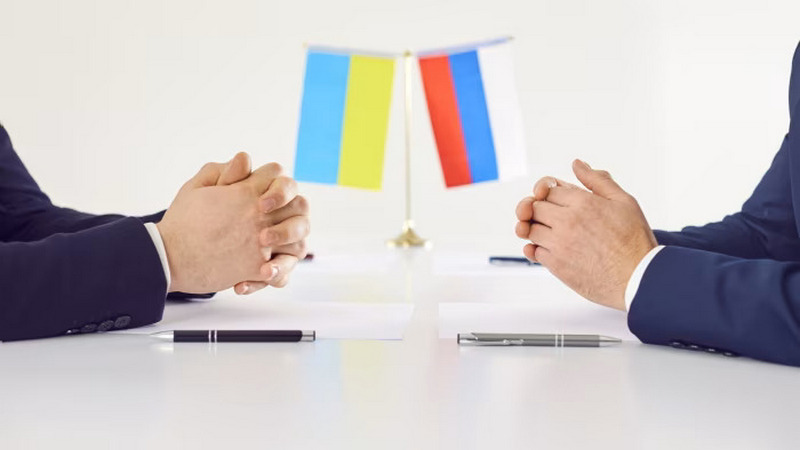
Russia’s latest military gains in the Donetsk region (Report, July 5) reinforce the case for a negotiated settlement of the war in Ukraine. The US and its allies support Ukraine’s key war aim, which is a return to the 2014 frontiers, ie, Russia’s expulsion from Crimea and Donbas. But all informed analysts agree that short of a serious escalation of war, the likeliest outcome will be continued stalemate on the ground, with a not insignificant chance of a Russian victory.
This conclusion points to the desirability, even urgency, of a negotiated peace, not least for the sake of Ukraine itself. Reluctance by the official west to accept a negotiated peace rests on the belief that anything short of a complete Ukrainian victory would allow Putin to “get away with it”.
But this ignores by far the most important outcome of the war so far: that Ukraine has fought for its independence, and won it — as Finland did in 1939-40. Some territorial concessions would seem a small price to pay for the reality, rather than semblance, of independence.
If a peace based on roughly the present division of forces in Ukraine is inevitable, it is immoral not to try for it now.
Washington should start talks with Moscow on a new security pact which would safeguard the legitimate security interests of both Ukraine and Russia. The announcement of these talks should be immediately followed by a time-limited ceasefire in Ukraine. The ceasefire would enable Russian and Ukrainian leaders to negotiate in a realistic, constructive manner.
We urge the world’s leaders to initiate or support such an initiative. The longer the war continues the more territory Ukraine is likely to lose, and the more the pressure for escalation up to a nuclear level is likely to grow. The sooner peace is negotiated the more lives will be saved, the sooner the reconstruction of Ukraine will start and the more quickly the world can be pulled back from the very dangerous brink at which it currently stands.
Lord Skidelsky Professor Emeritus in political economy University of Warwick
Sir Anthony Brenton British Ambassador to Russia (2004-2008)
Thomas Fazi Journalist, author, columnist for UnHerd
Anatol Lieven Senior Fellow, Quincy Institute for Responsible Statesmanship
Jack Matlock US Ambassador to the USSR (1987-1991)
Ian Proud British Embassy in Moscow (2014-2019)
Richard Sakwa Professor Emeritus of Russian and European Politics, University of Kent
Christopher Granville British Embassy, Moscow (1991-1995)
Donald Trump Should Not Repeat Woodrow Wilson’s Failure
April 30th is an important date in American politics. This is the day 100 for the American President in the White House, and all attention will be on the reports of his achievements and failures. But nothing can be more critical than Peace…
○
6 mins read
A Holocaust perpetrator was just celebrated on US soil. I think I know why no one objected.
Russia’s invasion has made ordinarily outspoken critics of antisemitism wary of criticizing Ukrainian Nazi collaborators
○
1 min read
Qi Book Talk: The Culture of the Second Cold War by Richard Sakwa
Richard Sakwa has for many years been one of the most distinguished and insightful observers of relations between the West and Russia, and one of the leading critics of Western policy. In this talk with Anatol Lieven, director of the Eurasia program at the Quincy Institute, Sakwa discusses his book, The Culture of the Second Cold War (Anthem 2025). The book examines the cultural-political trends and inheritances that underlie the new version of a struggle that we thought we had put behind us in 1989. Sakwa describes both the continuities from the first Cold War and the ways in which new technologies have reshaped strategies and attitudes.