Ukraine’s operation quickly takes territory in Russia’s Kursk region, but Kyiv’s forces are still mostly outgunned and outnumbered
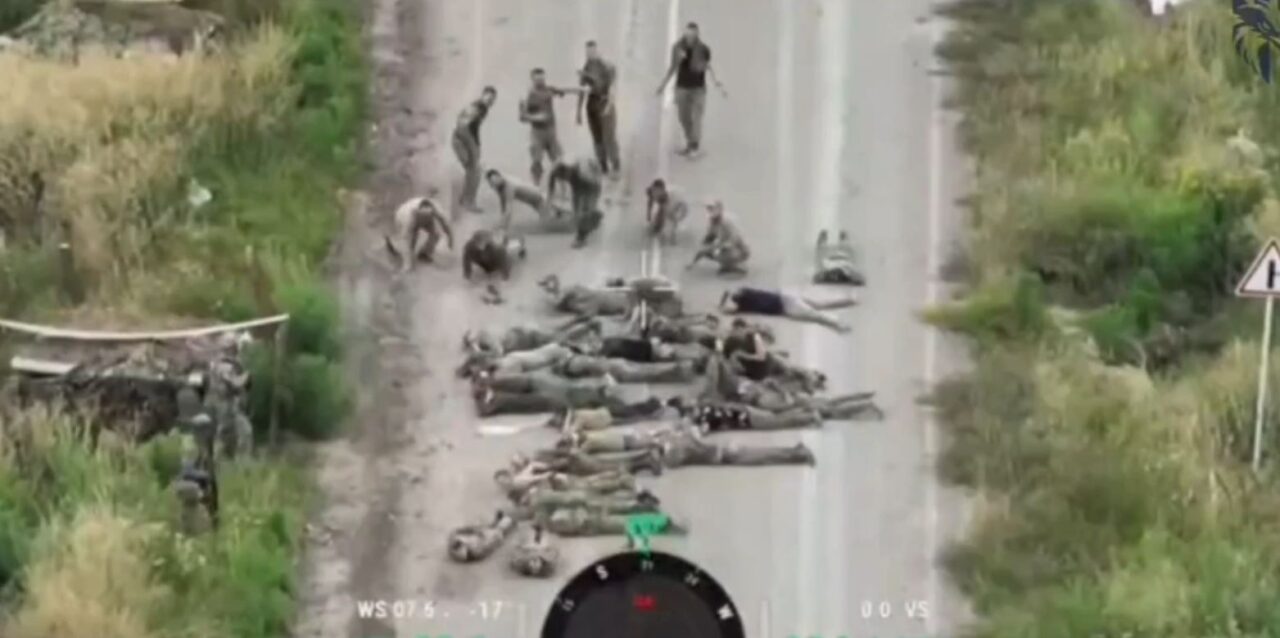
Russian troops surrender to Ukraine in Russia,
The dilemma for Ukraine’s leadership is whether the quest for further gains is worth wagering significantly more troops and military equipment that are sorely needed on the eastern front in Ukraine where Kyiv’s forces are struggling to contain Russian advances.
In just a few days, Ukraine has advanced at least 20 miles from the border, demonstrating to its enemy, its own citizens and its allies that it is still in the fight and can spring damaging surprises on its larger neighbor.
In his first comments on the invasion late Saturday, Ukrainian President Volodymyr Zelensky described the operation as “our actions to push the war onto the aggressor’s territory.”
Ukraine, he said, “is guaranteeing exactly the kind of pressure that is needed: pressure on the aggressor.”
The operation is a high-stakes move given Ukraine’s shortage of manpower and military equipment on the eastern front, where Russia is pressing forward.
“Maybe I’m in the same position now as the private who doesn’t understand why he has to hold a trench,” said a Ukrainian battalion commander fighting near the eastern logistical hub of Pokrovsk, where Russia has accelerated its advance in recent weeks. “But 1,000 men are very badly needed here.”
The ultimate goal of the Kursk operation remains unclear. Ukraine has given sparing comment, but the early successes are visible in videos shared online of Ukrainian troops raising their flag in several towns and villages near the border, clips of smoldering Russian military vehicles and the often angry posts of nationalist Russian war bloggers close to the military.
Russian reports indicate that Ukraine’s rapid advance was achieved by using electronic-warfare equipment to knock out Russian communications and help Ukrainian forces to maraud into Russian territory on fast-moving armored vehicles supported by strike drones and air-defense systems.
Ukraine has gained a foothold that it is using to send out reconnaissance teams to probe for further weaknesses to exploit and to bring forward artillery systems that can strike deep into Russia’s rear. Videos posted online showed a column of Russian military vehicles smashed by an apparent Ukrainian strike Friday near the town of Rylsk before they could reach the battlefield.
Russian officials have repeatedly announced that they are repelling Ukrainian forces from the border area, but on Sunday the Russian Defense Ministry acknowledged it was striking Ukrainian units in villages some 20 miles inside Russia.
Russia on Monday evacuated thousands of residents from the Krasnaya Yaruga district in the neighboring region of Belgorod, citing Ukrainian military activity at the border.
“It’s a blow to Putin,” said a Ukrainian officer fighting in the eastern Chasiv Yar area. “Of course I like seeing that we hit their column. If it continues for days, I’ll say it was very useful.”
In a video conference with defense and security chiefs Monday, Putin accused the West of being behind Ukraine’s incursion, despite the U.S. and other Ukrainian allies saying they didn’t have advanced warning and were trying to find out the goals of the operation. Putin said Kyiv was aiming to sow discord among the local population and trying to improve its position in any future negotiations.
The current U.S. assessment is that one of Ukraine’s reasons for launching the incursion was to disrupt Russian supply lines to the northern front in Kharkiv, where Moscow’s troops launched an incursion of their own in May, a U.S. official said. Ukraine has taken dozens of prisoners, whom it can trade for its own detainees held in Russia.
Beyond the tactical military wins, Ukraine has shown it has the audacity and the skill to secretly plan and launch a complex offensive operation. After a failed counteroffensive last summer, Ukraine has spent a year in brutal trench warfare against grinding Russian offensives that have raised questions at home and abroad how Ukraine can hold off its larger neighbor.
“They completely changed the strategic narrative with this assault,” said John Nagl, a retired U.S. Army lieutenant colonel who is now a professor of warfighting at the U.S. Army War College.
Nagl said he found the military logic of the operation questionable given the enormous pressure on Ukraine’s own defensive lines elsewhere. He said Ukraine may be focused on sending a message to the U.S., its most important backer, ahead of presidential elections in November.
“The Ukrainians want attention to this incursion. They’re saying the Ukrainians still have fight in them,” he said.
The U.S. has said it wasn’t informed about the operation before it was launched, as is typical for a tactical move. The Biden administration has urged against Ukrainian military strikes in Russia, but U.S. officials have said this incursion is consistent with U.S. rules allowing Ukraine to use U.S.-provided weapons to defend itself, given the Russian assault in Kharkiv province.
Fears of escalation haven’t grown much inside the White House, aides said. The expectation is regional fighting will resemble battles inside Ukraine, giving Moscow space to not overreact. Still, some U.S. officials expressed concern that killing Russian forces on their turf could prompt Putin to authorize a fierce retribution, namely a large barrage of missiles targeting Ukrainian cities and infrastructure.
Zelensky said late Saturday that Russia had used a North Korean missile to strike near Kyiv, killing a man and his 4-year-old son.
The next phase of the Kursk incursion depends on what reserves each side has available and how it deploys them, said Franz-Stefan Gady, a Vienna-based military analyst.
Ukraine will need to deploy additional manpower and military resources to maintain momentum, while Russia will want to counterattack swiftly and bring to bear its superior firepower, including massive glide bombs, if a static front line develops.
The main issue with the operation, Gady said, was that it doesn’t change the fundamentals on the front lines in the east of Ukraine, where Russian troops are advancing, albeit slowly, against outgunned and outnumbered Ukrainian forces.
“The operation in Kursk demands considerable resources, especially in infantry personnel, which might be more urgently needed elsewhere,” he said.
In eastern Ukraine, officers from brigades that were desperate for more men questioned the wisdom of committing forces to an attack in Russia, despite hopes it could draw Russian forces away from that battlefront.
“We don’t feel any changes, at least so far,” said the Ukrainian officer near Chasiv Yar. “The Russians are not going to move any troops from the east to Kursk. They have reserves.”
The details of the peace deal presented today by US special envoy Steve Witkoff are consistent with the report in the Financial Times discussed in my previous article and with Larry Sparano in the posted interview. Putin will halt the Russian advance prior to driving Ukrainian soldiers out of all of the territory that has been reincorporated into Russia. It appears to be the case that the borders between Russia and Ukraine will be the current front line, so Putin is withdrawing Russia’s claim to the Russian territories still under Ukrainian occupation.
Russia and the US seem near a Ukraine peace deal. Kyiv’s role may be moot.
President Donald Trump’s hopes of securing a quick Ukraine peace deal hang in the balance after Washington’s envoy, Steve Witkoff, held his fourth Kremlin meeting with Russian President Vladimir Putin Friday.