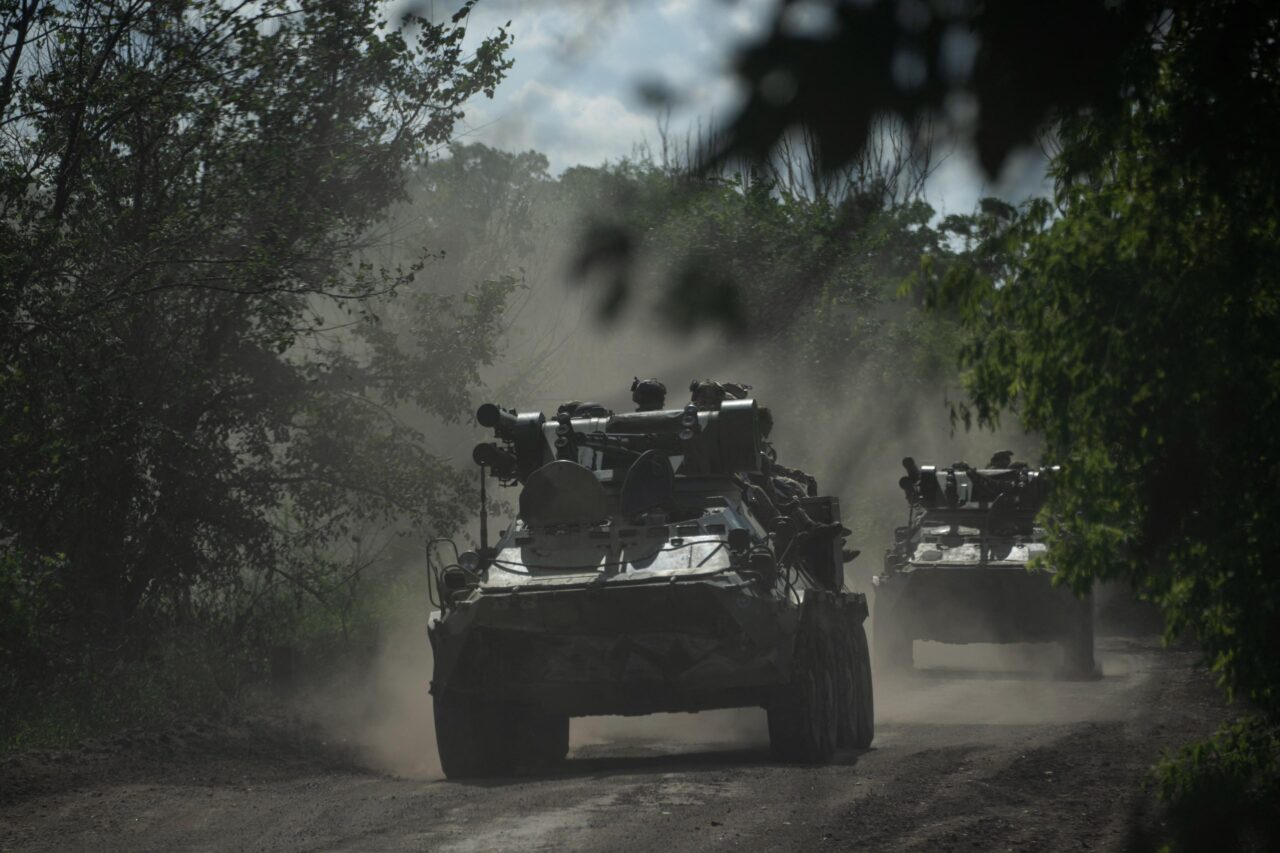
In its 1,000 year history Russia has been invaded quite a lot of times. For this reason, Russian rulers (at least the wise ones) always placed much emphasis on fortifying and controlling the border areas. For example, Tsar Ivan Grozny, who put together the basic architecture of the centralized Empire, had designated four major border cities: Smolensk, Pskov, Novgorod, and Kazan. The first three were assigned to keep out Poles and Swedes; and the latter, Crimean Tatars. To govern these border towns, the Tsar appointed four Dukes of high-ranking nobility who also served in his privy council. These Dukes rotated out every four years and were typically paid 700 rubles a year for their service, which was a higher salary than those Dukes who governed less-endangered towns.
It was always understood that it was the job of the governors, soldiers and ordinary citizens of these border towns to absorb the first brunt of any foreign invasion. Unlike the Dukes and Deacons, ordinary people, like peasants and merchants, probably did not receive anything extra in their paychecks, but they were still expected to do their best to cope, once the inevitable incursion came to ruin their lives.
As the Kursk situation develops, it becomes clearer that this actually IS the destined NATO land invasion of Russia which many have predicted over the years. (I think even I predicted this, although I thought it was probably going to start in the direction of Kaliningrad.)
One good thing, though: At least we know now, and many mysteries have been cleared up. Remember a couple of weeks ago inquiring minds were trying to figure out what Budanov was doing mucking around in the Sumy Oblast? What nefarious thing he was planning? Or why Zelensky was so insistent on receiving a very specific number of F-16’s by a certain date? [On that latter note, it seems the F-16’s were a bit late to the party, so the Ukrainian storm troopers had to conduct their classic NATO “combined-arms” attack without air support!]
This Is For Real
Anyhow, today I have this piece by reporter Alyona Zhilina. who confirms that the NATO invasion of Kursk is somewhat more massive than we thought initially. In the first couple of days, the number of 2,000 invading enemies was bandied about, but it turns out that was just the first echelon.
As of yesterday morning (August 10), the Ukrainian command has amassed more and more troops and equipment along the border near Kharkov, including 450 Polish Special Forces. The task of these reinforcements is to bolster the Ukrainian troops and help them hold on to their foothold in Sudzha. And thus, pessimistically, it seems like this is not going to be over soon; and that the grinding “positional warfare” which Simplicius warned us about, is going to become the norm in Russia’s Kursk region.
According to military expert Anatoly Matviychuk, there may be up to 9,000 Ukrainian soldiers in Kursk Oblast, busy entrenching and digging themselves in. So that it will be a real job to extract them, and could take months.
The good news is that every Ukrainian soldier mucking about fruitlessly in Sudzha is one less Ukrainian soldier manning the defensive lines of Pokrovsk, in the Donbass. Which is where the real action is taking place.
Meanwhile, Russian Prime MinisterMikhail Mishustin has signed an authorization to allocate 1.8 billion rubles to assist residents and families of the Kursk Oblast who lost their housing as a result of the invasion. I am not sure that Tsar Ivan or even Boris Godunov would have been so caring about ordinary people, so that is something, at least.
The details of the peace deal presented today by US special envoy Steve Witkoff are consistent with the report in the Financial Times discussed in my previous article and with Larry Sparano in the posted interview. Putin will halt the Russian advance prior to driving Ukrainian soldiers out of all of the territory that has been reincorporated into Russia. It appears to be the case that the borders between Russia and Ukraine will be the current front line, so Putin is withdrawing Russia’s claim to the Russian territories still under Ukrainian occupation.
Russia and the US seem near a Ukraine peace deal. Kyiv’s role may be moot.
President Donald Trump’s hopes of securing a quick Ukraine peace deal hang in the balance after Washington’s envoy, Steve Witkoff, held his fourth Kremlin meeting with Russian President Vladimir Putin Friday.