A bad peace is better than a good quarrel. Attributed to Cicero.
New times – new songs
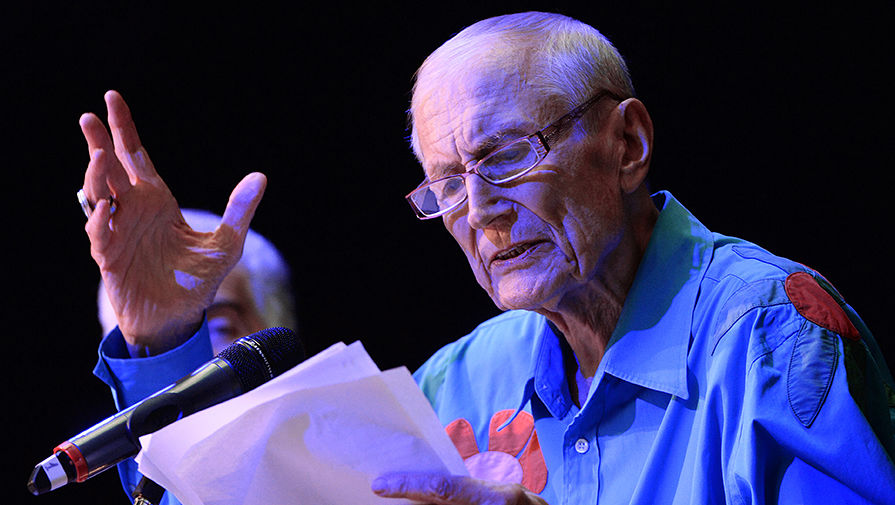
Eduard Kolmanovsky’s song “Do Russians Want War?”, written in 1961 to Yevgeny Yevtushenko’s words, was translated into many languages worldwide, gained international fame, and entered the canon of Soviet ideology.
Although Yevgeny Yevtushenko was a talented poet and skillful diplomat, he had a reputation as a dissident. He got along well with the Soviet authorities and, at the same time, gained widespread popularity in America and Western Europe. His portrait appeared on the cover of Time magazine. According to the poet, the song was written in response to a question that he constantly had to hear abroad: “Do Russians want war?” The answer was, of course, negative and sounded convincing. The memory of the war, in which more than 26 million Soviet citizens died, largely determined public psychology and mood. The song reminded of Soviet soldiers, “Who embraced you on Elba,” and expressed hope: “You must understand, Russians do not want war.”
The song had its critics among party orthodoxies, who claimed that it “demoralized the army and the people,” but it nevertheless became part of the peace movement’s arsenal and was often performed at international events initiated by Soviet propaganda.
Assurances of peacefulness could not prevent the ensuing Caribbean crisis of 1962, which brought the Soviet Union and the United States to the brink of nuclear war. And certainly, today, we cannot hope that poetry and music will save the world.
But other means—political, diplomatic, propaganda, and intelligence services efforts —have done little to soften relations so far. Over the past decade, stable narratives about the causes and responsibility for the crisis have been formed and consolidated in the mass consciousness in both Russia and the United States.
American literature reflects a contradictory interest in Russia. Joseph Conrad, John Dos Passos, John Reed, John Steinbeck, Theodore Dreiser , and Ernest Hemingway saw Russia and the USSR differently. Conrad wrote of “Russian barbarism” and “absolute moral decay.” Steinbeck noted sympathetically: “If any nation has learned to live in hope, to extract energy from hope, it is the Russian people.
In his memoir essay about life in Paris, “Moveble Feast” Ernest Hemingway writes about the influence of Turgenev, Gogol, Chekhov, Tolstoy, Dostoevsky, and notes that contemporaries can be highly appreciated only without knowing Russian literature. With all the everyday problems, “You can live at night in another wonderful world that Russian writers open for you. First, there were the Russians; then all the others.” In 1942, Hemingway said: “Every man who loves freedom owes more to the Red Army than he can repay in a lifetime.” It is telling that until recently, the quote’s validity was not questioned; with the current relationship with Russia, skeptics and critics have emerged.
The old paradigm has shifted: the talented and hardworking Russian people longing for freedom and peace, suffering and dreaming of deliverance from dictatorship and disenfranchisement. In the current dominant view of Russia, the country is irreformable, the people and the government are united, or, in a softened version, the people do not understand the benefits of democracy and civil liberties and have resigned themselves to their fate.
The attitude towards Russian culture has changed. Cooperation, even in music and fine arts, has been drastically reduced, and Russian literary classics are seen as imperialist and totalitarian. This was not the case even during communist rule and the first Cold War.
Own or Alien
Today, it is clear that America, like Western Europe, has no strategy toward Russia. Instead, there are counterreactions, rhetoric, propaganda, emotion, and hopes for regime change through sanctions, opposition efforts, and internal dissent, without even a hypothetical idea of where regime change will lead. Predictions range from Russia’s return to the fold of Western-style democracy to complete degradation and disintegration into separate states.
At the same time, Russia is convinced that the West perceives Russia as an alien phenomenon, and the West’s long-term strategy is aimed at world pressure and weakening Russia by all available means. The idea of Russia’s foreignness also dominates the worldview of Russian nationalists, who are convinced of the country’s special nature and world mission as a counterweight to the degenerating West.
The question of Russia’s historical place in the world community has been resolved since the time of Peter the Great and Catherine the Great, who chose and consolidated the European path of development. Marx and Lenin rejected “Asiaticism”, Lenin insisted on “Learning from the West”. Gorbachev, Yeltsin, and early Putin wanted closeness and equality with Western leaders. Even with the current hostile relations, Russian public consciousness is immeasurably closer to Western culture, literature, art, and personal way of being than any other culture. Russians definitely do not want a new Iron Curtain.
History has ordered it differently. Hopes for friendship and cooperation between equals have not materialized. Conspiracy theories about the world behind the scenes and malicious politicians who seek to control the world and multiply wealth to consolidate their power through wars and conflicts abound, but common sense says that no people want a war, which in the current circumstances is closer than ever to a global nuclear catastrophe.
But events are increasingly out of control. America can no longer dominate and decide the fate of the world, and its role in the world under any government will increasingly be determined not by foreign policy but by internal political, economic, racial, and ethnic strife.
The UN is powerless even in resolving local crises, its activities are wasteful and ineffective. The West has lost control in international organizations, radical, destructive forces are increasing their influence in them.
In Europe, nationalism is becoming more and more active, racial and ethnic conflicts are escalating, the cultural and demographic landscape is radically changing, and parties struggles are increasing chaos and polarization. China is increasingly facing a demographic crisis and a slowing economy. In India, nationalism and civil division are worsening, and democratic institutions are weakening. Many Latin American countries are in endless political struggles and economic crises. Africa is once again plunged into tribalism and civil wars. Totalitarianism and radicalism are consolidating in the Muslim world, and the Middle East crisis is in stalemate and hopelessness. International terrorism has, for many, become synonymous with the struggle for freedom and justice.
This is not the picture of the world that anyone wanted or wants. This is not a question of weak-minded, shortsighted, or malicious authoritarian leaders, propagandistic lying party programs, self-serving military-industrial complexes, class and group interests, education, media, or social media… This is a question about the driving forces and the course of history, about the real possibilities of human reason and will and societal resources and efforts, which have limits and boundaries. Self-destruction and the death of civilizations are not plots of dystopias, but a historical pattern. And the global world has no guarantees.
If we cannot solve and influence, if elections, presidents, Davos forums and volumes by Fukuyama and Harari do not justify our hopes, we should at least understand the realities of history and existence, and live, tempering ambitions and expectations in proportion to the possibilities. “Man is broad, we should narrow it down,” Dostoevsky wrote. This understanding is closer to the nature of things and circumstances than any utopias. How did we come to live such a life?
The crisis in relations between Russia and the West is not an isolated problem, nor is it central to the list of possible global catastrophes. Pandemics, global warming, resource scarcity and the threat of famine, numerous territorial and ethnic local wars with the support of powerful partners and threats of expansion, testify to the limited capacity for foresight and control on either side. But even in the harshest of times, the West and Russia have found ways to at least avoid nuclear catastrophe and have maintained opportunities for dialog.
The U.S. policy toward Russia is based on the views of Zbigniew Brzezinski – Russia is alien and dangerous, it cannot be trusted, it must be spoken from a position of strength and hegemony, and Henry Kissinger – it is possible and necessary to build relations with Russia, to approach it pragmatically, to look for a convergence of interests.
In recent years, distrust has prevailed in the United States, viewing Russia as a strategic adversary. According to Gellap, after the collapse of the Soviet Union, 68% of Americans had a positive opinion of Russia. in the following years, the attitude deteriorated, and this year 86% of Americans expressed a negative opinion.
In the list of countries Americans consider the main enemies today, Russia ranks second after China, ahead of Iran, the United States (an enemy to itself), and North Korea. 58% of respondents believe it is necessary to improve relations, and 36% think it is essential to increase pressure.
At the same time, Russia’s mood has changed radically. According to polls conducted by the Russian Center for Public Opinion Research, 71% of Russian citizens have a negative opinion of America. In 1991, 83% of Russian citizens had a positive attitude toward America. The dramatic change in public consciousness looks striking when you consider that the Gorbachev-Yeltsin revolution – the change of political regime and the reforms that followed were inextricably linked in both countries not only with political and economic cooperation, but also with genuinely friendly relations and Russia’s introduction to the Western world. After decades of living in scarcity and endless prohibitions and restrictions, the opportunity to become part of the free world looked extremely attractive, and America was perceived as a guide and guarantor of change for the better.
The majority of Russians, as well as the authorities and the new elite, shared the desire to join the Western community. The country’s leadership hoped to meet with Western leaders at summits, discuss the fate of the world, and be friends with the Rons, Bills, and Georges.
The mood of the oligarchs , the cultural elite, and government officials who had enriched themselves in corruption was quite definite: to hide mad unjust money safely in the West, to acquire property, to arrange a life for two houses for their families and mistresses, and to pave the way to recognition and status by sponsoring and lobbying. The new Cold War shattered hopes, confronted them with difficult and dangerous choices, and, for many Russians, turned into personal tragedies. The opposition, united in the past by the fight against the Kremlin and the support of the West, is now in chaos and split.
But the West has yet to gain any advantages either. Russia is strengthening its partnership with Western adversaries and competitors, economic sanctions are affecting American and Western European business interests, Kremlin power has grown stronger rather than weaker, and the immigrant opposition poses no threat to it. And most seriously, Russia and NATO are closer than ever to the threat of a nuclear clash.
Democrats, Republicans, and the media do not differ much in their assessment of Russia’s policy: it seeks to control post-Soviet countries and Eastern Europe, weaken the unity of the West, and threaten the democratic community. The U.S. presidential election, whatever the outcome, cannot promise magical solutions. Many years of antagonisms and confrontations are likely to lie ahead.
Trump may be more interested and active in finding solutions, but he will have to deal with even more fierce resistance and sabotage than he did during his first term. He does not have Kissinger on his team, and if he did, it’s unlikely Trump would listen to him.
Harris is weak and unprepared to solve crucial problems in the country and the world. She cannot become a unifying figure for the country and, like Trump, will face fierce opposition from opponents. Russia is not a priority for her; she does not understand it. Most likely, Harris will end up in the hands of Obama’s team and progressives, which will only add to the chaos in domestic and foreign policy.
How did this situation come about, and where are the origins of the crisis? This question interests not only historians and diplomats. After the end of the Cold War, both Western and Russian experts, assessing the prospects for international relations, shared liberal ideas about the path to common peace and well-being based on globalization and cooperation in the common interest. Nowadays, the collapse of these ideas is evident in Russia, but in the West, the current global crisis and the new Cold War are seen as deviant events caused by the behavior of bad partners – opponents of democracy. Hopes are pinned on confronting authoritarian regimes and consolidating Western hegemony. The current Russian narrative is based on the belief that the West insidiously deceived the shortsighted and unpatriotic Gorbachev and Yeltsin and gained enormous advantages by plundering Russia’s national wealth, that the West seeks to weaken the civil unity of Russians, change unwanted regimes, and dominate the world. A popular conspiracy theory is that Biden provoked the war between Russia and Ukraine to cover up his family’s corrupt practices.
Nevertheless, political preconditions are emerging for at least high-level meetings and dialog, which was impossible under Biden. Neither side in the Russian-Ukrainian conflict will achieve victory in the foreseeable future. Under these circumstances, it is hardly possible to suspect that the Kremlin will try to spread military action to other countries. A sizable portion of Russians fear strangulation in an embrace with China no less than they fear further aggravation of relations with America. And America finds itself in a stalemate.
Mitigating the current confrontation between the United States and Russia is a comparatively less challenging task than eliminating strategic contradictions with China and Iran and resolving the Israeli-Palestinian conflict. Tensions in relations with China have deep economic and geopolitical foundations; there is a real struggle for world domination with radically divergent interests. Negotiations and agreements with the fanatics of Iran and its satellites, as the experience of decades shows, are hopeless.
There is no such irreconcilable antagonism and manic insanity in US-Russian relations. It is in the Kremlin’s interest, as well as the new U.S. administration, whatever it may be, to make serious efforts to resolve at least one of the most dangerous global problems of our time.
What to do and what not to do
The outsider to the system Trump is certainly more willing than Harris to find ways to alleviate the crisis in America-Russia relations. Still, he has been weakening his position lately, failing to find an effective approach in dealing with an opponent more appropriate to the spirit of the place and time, a black woman.
Trump should not be focused on the persona of Harris; his opponents perceive any criticism from him as racist and sexist. Harris is too weak to influence policy; she will be a puppet to the left and minority progressives. She should be presented as the embodiment of social groups seeking to radically change the essence, values, and image of the country in the interests of the left wing of the Democratic Party, strengthening its electoral power and totalitarian control of all aspects of the country.
Attention should be focused on the social and cultural degradation of the country under the influence of liberal-progressivist ideology and education and racial demagoguery about rights and justice. The Democratic Party’s attitude toward illegal immigration is defined not by compassion and humanitarianism but by a desire to change the demographics of the country so that new generations see only racism, discrimination, exploitation, and white supremacism in its history. The message should not be limited to pictures of a bright future; it is more important to show the catastrophe that the Democrats’ consolidation of power is leading to.
Education and media are increasingly subordinated to the goals of progressives, who are rapidly expanding their presence in state institutions, displacing the old guard. This deepens the divisions in society and leads to violence, riots, civil disobedience, and a slide toward civil war. Leftist forces are increasingly using legislation for political struggle. Opponents are subjected to devastating and humiliating investigations and judicial reprisals. The Left is using Bolshevik tactics: arousing class hatred, redistributing wealth, privileging its supporters and electoral base, and rejecting meritocracy.
A message to Jewish liberals: what more must the Democrat Party do to reinforce anti-Semitism in public institutions, schools, universities, and media for Jews to realize where its policies are leading? The Schumers and Blinkens will be replaced by the Omars and Tlalibs, who do not hide their beliefs and intentions.
America’s declining international standing and influence is determined primarily by its internal state, divisiveness, chaos, inability to solve crisis problems, and, ultimately, discrediting the ideas of democracy and civil liberty.
President Trump’s supporters do not need to be persuaded; they have already made their choice. The main thing is to help all voters understand that it is not about Trump and Harris but about the fate of the country and the entire Western civilization.
Donald Trump Should Not Repeat Woodrow Wilson’s Failure
April 30th is an important date in American politics. This is the day 100 for the American President in the White House, and all attention will be on the reports of his achievements and failures. But nothing can be more critical than Peace…
○
6 mins read
A Holocaust perpetrator was just celebrated on US soil. I think I know why no one objected.
Russia’s invasion has made ordinarily outspoken critics of antisemitism wary of criticizing Ukrainian Nazi collaborators
○
1 min read
Qi Book Talk: The Culture of the Second Cold War by Richard Sakwa
Richard Sakwa has for many years been one of the most distinguished and insightful observers of relations between the West and Russia, and one of the leading critics of Western policy. In this talk with Anatol Lieven, director of the Eurasia program at the Quincy Institute, Sakwa discusses his book, The Culture of the Second Cold War (Anthem 2025). The book examines the cultural-political trends and inheritances that underlie the new version of a struggle that we thought we had put behind us in 1989. Sakwa describes both the continuities from the first Cold War and the ways in which new technologies have reshaped strategies and attitudes.