SecDef Austin's claim that these explosives are safe is dead wrong
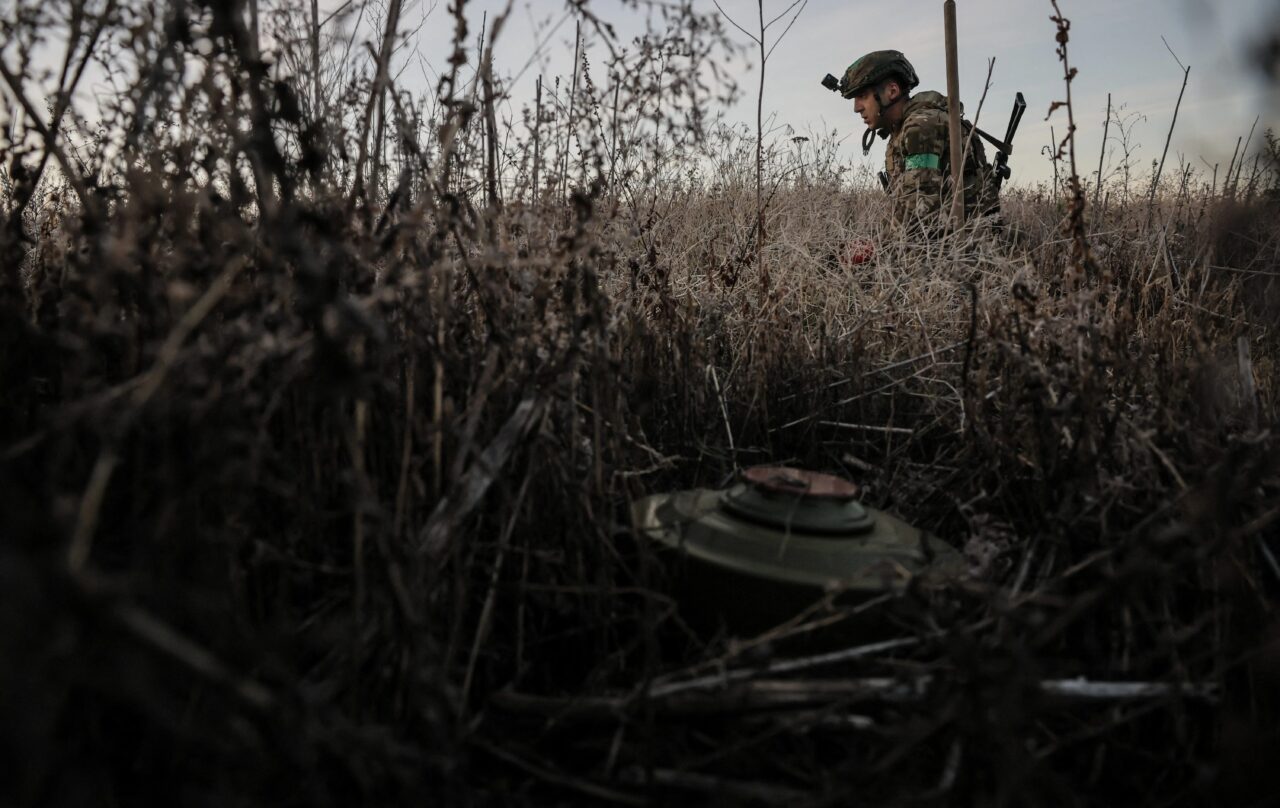
A sapper of the 24th mechanized brigade named after King Danylo installs an anti-tank landmine, amid Russia's attack on Ukraine, on the outskirts of the town of Chasiv Yar in the Donetsk region, Ukraine October 30, 2024. Oleg Petrasiuk/Press Service of the 24th King Danylo Separate Mechanized Brigade of the Ukrainian Armed Forces/Handout via REUTERS
The Biden administration announced today that it will provide Ukraine with antipersonnel landmines for use inside the country, a reversal of its own efforts to revive President Obama’s ban on America’s use, production, transfer, and stockpiling of the indiscriminate weapons anywhere except the Korean peninsula.
The intent of this reversal, one U.S. official told the Washington Post, is to “contribute to a more effective defense.” The landmines — use of which is banned in 160 countries by an international treaty — are expected to be deployed primarily in the country’s eastern territories, where Ukrainian forces are struggling to defend against steady advances by the Russian military.
But much like the Biden administration’s controversial decision to supply Ukraine with cluster bombs — another indiscriminate weapon system whose unexploded ordinance can maim and kill civilians, especially children, for decades after their use — this move may offer limited military upside, but it comes with massive risk to Ukrainian civilians, and it will not turn the tide of the war in Ukraine’s favor.
Secretary of Defense Lloyd Austin announced the policy shift to reporters this morning during a trip to Laos, a nation which the U.S. helped turn into the world’s most bombed country per capita. Either blind or indifferent to the irony of making this announcement from a country where 30% of the territory remains contaminated by unexploded ordinance thanks to the U.S. military, Austin prebutted humanitarian concerns with the weapons transfer by arguing that the land mines are “not persistent,” so “we can control when they would self-activate, self-detonate and that makes it far more safer eventually.”
But as arms experts at the Friends Committee on National Legislation have pointed out, drawing a distinction between persistent and non-persistent landmines is “dangerously misleading” because of the well-documented failures of the self-destruct and self-deactivation features that supposedly make these weapons “safer” for the civilians who stumble across them years after a war has ended. In fact, the “smart mines” the U.S. deployed in the Gulf War failed at a rate 150 times higher than the Department of Defense claimed.
The reality is that, no matter the mechanisms meant to make these weapons more humane, non-persistent landmines are still packed full of explosive materials — and so their lethality, indiscriminate nature, and ability to harm civilians persist.
In fact, when President Trump first reversed the Obama-era landmine restrictions in 2020, Joe Biden himself recognized the move for what it was — “another reckless act” that would “put more civilians at risk of being injured by unexploded mines.” Biden lived up to his campaign pledge to “promptly roll back” Trump’s move on landmines in 2022 — only to reverse his own position on the way out of the White House doors.Coming on the heels of Biden’s decision to allow Ukraine to use U.S. long-range missiles to strike Russian territory, this move is presumably aimed at proving Biden’s willingness to do “whatever it takes” to help Ukraine prevail over Russia. But as a battered Ukraine prepares to enter its fourth year since Russia’s invasion, and Ukrainian support for a war-ending diplomacy continues to grow, the question remains: when will U.S. leaders stop searching for a silver bullet weapon that enables Ukraine to win an unwinnable war, and actually pair U.S. military aid to Ukraine with an all-out push to get Russia and Ukraine to the negotiating table and broker an end to this bloodshed?
Alex Jordan is Deputy Communications Director at the Quincy Institute. Previously, he served as the Senior Communications Associate at the Advancement Project National Office, and as a Senior Media Advocacy Manager at the American Cancer Society Cancer Action Network.
The details of the peace deal presented today by US special envoy Steve Witkoff are consistent with the report in the Financial Times discussed in my previous article and with Larry Sparano in the posted interview. Putin will halt the Russian advance prior to driving Ukrainian soldiers out of all of the territory that has been reincorporated into Russia. It appears to be the case that the borders between Russia and Ukraine will be the current front line, so Putin is withdrawing Russia’s claim to the Russian territories still under Ukrainian occupation.
Russia and the US seem near a Ukraine peace deal. Kyiv’s role may be moot.
President Donald Trump’s hopes of securing a quick Ukraine peace deal hang in the balance after Washington’s envoy, Steve Witkoff, held his fourth Kremlin meeting with Russian President Vladimir Putin Friday.