Donald Trump and his team enter negotiations with Russia armed with a set of false, misleading assumptions. Donald Trump reportedly continues to believe, as does his team of negotiators, that Russia is suffering economically and militarily and wants to end the war in Ukraine. This is not true, at least as far as the folks in Moscow are concerned. Russia’s objectives are clear — restore normal relations with the United States and obtain an agreement to end the threat that NATO presents to Russia. Kremlin spokesman, Dmitri Peskov, and others, have been very clear in stating that Russia will not be bamboozled again into accepting a ceasefire with a promise of peace ahead. They made that mistake in halting their offensive operations after the 2015 battle in Debaltsevo as part of the Minsk II agreement.
Separatist and Russian forces began a concerted effort to force Ukrainian troops out of the city on 16–17 January, sparking the battle. Heavy fighting went on until 18 February 2015, when Ukrainian forces retreated from Debaltseve to Artemivsk (present-day Bakhmut).
It was the last major battle during the 2014–2015 phase of the war in Donbas, as the Minsk II ceasefire took effect on 15 February 2015, although fighting continued in Debaltseve for several days after.
Vladimir Putin’s June 2024 terms to start negotiations remain intact:
Ukraine must withdraw its troops from the territories of Donetsk, Luhansk, Zaporizhzhia, and Kherson, which Russia has annexed
Ukraine must formally renounce its intention to join NATO
Ukraine must accept the loss of Crimea and parts of Donbas
Ukraine must undergo “de-militarization,” which implies drastic disarmament
Ukraine must agree to “de-Nazification,” suggesting potential regime change and restrictions on expressing Ukrainian national identity
Ukraine must legally guarantee the rights and interests of “Russian-speaking citizens” in the remaining parts of Ukraine
I think the US delegation is in for a rude awakening when they discover that Russia is not likely to compromise on any of these points in light of being scammed under the Minsk II agreement.
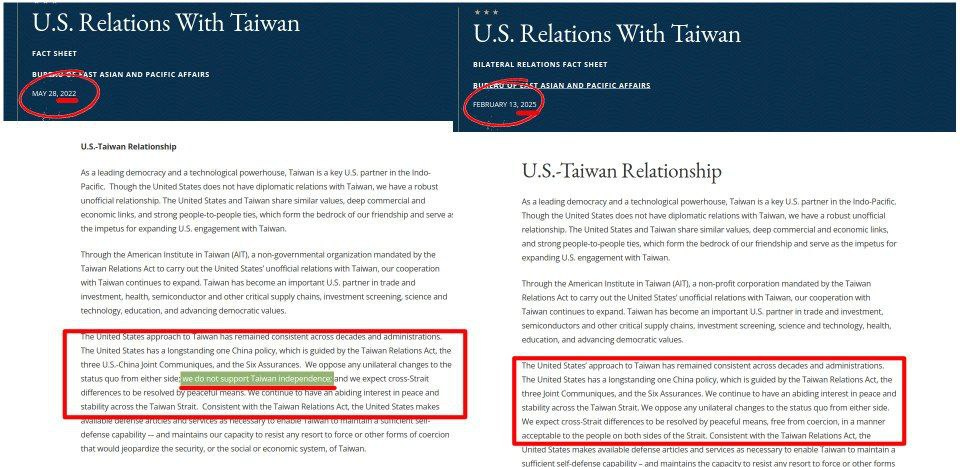
But the US has another agenda in mind in trying to reach a deal with Russia — it wants to split Russia from China so that it can focus on the Chinese threat. To this end, the Trump administration is proposing a massive new sale of weapons to Taiwan and is erasing the One China policy. I doubt that Russia has any interest in playing the US game…
Larry C Johnson is a Managing Partner of BERG Associates, former CIA Officer and State Department Counter Terrorism official.
Donald Trump Should Not Repeat Woodrow Wilson’s Failure
April 30th is an important date in American politics. This is the day 100 for the American President in the White House, and all attention will be on the reports of his achievements and failures. But nothing can be more critical than Peace…
○
6 mins read
A Holocaust perpetrator was just celebrated on US soil. I think I know why no one objected.
Russia’s invasion has made ordinarily outspoken critics of antisemitism wary of criticizing Ukrainian Nazi collaborators
○
1 min read
Qi Book Talk: The Culture of the Second Cold War by Richard Sakwa
Richard Sakwa has for many years been one of the most distinguished and insightful observers of relations between the West and Russia, and one of the leading critics of Western policy. In this talk with Anatol Lieven, director of the Eurasia program at the Quincy Institute, Sakwa discusses his book, The Culture of the Second Cold War (Anthem 2025). The book examines the cultural-political trends and inheritances that underlie the new version of a struggle that we thought we had put behind us in 1989. Sakwa describes both the continuities from the first Cold War and the ways in which new technologies have reshaped strategies and attitudes.