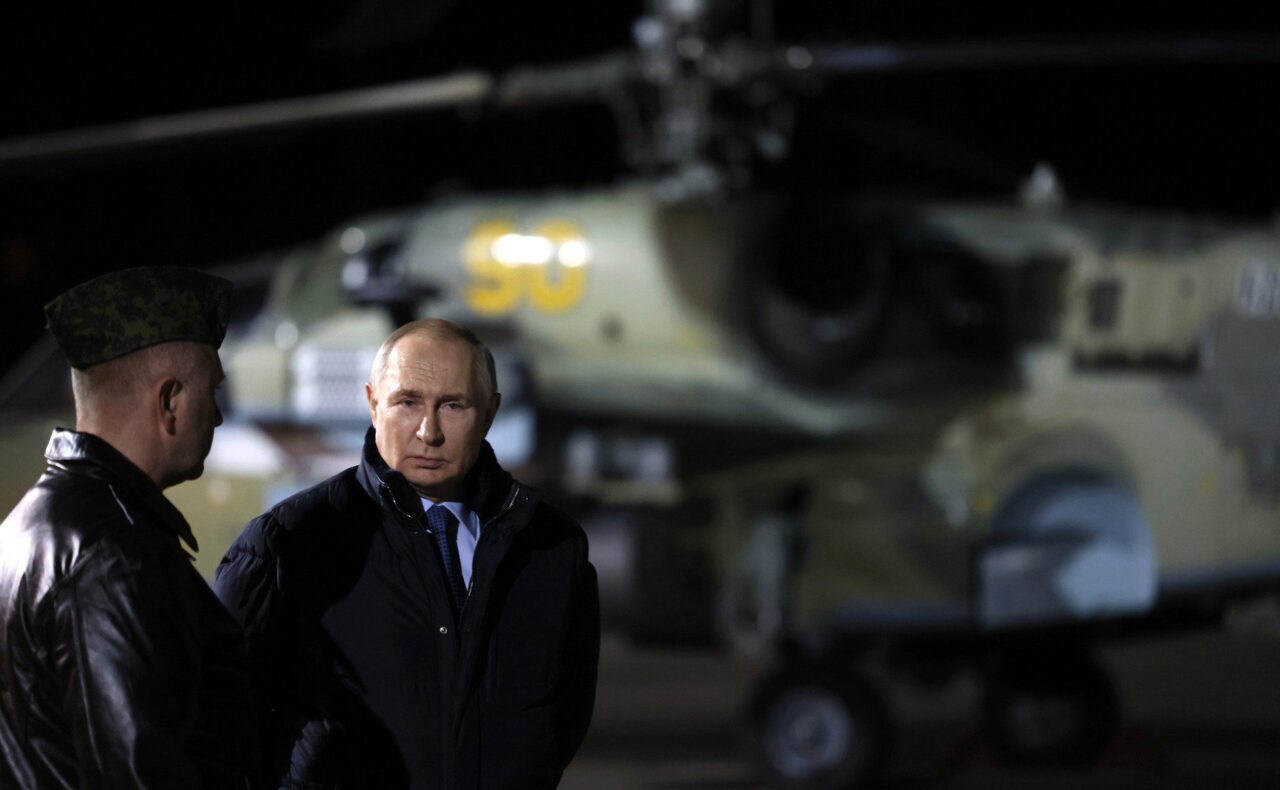
One of Joe Biden’s last consequential decisions as president was allowing Ukraine to strike deep within Russia using advanced American missile technology. This action marked a significant step up the escalation ladder. Vladimir Putin has warned that such actions could place Russia on a war footing with NATO. Biden’s risky decision reflects a broader problem of deterrence failure and the absence of military restraint in an increasingly multipolar world. Complicating matters further, Russia’s response—such as deploying advanced missile systems and tactical nuclear weapons to Belarus—signals a significant escalation using more advanced technologies that upend traditional deterrence frameworks.
Challenges of Deterrence in a Multipolar World
Deterrence has long been a cornerstone of international security. Yet in today’s multipolar world, where power is decentralized and alliances are fluid, maintaining effective deterrence is increasingly challenging. This does not mean that multipolarity and deterrence are inherently incompatible. Instead, new deterrence strategies are needed to address the complexities of a gray-zone conflict environment characterized by incrementalism, asymmetrical power dynamics, attribution problems, and rapid technological change.
The foundational works of political scientists like John Mearsheimer and Stephen Walt have shown how multipolar systems reinforce power asymmetries and rapid shifts in alliances. These dynamics also create uncertainty about adversaries’ resolve, complicating risk assessment. Stronger states, less deterred by weaker adversaries, may become emboldened to act aggressively. Moreover, technological advancements such as near-zero-miss precision-guided weapons—including Russia’s hypersonic missiles—make escalatory strategies more tempting. These technologies blur the line between conventional and nuclear strategic doctrines, while emerging capabilities like electromagnetic pulse (EMP) weapons and drones further complicate military strategy and operations.
Alliance Entrapment and Strategic Discord
In today’s geopolitical landscape, characterized by a multi-nodal world of regional theaters, fundamental shifts in the balance of power rarely result from outright military conquest. While major powers still rely on their conventional forces, they often fail to achieve broader geopolitical goals through the use of force alone. U.S. interventions in Afghanistan (2001), Iraq (2003), and Libya (2011), as well as Russia’s intervention in Ukraine (2022), highlight this trend.
The divergent priorities and different values among NATO members, EU states, and the United States have complicated efforts to confront Russia. This discord has shifted collective action from deterrence to “compellence” and ultimately to a proxy war. The lack of consensus on end goals and prioritized actions within the Western alliance underscores this challenge. For instance, while the United States expects other NATO members to align with its strategy of opposing Russia, countries like Poland and the UK adopt far more hawkish stances, even courting direct war with Russia. Conversely, Turkey and Hungary pursue multi-aligned strategies to avoid unnecessary confrontation with Moscow. These diverging approaches and a general disregard for the strategic autonomy of member states have enabled more bellicose NATO members to draw reluctant states into a prolonged proxy war with no clear diplomatic resolution — a classic case of alliance entrapment.
Diverging approaches and a general disregard for the strategic autonomy of member states have enabled more bellicose NATO members to draw reluctant states into a prolonged proxy war with no clear diplomatic resolution — a classic case of alliance entrapment.
Incoherence in U.S. Policy
President Biden’s Ukraine policy has often appeared inconsistent and incoherent. Influenced by figures like Antony Blinken and Victoria Nuland, the administration pursued a confrontational stance against Russia and China simultaneously. This approach reflects the Blob’s dissatisfaction with how the Ukraine crisis was managed under Obama and Trump, as well as concerns over Europe’s greater economic and energy integration with Russia, exemplified by the bipartisan opposition to Nord Stream II. Even before Russia’s 2022 intervention, the U.S. sought to punish and isolate Moscow through sanctions for its annexation of Crimea. These actions, while non-military, fall within the “gray zone” of conflict, characterized by propaganda, sanctions, and cyber tactics. However, weaponizing the gray zone often risks unintended military escalation.
Nationalism and Ethnic Divisions in Gray Zones
Ethnic dynamics have also played a significant role in the Russia-Ukraine war as exploiting sectarian divides and identity politics is a hallmark of gray-zone conflicts. Moscow justifies its actions as necessary for protecting ethnic Russians and Russian-speaking populations in Crimea and the Donbas from alleged threats posed by Ukrainian nationalists. While this narrative serves broader strategic aims such as maintaining Russia’s interests and civilizational expanse in its near-abroad, it underscores how ethnic and nationalist tensions coupled with a state’s aggressive geopolitical reorientation can produce and escalate security dilemmas. Russia’s intervention reflects its perception that acting now outweighs the risks of long-term inaction.
The Lure of Escalation
One reason for the breakdown of deterrence between Russia and the U.S. lies in the logic of escalation. While the threat of higher costs is meant to deter hostile actions and encourage diplomacy, both sides seem locked in a game of brinkmanship, repeatedly testing each other’s tolerance for risk. This uncoordinated escalation increases the likelihood of catastrophic outcomes. Failures of deterrence often stem from failures in coordination and communication, underscoring the importance of clear red lines. The U.S.-led Global West’s repeated disregard for Russian red lines about NATO expansion and its supply of advanced military equipment and training to Ukraine only made Russia’s intervention in 2022 more likely.
Strategic Empathy and Miscalculation
A critical factor in deterrence breakdown is the absence of strategic empathy—the ability to understand an adversary’s distinctive geopolitical situation and historical perspective. Since 1989, cognitive biases, a Manichaean belief in the triumph of liberal ideology, and universalist thinking have shaped a primacist U.S. policy, leading to misinterpretations of Russian behavior. Instead of attributing Russia’s actions to intrinsic hostility, permanent imperial ambition, or Putin’s state of mind, Western policymakers must consider situational and geopolitical factors and take ownership of their own role in provoking the conflict. This shift is essential for reducing tensions and avoiding strategic missteps.
A Pragmatic Approach to Deterrence
The transatlantic security community must recognize that rival powers like Russia cannot be decisively defeated nor fully isolated; they must be effectively deterred. With a credible threat of retaliation, deterrence dissuades adversaries by convincing them that the costs of aggression outweigh the potential benefits. Unlike strategies of absolute victory or “new containment” however, deterrence avoids the pitfalls of overreach, exorbitant spending, and heightened risks of global war.
The transatlantic security community must recognize that rival powers like Russia cannot be decisively defeated nor fully isolated; they must be effectively deterred. With a credible threat of retaliation, deterrence dissuades adversaries by convincing them that the costs of aggression outweigh the potential benefits.
Conclusion
Policies aimed at total victory demand high-risk strategies like escalation dominance, which depend exclusively on military readiness and proactive use of force. These approaches are destabilizing and ill-suited to engaging in realpolitik and economic competition with a host of great and middle powers ascendant in today’s polycentric world. Conversely, effective deterrence integrates robust military capabilities with diplomacy, negotiation, and clear communication channels with adversaries to manage gray-zone conflicts and prevent miscalculations and escalation spirals. A shift toward military restraint emphasizes the complementary power of strength and peace and allows America to recalibrate a foreign policy establishment that has struggled with unrestrained and poorly executed interventions over the past two decades. By embracing these changes, the U.S. and its allies can better navigate the complexities of a multipolar world.
David Carment is a Senior Fellow at the Institute for Peace & Diplomacy and a Professor at Carleton University.
Dani Belo is an Assistant Professor of International Relations at Webster University.