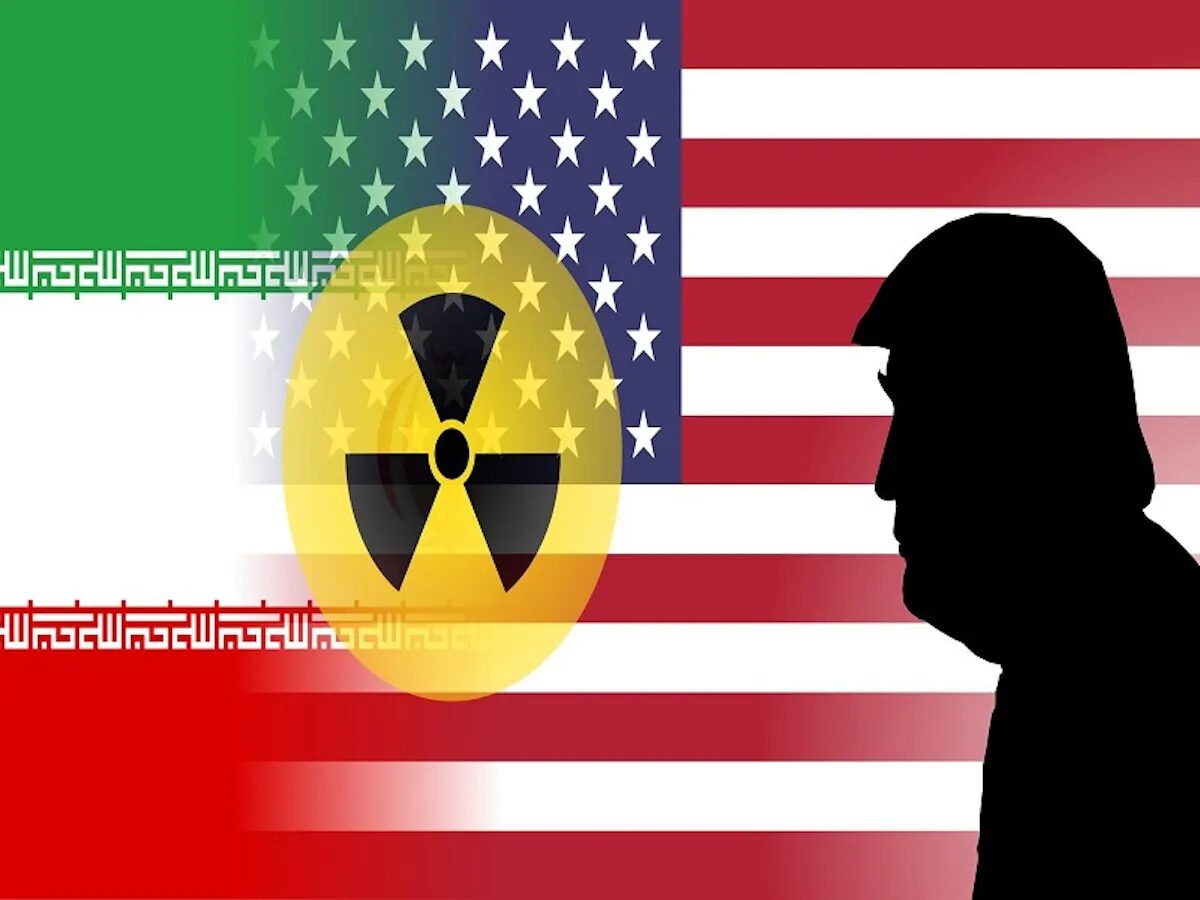
Russian officials indicate willingness to leverage their position with Iran to broker a potential game-changing deal with US
Donald Trump has threatened to resume his "maximum pressure" policy on Iran but a Russia-brokered deal could break the ice. Image: X Screengrab
Russia and Iran underscored their mutual trust in mid-January via an updated strategic partnership pact. Putin and his representatives are thus in a prime position to explain Trump’s revolutionary foreign policy to their Iranian counterparts and goad them to enter talks in good faith.
The Russian side can also potentially share its experience engaging with the Trump administration and increase the odds of any prospective US-Iranian talks succeeding, possibly birthing their own mutually beneficial “New Detente.”
Israel is, therefore, likely pleased that the US has apparently asked Russia to mediate between it and Iran, particularly since Israeli leader Benjamin Netanyahu is believed to trust Putin.
Some Israeli elites and media might loudly oppose the development, but they’re likely powerless to drive a wedge between Russia and the US, not to mention between Russia and Iran.
As such, Russian-mediated US-Iranian talks will likely proceed without external interference and might thus be more successful than many would expect.
Importantly, Russia invited Israel to attend its Victory Day parade at Red Square on May 9 so Netanyahu will probably meet with Putin around that time for a detailed briefing on the talks.
The Russian leader is expected to explain his interests in wanting to broker an Iranian-US “New Detente,” which could include the need to maintain transit along the North-South Transport Corridor with India as well as execute their energy plans as explained here.
The top obstacle is Trump’s reinstated “maximum pressure” policy against Iran, which relevantly involves the threat of secondary sanctions against third countries like India. As for Trump’s motives, he wants to reach a comprehensive agreement with Iran that could then facilitate his planned “Pivot (back) to Asia” policy of more muscularly containing China, which Putin can potentially help with.
The US’ goals are to get Iran to agree to a new nuclear deal, curtail its ballistic missile program and distance itself from the “Resistance Axis” in exchange for phased sanctions relief, all of which can alleviate Israel and Saudi Arabia’s security concerns and reduce the chances of another regional war.
Trump can’t fully focus on China as long as that sword of Damocles continues to hang over his head. But he also likely has no realistic possibility of convincing Iran to agree to his terms without Putin’s help.
To be sure, the US is asking for quite a lot from Iran and it will be a bitter pill for Iranian President Masoud Pezeshkian to swallow if he agrees to even part of what Washington is demanding.
But his country’s greatly weakened regional position after the latest Middle East war improves the likelihood that he might.
Pezeshkian could also be incentivized by the hypothetical possibility of either allowing US energy companies back into Iran under strict conditions and/or forming a “gas OPEC” with Russia, the US and maybe also Qatar.
From Israel’s perspective, it might not approve of any partnership between Iran and the US no matter what form it takes. But this could also create leverage for the US to ensure Iranian compliance with whatever deal they agree to under the pain of withdrawing as punishment.
If Iran’s economic interests became partially dependent on the US, whether directly via investments and/or indirectly via sanctions relief, then Tehran will be more inclined to abide by any deal.
If an Iranian-US “New Detente” follows the nascent Russian-US one, brokered as it might be by Putin as a reciprocal favor to Trump for what he’s now boldly doing on Ukraine, then it would completely transform Western Eurasian geopolitics and unlock exciting new geo-economic opportunities – not to mention accelerate the global systemic transition to multipolarity.
Donald Trump Should Not Repeat Woodrow Wilson’s Failure
April 30th is an important date in American politics. This is the day 100 for the American President in the White House, and all attention will be on the reports of his achievements and failures. But nothing can be more critical than Peace…
○
6 mins read
A Holocaust perpetrator was just celebrated on US soil. I think I know why no one objected.
Russia’s invasion has made ordinarily outspoken critics of antisemitism wary of criticizing Ukrainian Nazi collaborators
○
1 min read
Qi Book Talk: The Culture of the Second Cold War by Richard Sakwa
Richard Sakwa has for many years been one of the most distinguished and insightful observers of relations between the West and Russia, and one of the leading critics of Western policy. In this talk with Anatol Lieven, director of the Eurasia program at the Quincy Institute, Sakwa discusses his book, The Culture of the Second Cold War (Anthem 2025). The book examines the cultural-political trends and inheritances that underlie the new version of a struggle that we thought we had put behind us in 1989. Sakwa describes both the continuities from the first Cold War and the ways in which new technologies have reshaped strategies and attitudes.