On August 5 – one day before the 75th anniversary of the American atomic bombing of Hiroshima – Politico published a very important open letter that urges a rethinking of U.S. policy toward Russia. The letter, signed by more than […]
On August 5 – one day before the 75th anniversary of the American atomic bombing of Hiroshima – Politico published a very important open letter that urges a rethinking of U.S. policy toward Russia. The letter, signed by more than a hundred distinguished American foreign policy experts, rightly argues that recent U.S. policies have not worked and that the risk of a military confrontation which could lead to nuclear war urgently demands a change of course.
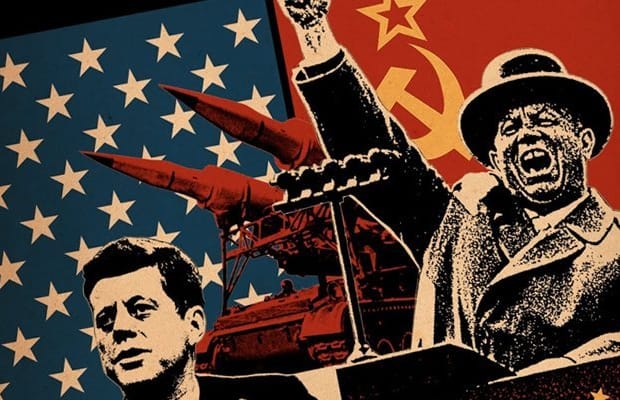
Yet the letter does not go far enough in considering how the United States and Russia came to be in the present dangerous situation. In addition, instead of articulating a forward-looking vision the letter calls for a return to Cold War strategies that supposedly “served us well.” That call disregards how those strategies led to perilous confrontations such as the Cuban missile crisis of 1962 and several incidents when false alarms or mistakes nearly led to launches of nuclear missiles.
A deeper rethinking of U.S. policies toward Russia is needed. Instead of going back to Cold War policies that tried to combine mutually assured destruction with limited détente we need to move beyond the constraints of Cold War thinking and dare to envision a brighter future for both the United States and Russia. While some may think that too idealistic amid the severely strained relations today, we must remember how setting ambitious common goals – especially ending the arms race and overcoming mutual demonization – enabled Americans and Soviets to set aside finger-pointing and end the Cold War more than thirty years ago.
Like all other nations, the United States must, as the open letter argues, protect its “national interest,” but the letter fails to address troubles caused by how the U.S. has pursued its “role as a global leader.” Presumptions of the inherent legitimacy of U.S. global hegemony and the validity of American but not Russian national interests have done much to cause our present predicament. For most of the post-Cold War period U.S. policymakers have seen Russia as so weak that its views did not need to be considered or as so malevolent that its declared interests were deemed illegitimate.
Although the open letter is a welcome first step away from the present “dead end,” it stops short by not including any reflection on the major problems in the U.S. efforts to build a “world order” in the last three decades. A full rethinking of U.S. policy toward Russia must include candid recognition that the U.S. policies of “regime change” and “nation building” have been catastrophic failures in countries from Afghanistan, Iraq, Syria, Libya, and Somalia to Venezuela, and that several of those disastrous U.S. interventions have done much to exacerbate friction with Russia.
In rethinking our Russia policy we should take inspiration from the breakthrough of the middle and late 1980s, when President Ronald Reagan worked with Soviet leader Mikhail Gorbachev to focus on mutual interests and overcome the hostility between the nuclear-armed superpowers. In those years Gorbachev championed a “new thinking” that stepped beyond the bounds of national interest to emphasize the interdependence of the world’s nations, the counterproductive effects of quests for unilateral advantage, and the need for mutual security. Of course, President Vladimir Putin is different from Gorbachev and most Russian foreign policy thinkers today believe that the West selfishly exploited openings created by Gorbachev’s concessions. Yet the core ideas of the “new thinking” remain valuable as principles to guide future discussions between American and Russian foreign policy advisers.
In a rebuttal to the open letter, published in Politico on August 11, hardline critics of Russia argue that Washington should avoid pointless dialogue with Moscow until Putin confesses his complicity in a series of misdeeds, including the shooting down of a civilian airliner over eastern Ukraine in 2014. If Reagan had heeded the similar views of his hawkish advisers, he would not have reoriented his policy in the months after a Soviet fighter pilot shot down a Korean airliner in September 1983. Fortunately, Reagan listened to more pragmatic officials, particularly Secretary of State George Shultz and career diplomat Jack Matlock, who realized well before Gorbachev came to power in 1985 that dialogue, engagement, and reduced tension were necessary in order to achieve concrete U.S. objectives and facilitate internal liberalization in the U.S.S.R.
The authors of the August 5 open letter call for a return toward the strategy that National Security Adviser Henry Kissinger and President Richard Nixon employed in the early 1970s to play the Soviet Union off against the People’s Republic of China. While it would indeed be wise to stop driving Russia and China closer together today (as the open letter notes), a return to the cynical power politics of Nixon and Kissinger will not help America to regain its image as a principled leader in the world. Instead of concentrating on aligning Russia with the U.S. in a new Cold War against China, U.S. policy toward Russia should emphasize a search for ways all three countries can cooperate. While the open letter partially recognizes the desirability of “three-way cooperation,” that dimension needs to be emphasized more than manipulation of the “strategic triangle.”
In addressing the crucial issue of interference in other nations’ elections and political systems, the open letter is regrettably one-sided (depicting only Russians as culprits) and it focuses merely on limiting damage. A more balanced and positive approach is needed. U.S. officials should work with their Russian counterparts to conclude an agreement to end not only cyberattacks but also other forms of intervention in the domestic politics of foreign nations.
Although the open letter wisely counsels that “we must deal with Russia as it is, not as we wish it to be,” it goes too far in the opposite direction by positing that Russia’s present “strategic framework deeply rooted in nationalist traditions,” is immutable. It is important to recognize the counterproductive effects of many American efforts to remake Russia during the last century, but it also is vital to acknowledge how much Russian and Soviet strategies have changed in response to U.S. policies. Within a year after the most dangerous confrontation of the Cold War in Cuba, President John F. Kennedy called upon Americans to rethink their views of the Soviet Union, the two countries signed a limited test ban treaty, Nikita Khrushchev made deep cuts in Soviet military forces, and the two nations started on a path to détente. Less than four years after Reagan shifted from condemnation and confrontation to dialogue and engagement, Reagan and Gorbachev signed the first superpower treaty that eliminated a whole category of nuclear weapons. On the other hand, after President George W. Bush shifted away from a strategic and economic partnership with Vladimir Putin toward an expansive “freedom agenda” American-Russian relations degenerated into acrimony and recrimination.
In reconsidering U.S. policy toward Russia it would be a mistake to underestimate the possibility for a far-reaching shift toward cooperation against common threats such as terrorism, nuclear proliferation, climate change, and pandemics. Moreover, there are significant possibilities for the joint pursuit of American and Russian interests in areas such as space exploration and environmentally responsible development of the Arctic. While rethinking our Russia policy we should set our sights high and not fear to be bold.
David S. Foglesong
Professor of History, Rutgers University
James Jatras
Retired diplomat and former foreign policy adviser to the U.S. Senate Republican leadership
T.J. Jackson Lears
Professor of History, Rutgers University
Edward Lozansky
President, American University in Moscow
Raymond L. McGovern
Former chief, Soviet Foreign Policy Branch, Central Intelligence Agency
Jennifer Mittelstadt
Professor of History, Rutgers University
Ido Oren
Professor of Political Science, University of Florida
Nicolai N. Petro
Professor of Political Science, University of Rhode Island
Andrei P. Tsygankov
Professor of Political Science, San Francisco State University