By Andrey Kortunov Even the Mayor in Gogol’s Inspector General, not being the sharpest tool in the shed, acknowledged that Alexander the Great was a hero, although he cautioned against proving this statement by destroying government property. Indeed, Alexander the […]
By Andrey Kortunov
Even the Mayor in Gogol’s Inspector General, not being the sharpest tool in the shed, acknowledged that Alexander the Great was a hero, although he cautioned against proving this statement by destroying government property. Indeed, Alexander the Great was the first to attempt the heroic feat of uniting the entire ecumene known to Europeans in BC 334–323. Certainly, history knew great conquerors before Alexander, people who established vast empires, but Alexander laid down, if we may say so, both the material and the ideological and political foundations of a globalization project in classical antiquity. Alexander emerged as a thoroughly cosmopolitan ruler on a global scale.
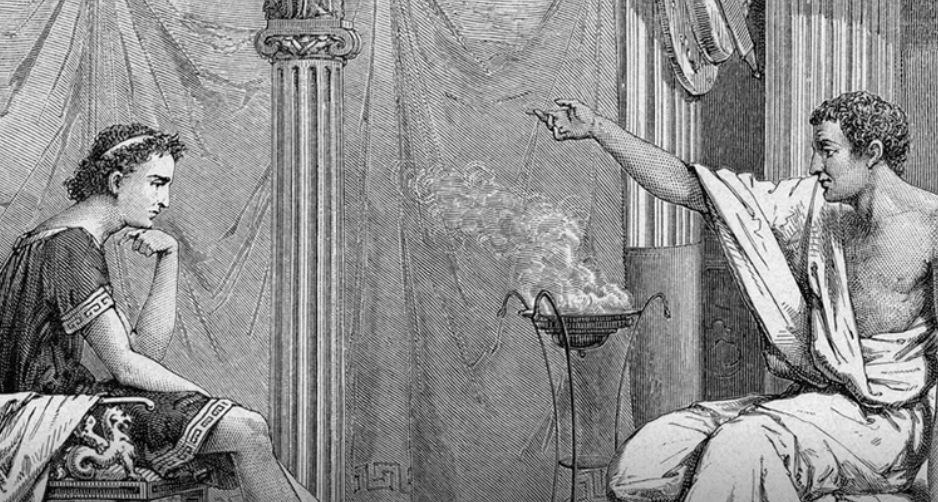
It is a well-known fact that Alexander was tutored and mentored by Aristotle, the greatest philosopher of classical antiquity, who had a very important influence on shaping the personality of the future Macedonian king and inspired him to achieve great things. According to Plutarch, Alexander said he owed his father his life, and he owed Aristotle the dignity of his life. It is a lesser-known fact that the perspectives of the two visionaries on the specific paths for uniting humanity were not identical, and in the course of time, they began to diverge more and more. The direct and indirect polemics of Alexander and Aristotle did not cease with the death of the Great King. In some manner or other, it continued later as it engaged new participants, and it remains relevant even now. Today, as we are witnessing a clearly emerging crisis of globalization, and as particularist and traditionalist sentiments are gaining traction throughout the world, it would be useful to review this polemic once again.
For a long time, Greek city-states viewed the idea of the political unification of Hellas as heretical, infeasible and generally absurd. The jealously guarded independence of individual city-states and their mutual cutthroat competition were seen as inherent traits of Greek civilization, the key source of its vitality and evidence of its superiority over adjacent barbaric states. Like the Italian cities of the Renaissance, Greek city-states rivalled each other in terms of the wealth of their citizens, the wisdom of their rulers, and the achievements of their architects, sculptors, orators, philosophers, poets, and playwrights.
Forward winds carried Greek ships like the spores of some fantastic plant along the entire coast of the Mediterranean and the Black Sea. These spores produced amazing sprouts: new colonies that easily adapted to any local conditions, successfully cooperated with native tribes, and enriched the common Greek culture. No one saw any point in supplementing this undisputed cultural unity with a political union.
The situation began to change following the Greco-Persian Wars of BC 500—449. On the one hand, these wars led to an unprecedented rise in pan-Greek patriotism. On the other hand, they clearly demonstrated the imperfections of the structure of the Greek world comprised of city-states. Soon after its triumphant victories over Darius the Great and Xerxes, Hellas entered a protracted period of political and military confrontation between Athens and Sparta, fuelled up by generous infusions of Persian gold. The aging and weakening Persia did not want to risk a new invasion, but it artfully pitted Greek cities against each other, supporting the weak and threatening the strong, encouraging conflict and upsetting unions. This inglorious era concluded with the destructive Peloponnesian War (BC 431–404) that forever undermined the power of Athens.
History develops in a spiral. In some sense, the global situation today is similar to the situation in the ancient world shortly after the death of Alexander the Great. On the one hand, we see many signs that globalization is in crisis: international trade, foreign direct investment, international migrations, etc., are falling. The importance of national sovereignty and national identity is emphasized everywhere, political forces advocating traditional values and the traditional way of life are growing in influence. Globalization priorities are being replaced with regionalization priorities. Ambitious long-term imperial plans are giving way to situational and highly pragmatic plans that are geared mostly toward domestic audiences instead of the world in general. As far as we can tell, deglobalization trends have gained major traction and will not be reversed in the foreseeable future.
On the other hand, it would be wrong to say that “globalization is over.” The world is getting smaller. Technological progress makes global communication easier and reduces the costs of implementing geographically distributed projects. The burden of common problems puts increasing pressure on all countries—problems ranging from the growing shortage of resources to accelerating climate change. The fact that the first wave of globalization of the late 20th to the early 21st century broke down does not necessarily mean that humanity will not have to face a second wave or that there is no need to prepare for it.
Historically, the Diadochi were the losers because they borrowed Aristotle and Alexander’s most obvious and least productive ideas. They took Aristotle’s political particularism and pan-Hellenistic nationalism, and Alexander’s despotic and highly centralized style of governance. And even though most of Alexander’s comrades-in-arms were remarkable people, neither Seleucus, nor Ptolemy, nor Perdiccas, nor Antigonus, nor Eumenes could measure up to the King in terms of his personality and his inexhaustible energy. Therefore, the Hellenistic states of the Eastern Mediterranean were internally unstable and ultimately fell to Rome or Parthia.
Solving the task that humanity has faced for over 2000 years requires approaches that would be diametrically opposite to those chosen by the Diadochi. How can we combine the most revolutionary and complicated elements of the globalization programmes of the two great figures of classical antiquity? How can we combine Alexander’s global universalism and noble idealism with Aristotle’s rational democracy and political pluralism? Solving this historical task would usher in radically new development directions for our world.