Once a force for peace and justice, today the western media loyally serves the national security state, playing a major role in intensifying conflict and militarism at home and abroad.
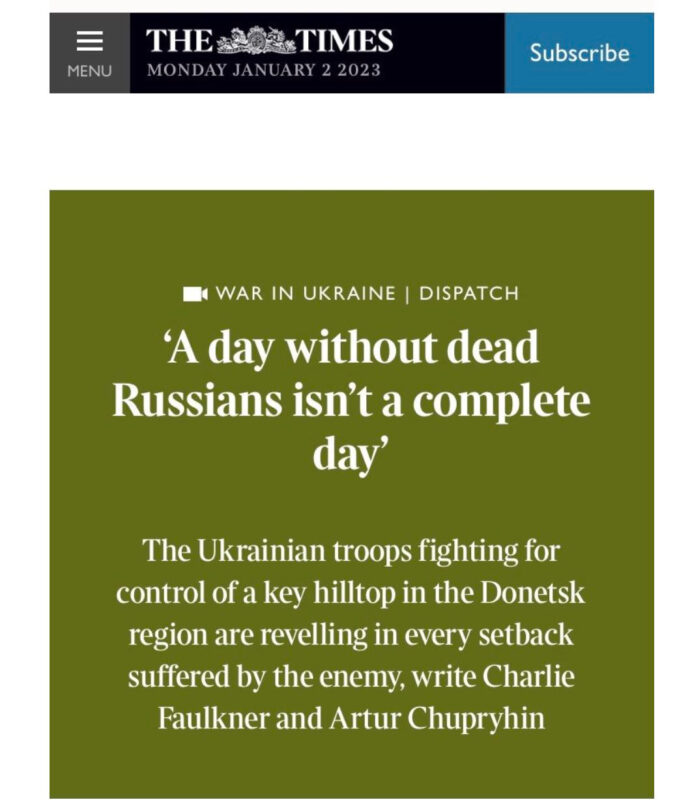
“A Day Without Dead Russians Isn’t a Complete Day” — on January 2 this was a headline in The Times, a leading British newspaper. Such brazen hatred and racism is only allowed towards Russians. And it is commonplace in the West today.
Can you imagine British or U.S. media running a similar headline in regard to Muslims when the West waged war against the Islamic world from 2001-2021?
Those brutal and illegal wars killed over 1 million Muslims in Iraq, Syria, Libya, Afghanistan and etc, and forced millions more from their homes. Oddly, the western media retained a sense of civility toward Muslims. Any hint of negativity could end a journalist’s career, and the media outlet would be condemned for Islamophobia.
When it comes to Russians, however, there’s no limit to the amount of hatred that a western journalist is allowed to vent, and they gleefully smirk when NATO weapons cut down Russian soldiers, who are dehumanized as “orcs” and “aggressors”.
Yes, the western media narrative of a virgin, free and democratic Ukraine that’s been violated by brutish Russian ‘barbarians’ is false. In spring 2014, Ukraine fired the first shots against the ethnic Russian separatists in the Donbass region who simply wanted their freedom from a far-right nationalist regime in Kiev.
Naturally, this aroused Moscow’s anger, which has a right to protect ethnic Russians abroad. Kiev’s stubborn refusal to resolve the conflict peacefully over the course of 8 years, along with NATO’s efforts at eastward expansion, are the fundamental forces that ignited this war.
The above headline is the fiendish face of modern western journalism: A profession that’s tremendously corrupt and marred by insidious disinformation. Today, to make a career in journalism in the U.S. or Europe, one must prove loyalty to the political establishment. Any deviation from the approved script can end one’s career.
In the years following America’s brutal war in Vietnam (1965-73), when I came of age as a young analyst, American journalism was first and foremost about anti-war sentiment, justice and a belief in human rights. Any journalist worth the cost of his/her ink was in fierce opposition to anything the Pentagon said and supported.
Today, whether it’s the war in Ukraine or Covid-19, the western media eagerly jumps into bed with their governments, the national security state and powerful corporations. It seems that their goal is more chaos and division in society.
Here’s another recent media case study — On January 2, Russia’s Defense Ministry said that 63 soldiers were killed by a Ukrainian strike with the help of America’s HIMARS guided missile system. The western media seized on this news, joyful at the death and destruction. It was front page news for a few days, and many western media gloated that “hundreds” of Russians were killed.
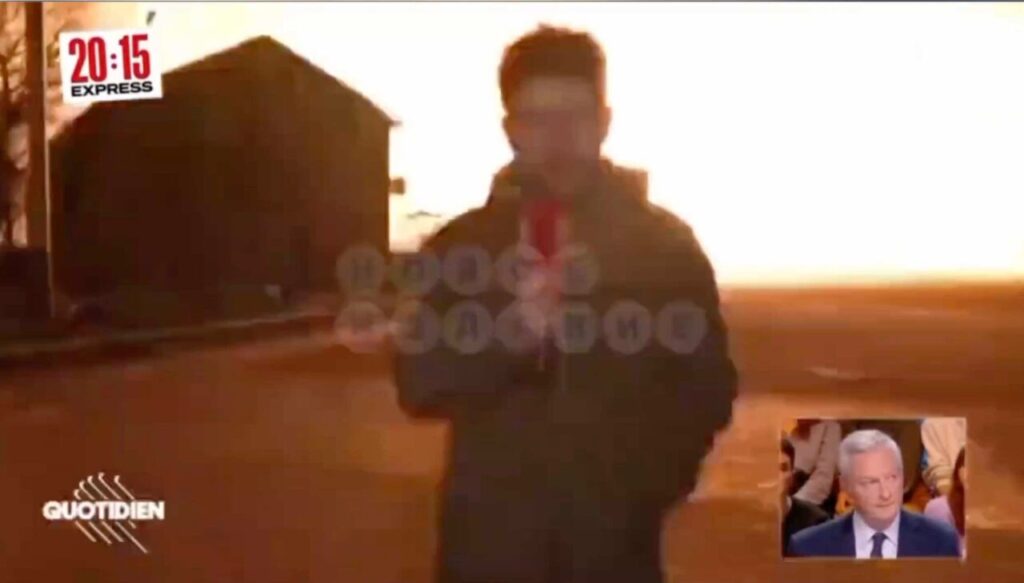
Naturally, Moscow would retaliate, and early on January 3 an echelon of Ukrainian conscripts and NATO weapons were pounded. The death and destruction were equally horrific and tragic. The moment of Russia’s attack was caught on video by TV journalist Paul Gasnier while giving a live standup for a French channel.
Paul Gasnier at the moment of the Russian strike (still from the video)
These heavy Ukrainian losses, however, were ignored by most American and British media. Reuters mentioned it briefly, but buried it deep in their coverage for that day’s events in Ukraine.
If you only follow the western media, you’ll notice that Ukrainian soldiers rarely die or suffer setbacks on the battlefield. We primarily see heroic photos and videos of brave, determined and stalwart Ukrainian warriors. We don’t see their defeats, anguish, their fear and unwillingness to fight. All of which has been well documented by Ukrainian bloggers and soldiers themselves.
Concerning Russians, however, the news in the western media almost always shows one defeat after another, and rapidly mounting and catastrophic losses. The Russian military is depicted as corrupt, incompetent and demoralized. The sources for these exaggerated claims are either anonymous sources, or the Ukrainian Defense Ministry, or the Pentagon.
I want to be very clear — we are witnessing the worst tragedy in Europe since 1945. Young men from neighboring nations — related by blood, language, religion and culture — are killing each other. This war was easily avoidable and should not be happening.
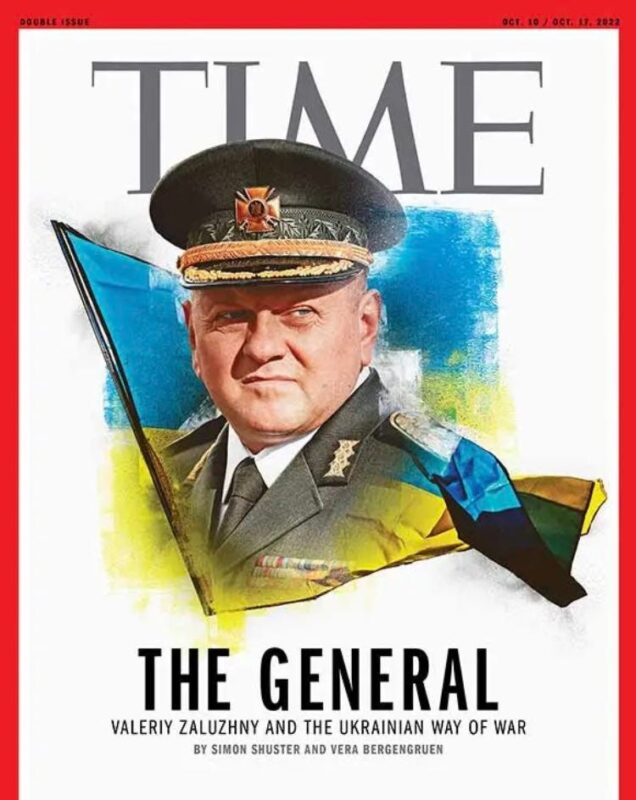
A typical American ‘puff piece’ to support Kiev
The western media’s emphasizing and exaggerating Russian losses, while concealing or diminishing Ukrainian losses, is a clever ploy that serves two goals in NATO’s information war against Russia.
First, this disinformation is meant to brainwash western audiences into believing that the Russian ‘barbarians’ will be defeated, that the wise Commander-in-Chief in the White House made the correct decision to fight Russia in an epic battle of “Democracy vs. Autocracy”.
Second, there is the goal that western media coverage will make its way back to Russia and demoralize the home front and the troops in the trenches. The Russian liberal émigré media in Europe and the U.S. often collaborates closely with their host governments and repeats what western media print or air. That disinformation then seeps back into Russia via the Internet.
Not so long ago, journalists championed universal human rights, justice, peace, harmony and an end to militarism. Today, the western media, with its disinformation when covering the war in Ukraine, agitates for more war, more hatred and more militarism. Indeed, we are locked in an epic battle for the soul and future of western civilization. But the line of battle isn’t about a foreign threat; it’s about Truth vs. Lies.
Donald Trump Should Not Repeat Woodrow Wilson’s Failure
April 30th is an important date in American politics. This is the day 100 for the American President in the White House, and all attention will be on the reports of his achievements and failures. But nothing can be more critical than Peace…
○
6 mins read
A Holocaust perpetrator was just celebrated on US soil. I think I know why no one objected.
Russia’s invasion has made ordinarily outspoken critics of antisemitism wary of criticizing Ukrainian Nazi collaborators
○
1 min read
Qi Book Talk: The Culture of the Second Cold War by Richard Sakwa
Richard Sakwa has for many years been one of the most distinguished and insightful observers of relations between the West and Russia, and one of the leading critics of Western policy. In this talk with Anatol Lieven, director of the Eurasia program at the Quincy Institute, Sakwa discusses his book, The Culture of the Second Cold War (Anthem 2025). The book examines the cultural-political trends and inheritances that underlie the new version of a struggle that we thought we had put behind us in 1989. Sakwa describes both the continuities from the first Cold War and the ways in which new technologies have reshaped strategies and attitudes.