Elon Musk says 'shame on MSNBC' for pushing misleading Russian bots narratives
Former FBI special agent and current MSNBC contributor Clint Watts spearheaded the Hamilton 68 dashboard. (Win McNamee/Getty Images)
The latest installment of the Twitter Files focused on the dubious source that the media and Democrats heavily relied on to peddle the false narrative of Russian bot activity on the platform.
Substack writer Matt Taibbi previously reported how top Democrats like California Democratic Rep. Adam Schiff and Sen. Dianne Feinstein, as well as Connecticut Democratic Sen. Richard Blumenthal, kept promoting claims that the Kremlin had significant influence in public discourse despite being told otherwise by Twitter executives.
On Friday, Taibbi did a deep dive into their source, Hamilton 68, a so-called “dashboard” that purportedly monitored Russian bot activity.
Hamilton 68, which was spearheaded by former FBI special agent and MSNBC contributor Clint Watts, was operated by the Alliance for Securing Democracy (ASD), a “neoliberal think tank” founded in 2017 with an advisory council that includes Clinton ally John Podesta, former Obama-era acting CIA director Michael Morrell, former Obama official Michael McFaul and The Bulwark editor-at-large Bill Kristol.
But behind the scenes, Twitter executives trashed Hamilton 68 and deliberated whether they should publicly rebuke ASD.
“I think we need to just call this out on the bulls— it is,” Twitter’s then-head of trust and safety Yoel Roth wrote in an October 2017 email, later writing in January 2018 that the dashboard “falsely accuses a bunch of legitimate right-leaning accounts of being Russian bots.”
“Virtually any conclusion drawn from it will take conversations in conservative circles on Twitter and accuse them of being Russian,” Roth wrote in February 2018.
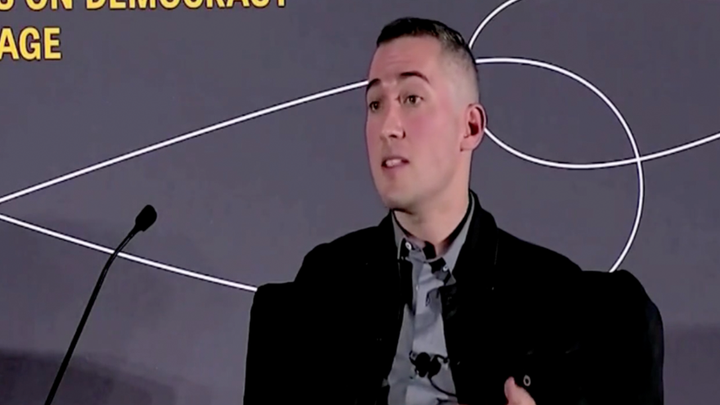
Former Twitter Head of Trust and Safety Yoel Roth was vocal in his opposition to Hamilton 68 behind the scenes. (Knight Foundation/CNN)
“Hamilton 68 was the source for stories claiming Russian bots pushed terms like ‘deep state’ or hashtags like #FireMcMaster, #SchumerShutdown, #WalkAway, #ReleaseTheMemo, #AlabamaSenateRace, and #ParklandShooting, among many others,” Taibbi tweeted.
Taibbi called out Hamilton 68’s methodology that monitored “600” Russian-linked Twitter accounts but never publicly shared who was on the list.
“Twitter executives were in a unique position to recreate Hamilton’s list, reverse-engineering it from the site’s requests for Twitter data. Concerned about the deluge of Hamilton-based news stories, they did so – and what they found shocked them,” Taibbi wrote. “‘These accounts,’ they concluded, ‘are neither strongly Russian nor strongly bots.’ ‘No evidence to support the statement that the dashboard is a finger on the pulse of Russian information ops.’ ‘Hardly illuminating a massive influence operation.’”
13.“These accounts,” they concluded, “are neither strongly Russian nor strongly bots.”
“No evidence to support the statement that the dashboard is a finger on the pulse of Russian information ops.”
“In layman’s terms, the Hamilton 68 barely had any Russians. In fact, apart from a few RT accounts, it’s mostly full of ordinary Americans, Canadians, and British,” Taibbi wrote. “It was a scam. Instead of tracking how ‘Russia’ influenced American attitudes, Hamilton 68 simply collected a handful of mostly real, mostly American accounts, and described their organic conversations as Russian scheming.”
According to a January 2018 email exchange, Roth sounded the alarm of the ethical dilemma Twitter had faced, writing “Real people need to know they’ve been unilaterally labeled Russian stooges without evidence or recourse.”
“My recommendation at this stage is an ultimatum: you release the list or we do,” Roth wrote in January 2018.
There were “internal concerns” at Twitter “about taking on the politically connected Alliance for Securing Democracy,” per Taibbi.
“We have to be careful in how much we push back on ASD publicly,” wrote Emily Horne, then-head of Twitter global policy communication who would later become a spokesperson for President Biden’s National Security Council.
Carlos Monje, Twitter’s then-public policy director who now serves as an aid at Pete Buttigieg’s Department of Transporation, similarly wrote, “I also have been very frustrated in not calling out Hamilton 68 more publicly, but understand we have to play a longer game here.”
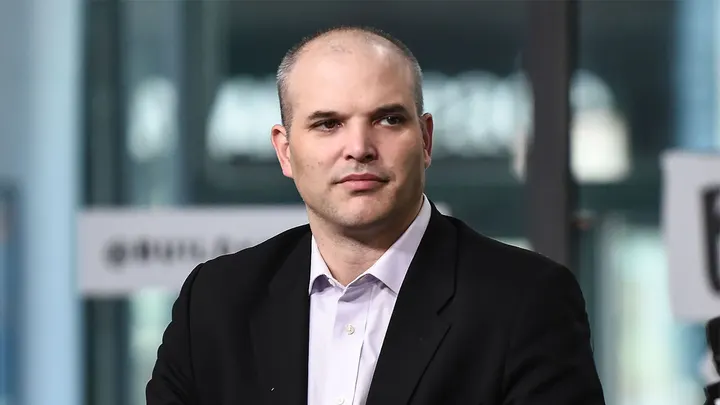
Substack writer Matt Taibbi has led the coverage of the Twitter Files made public by Elon Musk. (Daniel Zuchnik/WireImage)
Twitter ultimately never contacted users that were being classified by Hamilton 68 as Russian stooges. Many were shocked by the revelations in exchanges with Taibbi. Among them were conservative commentator Dennis Michael Lynch and Consortium News editor-in-chief Joe Lauria.
“What makes this an important story is the sheer scale of the news footprint left by Hamilton 68’s digital McCarthyism,” Taibbi wrote. “Hamilton 68 was used as a source to assert Russian influence in an astonishing array of news stories: support for Brett Kavanaugh or the Devin Nunes memo, the Parkland shooting, manipulation of black voters, ‘attacks’ on the Mueller investigation… These stories raised fears in the population, and most insidious of all, were used to smear people like Tulsi Gabbard as foreign ‘assets,’ and drum up sympathy for political causes like Joe Biden’s campaign by describing critics as Russian-aligned.”
Taibbi continued, “Twitter didn’t have the guts to out Hamilton 68 publicly but did try to speak to reporters off the record… Again, even Roth, like most Twitter execs an ardent Democratic partisan, saw that the Hamilton scheme would lead people ‘to assert that any right-leaning content is propagated by Russian bots.’”
28.What makes this an important story is the sheer scale of the news footprint left by Hamilton 68’s digital McCarthyism. The quantity of headlines and TV segments dwarfs the impact of individual fabulists like Jayson Blair or Stephen Glass. pic.twitter.com/zfyjLb5Tkq
Among the media outlets that refused to comment to Taibbi include MSNBC, The Washington Post, Politico and Mother Jones, all publishing “at least 14 Hamilton 68 stories” during the Trump years.
In addition to Democrats like Schiff, Feinstein, Blumenthal, Virginia Sen. Mark Warner, and Republican Oklahoma Sen. James Lankford who elevated Hamilton 68, Taibbi also called out universities like Harvard, Princeton, and New York University (NYU) for citing the dashboard as a source.
This marked the 16th installment of the Twitter Files, which began coming out in December addressing various controversies involving the tech giant such as the suppression of the Hunter Biden laptop story in 2020, the existence of shadowbanning and its decision to ban former President Trump.
Twitter CEO Elon Musk chimed in after the latest files, “Shame on MSNBC for misleading the public!”
Donald Trump Should Not Repeat Woodrow Wilson’s Failure
April 30th is an important date in American politics. This is the day 100 for the American President in the White House, and all attention will be on the reports of his achievements and failures. But nothing can be more critical than Peace…
○
6 mins read
A Holocaust perpetrator was just celebrated on US soil. I think I know why no one objected.
Russia’s invasion has made ordinarily outspoken critics of antisemitism wary of criticizing Ukrainian Nazi collaborators
○
1 min read
Qi Book Talk: The Culture of the Second Cold War by Richard Sakwa
Richard Sakwa has for many years been one of the most distinguished and insightful observers of relations between the West and Russia, and one of the leading critics of Western policy. In this talk with Anatol Lieven, director of the Eurasia program at the Quincy Institute, Sakwa discusses his book, The Culture of the Second Cold War (Anthem 2025). The book examines the cultural-political trends and inheritances that underlie the new version of a struggle that we thought we had put behind us in 1989. Sakwa describes both the continuities from the first Cold War and the ways in which new technologies have reshaped strategies and attitudes.