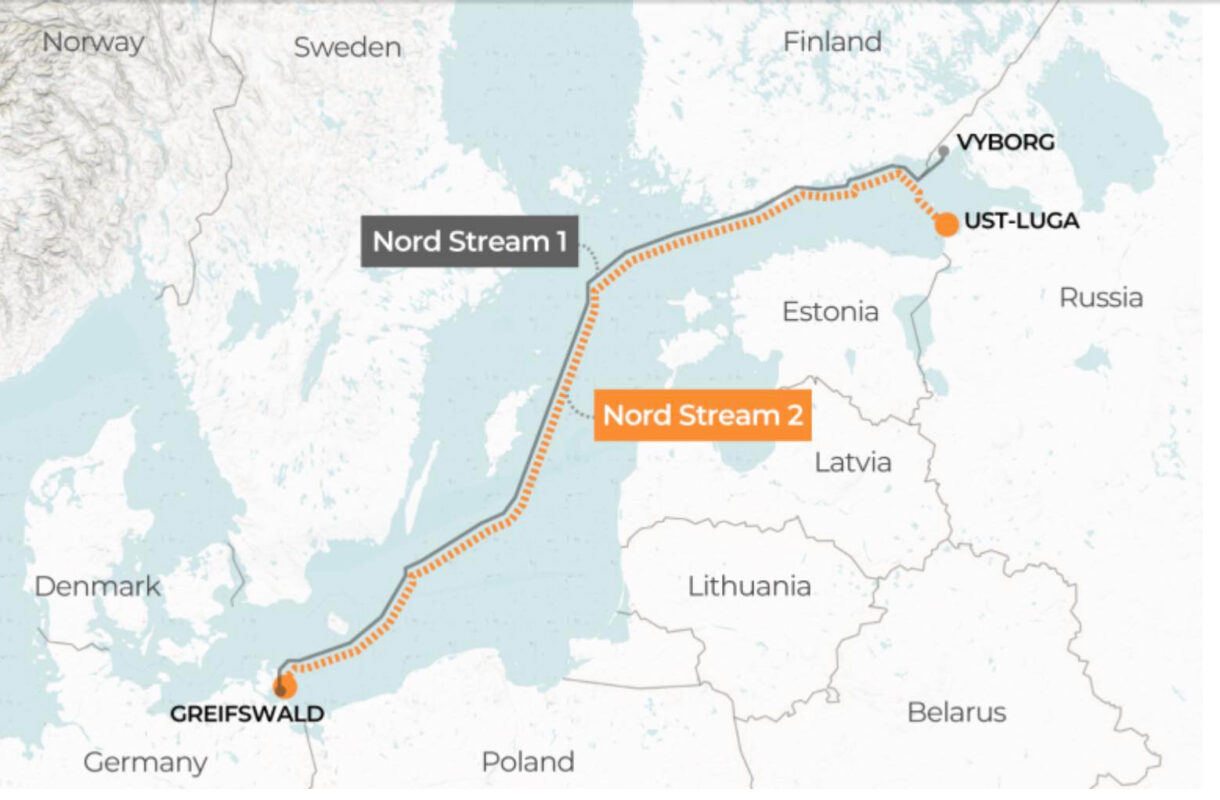
In his new article today, Seymour Hersh said Joe Biden ordered the terrorist attack against the Nord Stream pipelines. Norway helped. Now, both Norway and the U.S. sell expensive gas to the EU.
With the rise of Big Tech and media censorship, investigative journalism is almost dead in America. But one legend remains — the 85-year old Seymour Hersh, the Pulitzer Prize-winning journalist who revealed the truth about American war crimes in both Vietnam and in Iraq.
Hersh has long been America’s leading investigative journalist; he is relentless, risking his safety and well-being in search of the truth.
In a meticulous and detailed investigative report published today by Mr Hersh on his Substack page, it’s now clear that the $11 billion Nord Stream pipelines owned by Russia’s Gazprom were destroyed by order of the White House in order to weaken both Russia and the European Union.
(Please click on the link for full access to the article.)
The now defunct pipelines stretched from Russia to Germany on the bottom of the Baltic Sea. One pipeline had been in operation for a decade; a second pipeline, Nord Stream 2, was slated to come into service in 2022. However, in January 2022, Joe Biden publicly threatened to destroy Nord Stream. Russia failed to react, and the White House took this as a sign of Russian weakness.
On Sept 26, 2022, the world awoke to the most dastardly terrorist attack in recent years — the destruction of two major gas pipelines that fueled Europe, keeping people warm and powering European industry. The loss of cheap Russian gas resulting from the terror attack and NATO sanctions is now a major factor leading to rising levels of poverty, unemployment, sickness and overall chaos across Europe.
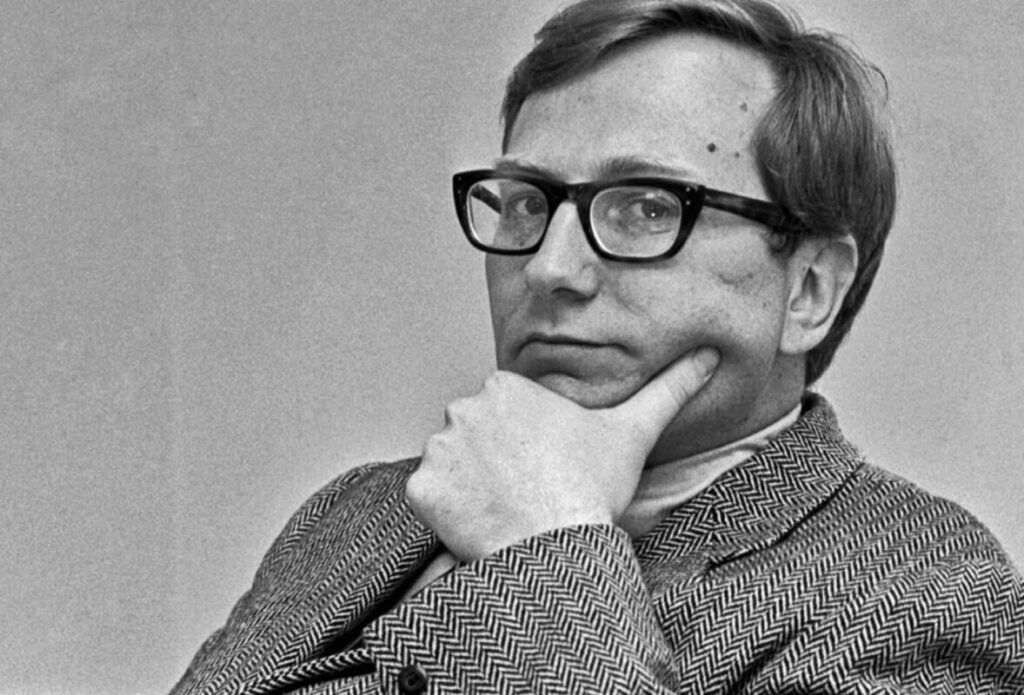
Seymour Hersh, 1969, when he won a Pulitzer Prize for his book about American war crimes in Vietnam, My Lai 4: A Report on the Massacre
In fact, much of Europe’s post-1990 prosperity is in large part due to access to cheap Russian gas. Energy is the foundation of any advanced civilization, and cheap energy is needed for economic competitiveness in global markets. Without this cheap energy the EU will sink deeper into poverty and economic chaos.
EU leaders hope they can do without Russian gas by building solar, wind and hydrogen power plants. But many years are needed before those experimental and highly complex facilities will fully be able to compensate for the loss of Russian gas.
In the meantime, Europe must buy very expensive American natural gas (LNG), the burden of which is paid for by average Europeans, especially the poor. Death rates in Europe are soaring to record levels. Increasing poverty, economic decline, freezing homes and despair are likely to be factors.
Also, Norway helped to carry out the American terrorist attack against the pipeline. And guess what — Norway and the U.S. are now selling natural gas to Europe in record amounts, and at very high and extortionate prices.
This terror attack was an act of war that could ignite World War 3. I’m very surprised that the Kremlin remains quiet and has not retaliated. Or is it just waiting for the right moment?
Donald Trump Should Not Repeat Woodrow Wilson’s Failure
April 30th is an important date in American politics. This is the day 100 for the American President in the White House, and all attention will be on the reports of his achievements and failures. But nothing can be more critical than Peace…
○
6 mins read
A Holocaust perpetrator was just celebrated on US soil. I think I know why no one objected.
Russia’s invasion has made ordinarily outspoken critics of antisemitism wary of criticizing Ukrainian Nazi collaborators
○
1 min read
Qi Book Talk: The Culture of the Second Cold War by Richard Sakwa
Richard Sakwa has for many years been one of the most distinguished and insightful observers of relations between the West and Russia, and one of the leading critics of Western policy. In this talk with Anatol Lieven, director of the Eurasia program at the Quincy Institute, Sakwa discusses his book, The Culture of the Second Cold War (Anthem 2025). The book examines the cultural-political trends and inheritances that underlie the new version of a struggle that we thought we had put behind us in 1989. Sakwa describes both the continuities from the first Cold War and the ways in which new technologies have reshaped strategies and attitudes.