A proposed bill on mobilization has become the focus of a debate as more men dodge the draft and calls rise to demobilize exhausted soldiers.
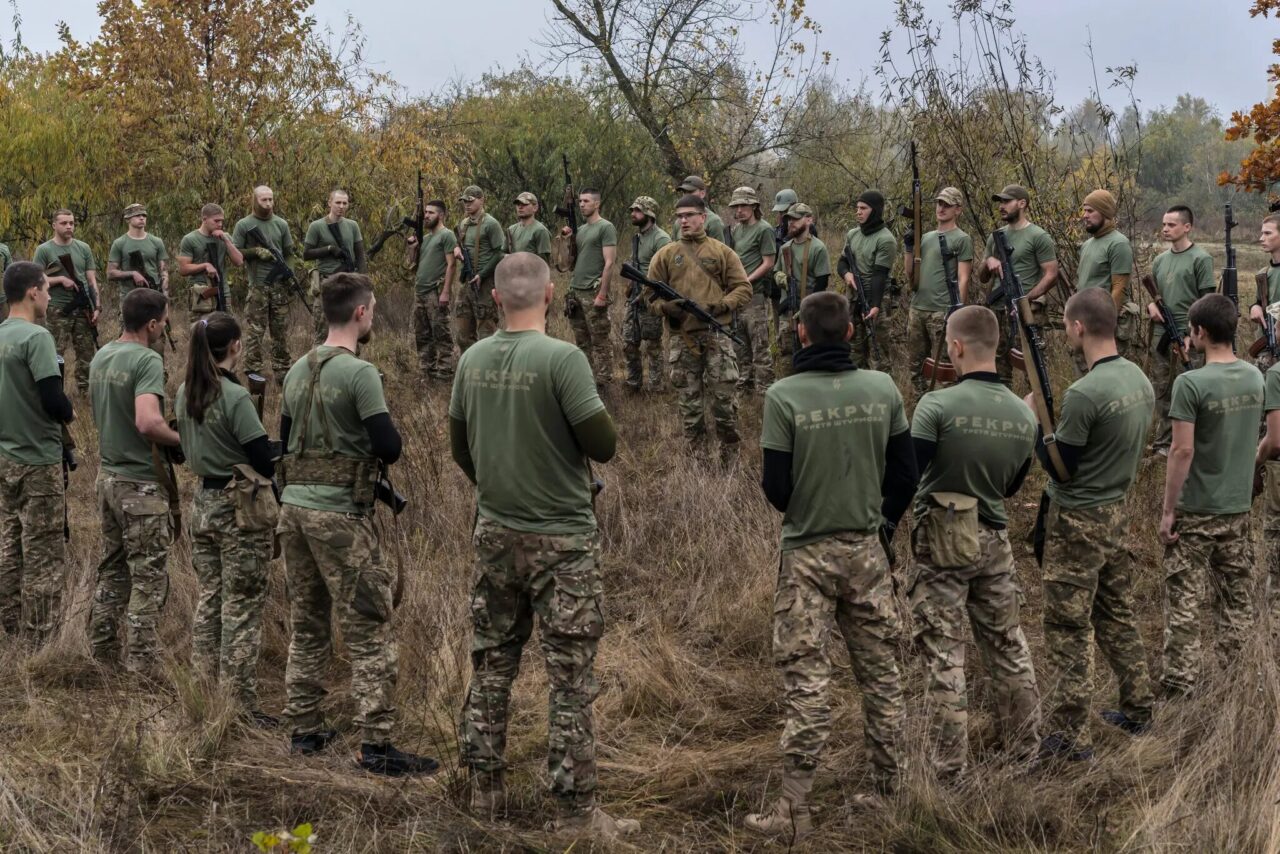
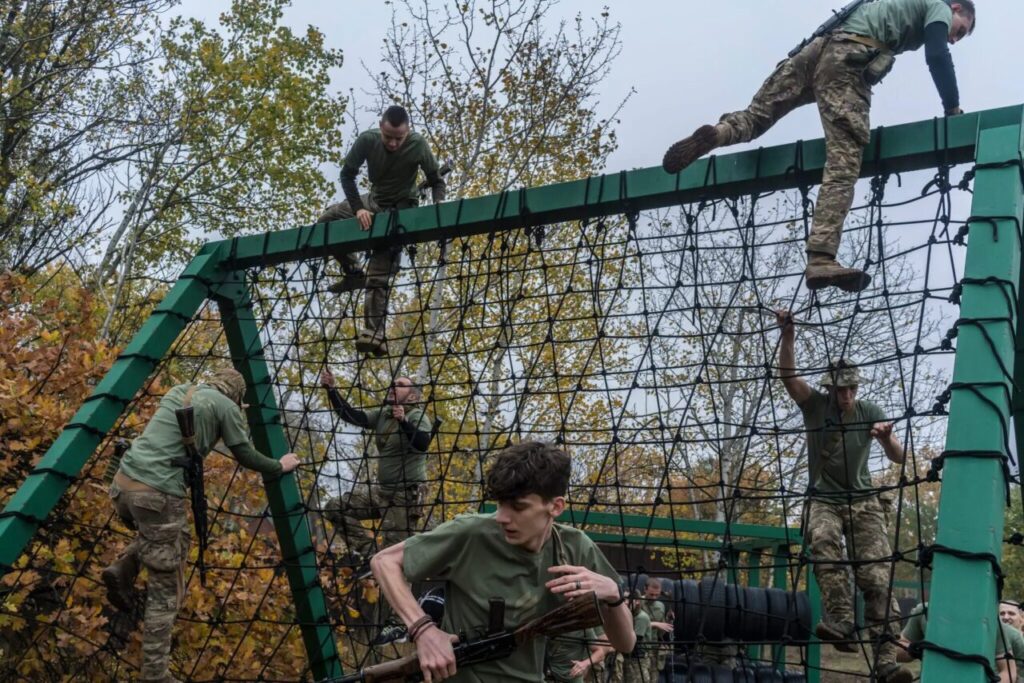
New recruits with the Ukrainian Army’s Third Separate Assault Brigade training in October in Kyiv, Ukraine’s capital.Credit...Brendan Hoffman for The New York Times
When Russian troops and tanks invaded Ukraine in February 2022, tens of thousands of Ukrainians rushed to serve in the army in a surge of patriotic fervor. The influx of fighters who dutifully answered their draft notices or enlisted as volunteers helped to repel Russia’s initial assault and thwart the Kremlin’s plans to decapitate the Ukrainian government.
But after nearly two years of bloody fighting, and with Ukraine once again in need of fresh troops to fend off a new Russian push, military leaders can no longer rely solely on enthusiasm. More men are avoiding military service, while calls to demobilize exhausted frontline soldiers have grown.
The change in mood has been particularly evident in the heated debates over a new mobilization bill that could lead to drafting up to 500,000 troops. The bill was introduced in Parliament last month — only to be quickly withdrawn for revision.
The bill has catalyzed discontent in Ukrainian society about the army recruitment process, which has been denounced as riddled with corruption and increasingly aggressive. Many lawmakers have said that some of its provisions, like barring draft dodgers from buying real estate, could violate human rights.
The biggest sticking point concerns the highly delicate issue of mass mobilization. Measures that would make conscription easier have been seen by experts as paving the way for a large-scale draft, of the kind several military officials have recently said is needed to make up for losses on the battlefield and withstand another year of fierce fighting. Many in Ukraine fear that such measures could stir up social tensions.
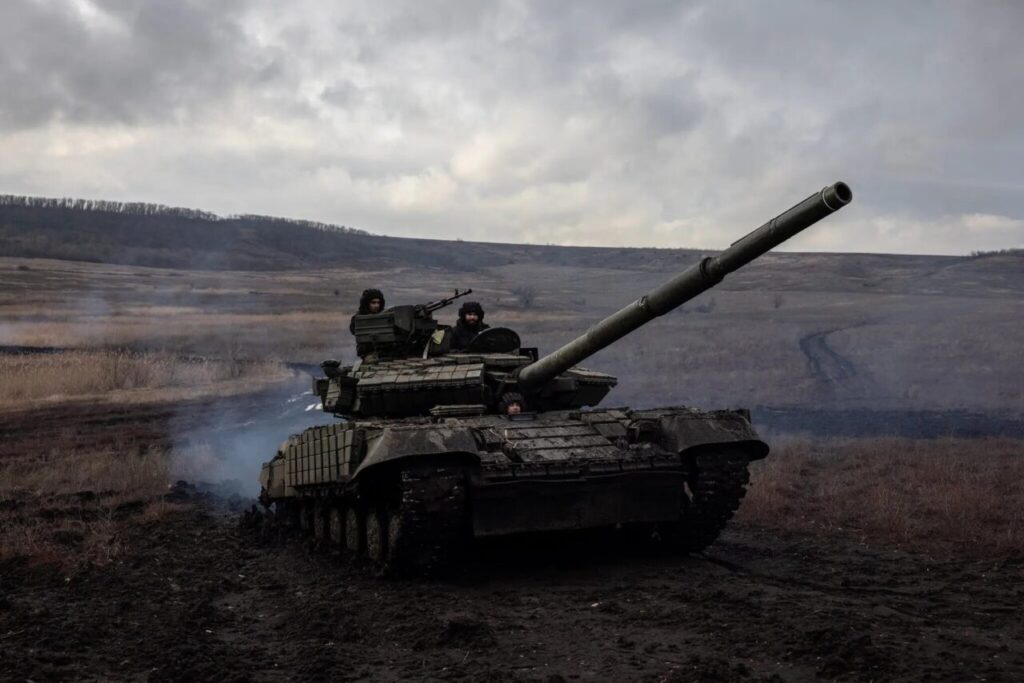
A Ukrainian tank near the front line this month in the Donetsk region. Experts say Ukraine needs more troops to withstand a renewed Russian push. Credit: Finbarr O’Reilly for The New York Times
President Volodymyr Zelensky has appeared unwilling to take responsibility for instituting a major draft, instead asking his government and the army to come up with more arguments supporting this move. “I haven’t seen clear enough details to say that we need to mobilize half a million” people, he said in a recent interview with Channel 4, a British broadcaster.
“It’s a hot potato,” said Petro Burkovsky, the head of the Democratic Initiatives Foundation, a Ukrainian think tank.
“The political leadership decided to avoid the issue of mobilization” for most of the war, Mr. Burkovsky said. But with troops depleted after two years, ignoring it is not sustainable, “and right now, someone has to be politically responsible.”
The need to replenish the Ukrainian armed forces has been evident for months. While Kyiv has kept its casualty count secret, American officials this summer put the number at nearly 70,000 killed and 100,000 to 120,000 wounded.
Russia’s casualties, the American officials said, were nearly twice that — the result of sending waves of troops in bloody assaults to capture cities, regardless of the human cost. But Russia has a much larger population, and it has swelled its ranks with tens of thousands of prisoners.
By contrast, Ukraine’s efforts to rebuild its forces have lagged.
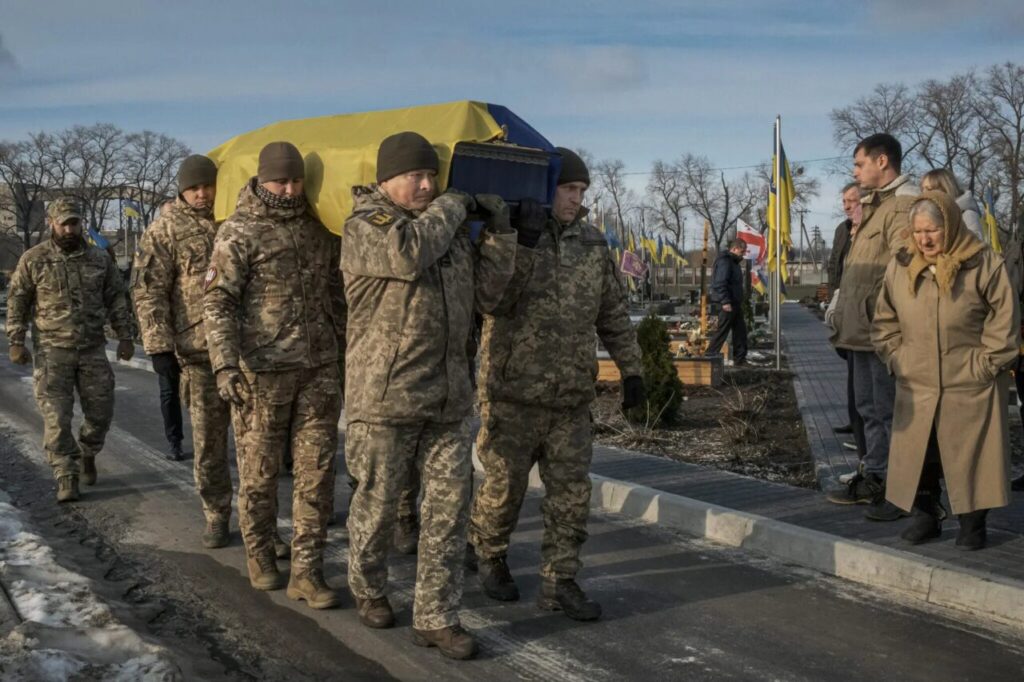
The funeral in Brovary, Ukraine, last month of a soldier who was killed by a Russian drone. In August U.S. officials put the number of Ukrainian troops killed at nearly 70,000. Credit: Mauricio Lima for The New York Times
Soldiers at the front said that they had noticed a steady decline in the quality of recruits. Many are older, nursing injuries from years ago and unmotivated to fight. More men are also trying to avoid the draft, escaping the country or hiding at home. Desertion, said one Ukrainian soldier stationed in the east, is also becoming an issue.
That has prompted military recruiters to shift to more aggressive tactics, forcing men into conscription offices, detaining them, sometimes illegally, and forcing them to enlist. Lawyers and activists have spoken out but there is little sign of change. Many Ukrainians have likened recruiters to “people snatchers.”
General Zaluzhny said in an essay in November that the recruitment process needed to be reviewed “to build up our reserves.” But he and other officials have offered little alternative to a large-scale mobilization.
Mr. Zelensky has said his army chiefs have asked him to mobilize 450,000 to 500,000 men. “This is a significant number,” he said last month, adding that a plan had to be drawn up before he could decide.
Experts say that is the main purpose of the mobilization bill, which does not specify how many troops should be added. It would lower the conscription age to 25 from 27, limit deferments over minor disabilities and restrict the ability of draft dodgers to obtain loans or buy property. It also gives local authorities greater responsibility for conscription.
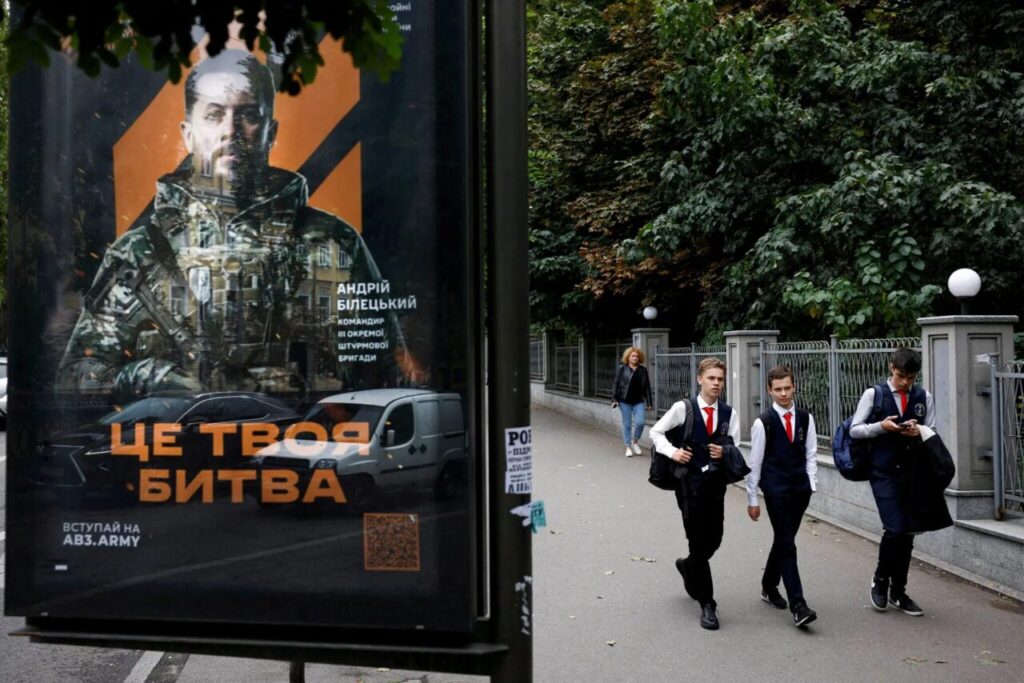
Schoolchildren passing an army recruitment poster in Kyiv in September. The recent bill proposes lowering the conscription age to 25 from 27. Credit: Thomas Peter/Reuters
Viktor Kevliuk, a retired Ukrainian colonel who oversaw mobilization in western Ukraine from 2014 to 2018, said the bill was “specifically aimed” at facilitating the drafting of hundreds of thousands.
“The state is taking a firm stance on how quickly it can provide its defense forces with such a number of personnel,” Mr. Kevliuk said.
But many lawmakers, including from Mr. Zelensky’s party, have raised concerns at measures such as those affecting the disabled and draft dodgers. They also say that relying on local governments may exacerbate problems. Regional recruitment centers have been plagued by corruption, with officers taking bribes to let men evade being drafted.
“All together, that made this bill unacceptable in its form,” said Oleksiy Honcharenko, a member of Parliament in the opposition European Solidarity party.
Mr. Honcharenko added that the introduction of the bill into Parliament had been “messy,” reflecting the government’s desire “to avoid political responsibility.” The bill was submitted on Christmas night, which some critics saw as an attempt to go unnoticed, and in the name of Prime Minister Denys Schmyhal, rather than Mr. Zelensky.
After several days of debate this month, lawmakers sent the bill back for revision.
“I clearly understand that the task of the military is to achieve success on the front,” Ruslan Stefanchuk, the speaker of Parliament, told the Ukrainian news media recently. “However, we need to work together to regulate such important and sensitive processes as mobilization.”
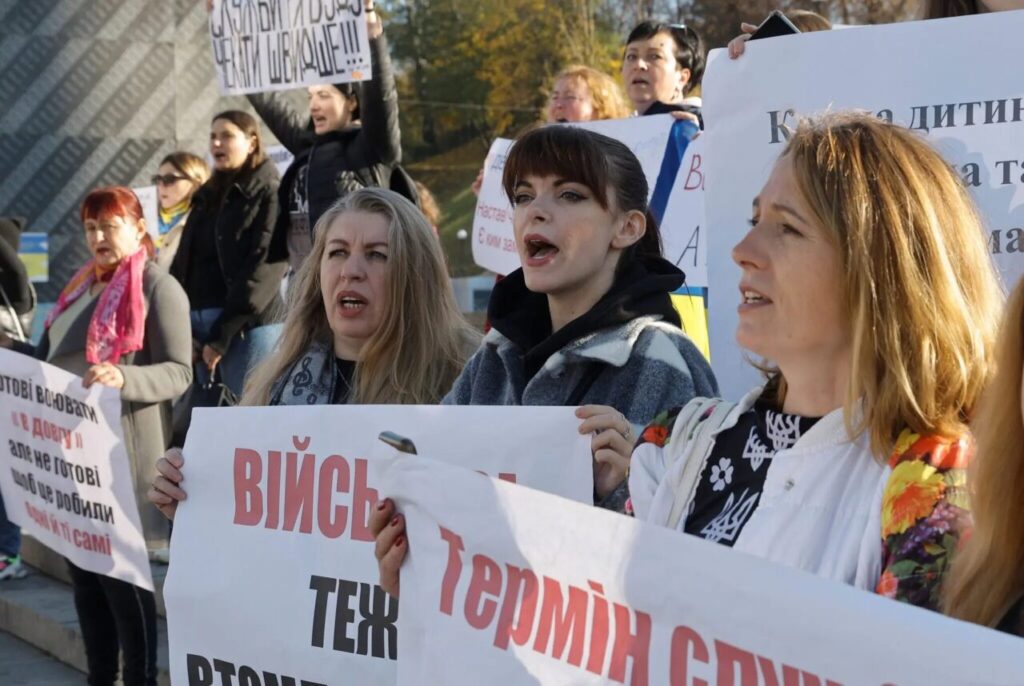
A rally in October in Kyiv by soldiers’ relatives calling for demobilization of those who have fought since the full-scale war began. Such protests have grown more frequent. Credit: Sergey Dolzhenko/EPA, via Shutterstock
Rustem Umerov, Ukraine’s defense minister, said the government was already working on revisions. He expressed frustration at the lawmakers’ decision, saying mobilization had been “politicized and stalled.”
Mr. Honcharenko said a broader debate was needed on Ukraine’s military strategy. No one had clearly explained why it was now necessary to conscript up to half a million people, he said, which had left civilians confused.
“If our strategy is to attack through Russian minefields, with Russian air superiority, then, I don’t know, 500,000 people may not be enough. Maybe one million, or even two million will not be enough,” he said. “We can’t compete with Russia in terms of the number of people. They will always win this competition — they’re just bigger than us.”
Mr. Burkovsky, the political analyst, said the Ukrainian authorities had failed to “plan the pace of recruitment, of training and of replenishment of troops” in the war’s first year, leaving them to rush through the conscription process without addressing underlying issues that cause concern in Ukrainian civil society.
The bill, for instance, leaves open the possibility of demobilizing troops after three years of service. But relatives of men who have fought since the war began say this is too long and that they need to be replaced now. In recent weeks, Ukrainian cities have seen a growing number of protests calling for immediate demobilization, a rare show of public criticism in wartime.
Mr. Zelensky has also highlighted the cost of mobilization for Ukraine’s flagging economy.
Conscription means fewer taxpayers covering a bigger army payroll. Mr. Zelensky said last month that mobilizing more than 450,000 people would cost 500 billion Ukrainian hryvnias, about $13 billion — when continued Western financial aid is in doubt.
“Where will we get the money from?” Mr. Zelensky asked.
New recruits taking part in training in October in Kyiv. Credit: Brendan Hoffman for The New York Times
Daria Mitiuk contributed reporting.
Constant Méheut has covered France from the Paris bureau of The Times since 2020.
Thomas Gibbons-Neff is a Ukraine correspondent and a former Marine infantryman.
The details of the peace deal presented today by US special envoy Steve Witkoff are consistent with the report in the Financial Times discussed in my previous article and with Larry Sparano in the posted interview. Putin will halt the Russian advance prior to driving Ukrainian soldiers out of all of the territory that has been reincorporated into Russia. It appears to be the case that the borders between Russia and Ukraine will be the current front line, so Putin is withdrawing Russia’s claim to the Russian territories still under Ukrainian occupation.
Russia and the US seem near a Ukraine peace deal. Kyiv’s role may be moot.
President Donald Trump’s hopes of securing a quick Ukraine peace deal hang in the balance after Washington’s envoy, Steve Witkoff, held his fourth Kremlin meeting with Russian President Vladimir Putin Friday.