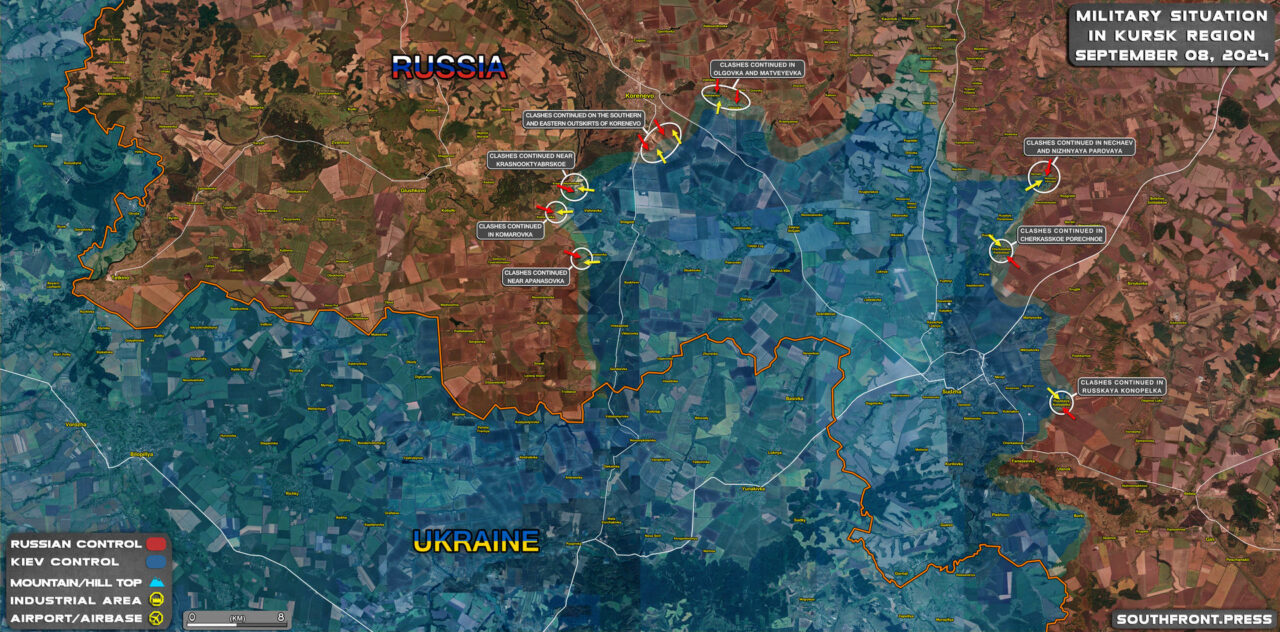
Moore said the Kursk invasion was “typically audacious and bold on the part of the Ukrainians, to try and change the game” and said it had “brought the war home to ordinary Russians.”
Burns said the operation in Kursk was a “significant tactical achievement” that boosted morale in Ukraine. While the fighting continues in Kursk, Russian forces have been making more rapid gains in Ukraine’s Donbas region since the invasion was launched.
The US and its allies claim they weren’t involved in the planning of the Kursk invasion, but a Ukrainian soldier said Western intelligence was crucial for the attack. Ukrainian forces have been using US and British weapons in the assault, marking a significant escalation of the proxy war.
“I think there was a moment in the fall of 2022 when there was a genuine risk of the potential use of tactical nuclear weapons. I have never thought, however, and this is the view of my agency, that we should be unnecessarily intimidated by that. Putin’s a bully and he is going to continue to saber-rattle from time to time,” Burns said.
The details of the peace deal presented today by US special envoy Steve Witkoff are consistent with the report in the Financial Times discussed in my previous article and with Larry Sparano in the posted interview. Putin will halt the Russian advance prior to driving Ukrainian soldiers out of all of the territory that has been reincorporated into Russia. It appears to be the case that the borders between Russia and Ukraine will be the current front line, so Putin is withdrawing Russia’s claim to the Russian territories still under Ukrainian occupation.
Russia and the US seem near a Ukraine peace deal. Kyiv’s role may be moot.
President Donald Trump’s hopes of securing a quick Ukraine peace deal hang in the balance after Washington’s envoy, Steve Witkoff, held his fourth Kremlin meeting with Russian President Vladimir Putin Friday.