Coming to America: Tchaikovsky’s Many Surprises in Gilded-Age New York and Philadelphia
Coming to America: Tchaikovsky’s Many Surprises in Gilded-Age New York and Philadelphia
○
3 mins read
By Paul Kindlon
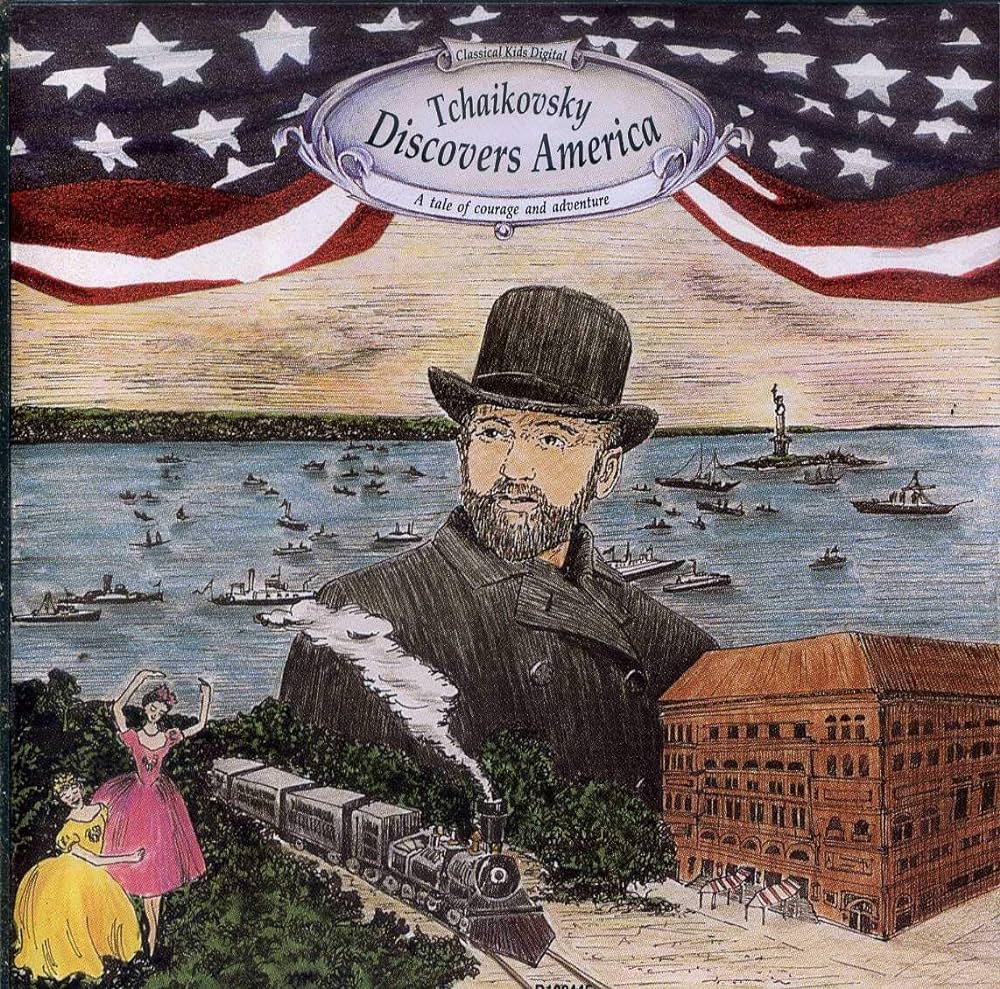
When the great Russian classical music composer Pyotr Ilyich Tchaikovsky visited the United States in late April/early May in 1891 he was shocked and bewildered beyond belief. The trip did not start off well. The composer experienced debilitating seasickness while crossing the Atlantic. Not to mention a hurricane!
When he arrived at his New York hotel he was taken aback by one stunning surprise after another. Despite having stayed at the finest hotels in major European cities like Vienna, Paris, Rome and London he had never been in a hotel with electric lights! Moreover, the hotel had private bathrooms in every room with hot and cold running water and a tubular device with which to communicate directly with the front desk!
The next surprise came on his first night in New York City when he was absolutely flabbergasted by the many “negroes” among the pedestrians. Tchaikovsky was not a tourist, however, he was invited to conduct one of his compositions and feted as an internationally famous composer of the highest order. He was specifically invited to participate in the inaugural concert at Carnegie Hall’s grand opening (initially just called “The Music Hall”) and treated like a superstar.
Tchaikovsky spent time with the philanthropist who provided the money to build the concert hall and was shocked to find a man who – despite being one of the wealthiest men in America – did not put on airs or act at all in a superior manner. Pyotr Ilyich was also amazed by the uncanny resemblance of Carnegie to the great Russian playwright Ostrovksy and that the philanthropist was a big admirer of Moscow!
The composer and the Capitalist extraordinaire got along extremely well laughing and joking for hours on end. This pleasant surprise was offset, however, by an unpleasant one. The day after his concert the newspapers spent as much time describing his physical appearance as they did his music. Pyotr Ilyich was not only disturbed by this, he found it odd and remarkably superficial. After a concert in Philadelphia, a newspaper columnist wrote about his disappointment in seeing a man who “did not look like a composer”. Tchaikovsky had no idea what this journalist could possibly mean.
Moreover, the journalist expressed further disappointment that Tchaikovsky did not have your typical classic “Slavic features” like Anton Rubenstein (!)Another surprise occurred when Tchaikovsky met with the Russian ambassador in Philadelphia. A gifted musician in his own right, the ambassador and Pyotr Ilyich wound up playing piano duets together at a party.
Among his other discoveries were that the overwhelming majority of people were mono-lingual and that men who were close friends or relatives shook hands vigorously instead of kissing each other. Undoubtedly the greatest shock, however, was the fact that Tchaikovsky was – as he said – “ten times more popular in America than in Europe”. That… was the most pleasant surprise.
Donald Trump Should Not Repeat Woodrow Wilson’s Failure
April 30th is an important date in American politics. This is the day 100 for the American President in the White House, and all attention will be on the reports of his achievements and failures. But nothing can be more critical than Peace…
○
6 mins read
A Holocaust perpetrator was just celebrated on US soil. I think I know why no one objected.
Russia’s invasion has made ordinarily outspoken critics of antisemitism wary of criticizing Ukrainian Nazi collaborators
○
1 min read
Qi Book Talk: The Culture of the Second Cold War by Richard Sakwa
Richard Sakwa has for many years been one of the most distinguished and insightful observers of relations between the West and Russia, and one of the leading critics of Western policy. In this talk with Anatol Lieven, director of the Eurasia program at the Quincy Institute, Sakwa discusses his book, The Culture of the Second Cold War (Anthem 2025). The book examines the cultural-political trends and inheritances that underlie the new version of a struggle that we thought we had put behind us in 1989. Sakwa describes both the continuities from the first Cold War and the ways in which new technologies have reshaped strategies and attitudes.