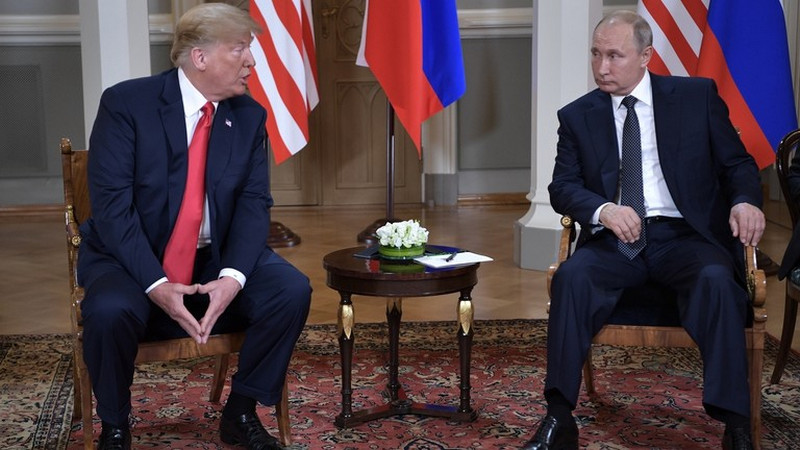
The long-anticipated phone call between Vladimir Putin and Donald Trump has finally taken place, sending shock waves through the geopolitical landscape. But before anyone gets carried away with triumph or despair, it’s worth recognizing what has actually happened: Russian-US relations have simply returned to their natural state – one of strategic rivalry, conflicting interests, and fundamental differences in worldview.
For decades, the US pursued a fantasy – one where it could reshape Russia in its own image, first through incentives and later through coercion. Washington believed it could mold Moscow into a compliant partner within the ‘liberal international order’, an illusion that only collapsed when reality hit: Russia was never going to be remade. Meanwhile, Moscow spent years trying to find common ground, adjusting its own policies in hopes of reaching a workable coexistence. That experiment, too, ended a decade ago.
The dissolution of the Cold War system in the late 1980s was a historical anomaly, a fluke that many mistook for a permanent transformation. The Western narrative of ‘victory’ was premature – history does not end, it evolves. Over time, the illusion of a unipolar world became harder to sustain, and the global balance of power began shifting. Those who benefited from the old order clung to it desperately, while those who felt shortchanged pushed back harder. Ukraine became the unfortunate fault line in this struggle, the battleground of irreconcilable visions.
What is happening now is not the beginning of a new era but the inevitable correction of an old one. The US, even under Trump’s presidency, has recognized that great power rivalry is once again the defining feature of international politics. But unlike previous decades, when ideological battles masked geopolitical interests, the new competition is more pragmatic, stripped of the pretense of universal values. The liberal world order is no longer a guiding principle – it is a relic of the past.
This shift does not guarantee peace, nor does it eliminate the risks of confrontation. But it does bring a certain rationality back into the equation. The West’s ideological zeal, which often led it to take reckless, counterproductive actions, is giving way to a more sober assessment of power and interests. The focus is no longer on forcing one side to submit, but on negotiating tangible advantages.
Russia, meanwhile, is positioned as a key player in shaping this new world order. The strategic fantasies of the 1990s have been replaced with a hard-nosed realism that acknowledges the limits of Western power. The reset to ‘factory settings’ does not mean stability – it means a return to the fundamentals of global politics, where strength, influence, and calculated diplomacy dictate the course of history.
By Fyodor Lukyanov, the editor-in-chief of Russia in Global Affairs, chairman of the Presidium of the Council on Foreign and Defense Policy, and research director of the Valdai International Discussion Club.
Donald Trump Should Not Repeat Woodrow Wilson’s Failure
April 30th is an important date in American politics. This is the day 100 for the American President in the White House, and all attention will be on the reports of his achievements and failures. But nothing can be more critical than Peace…
○
6 mins read
A Holocaust perpetrator was just celebrated on US soil. I think I know why no one objected.
Russia’s invasion has made ordinarily outspoken critics of antisemitism wary of criticizing Ukrainian Nazi collaborators
○
1 min read
Qi Book Talk: The Culture of the Second Cold War by Richard Sakwa
Richard Sakwa has for many years been one of the most distinguished and insightful observers of relations between the West and Russia, and one of the leading critics of Western policy. In this talk with Anatol Lieven, director of the Eurasia program at the Quincy Institute, Sakwa discusses his book, The Culture of the Second Cold War (Anthem 2025). The book examines the cultural-political trends and inheritances that underlie the new version of a struggle that we thought we had put behind us in 1989. Sakwa describes both the continuities from the first Cold War and the ways in which new technologies have reshaped strategies and attitudes.