"The connection of times fell apart." — Hamlet, William Shakespeare. "Such is our age, where blind men lead the mad." — King Lear, William Shakespeare
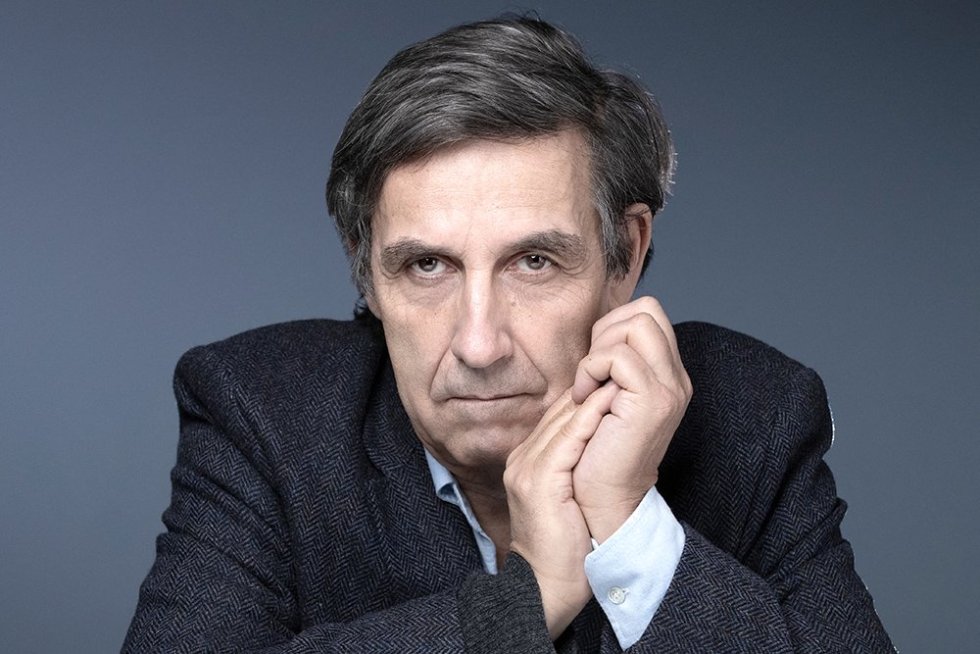
Emmanuel Todd
For a Russian reader, “Smutnoye Vremya” (“Time of Troubles”) is not a metaphor but a historical period from 1598 to 1613, characterized by deep crises in governance, civil wars, famine, riots, foreign intervention, the emergence of impostors, dual power structures, conspiracies, upheavals, betrayals, and significant territorial losses. The Time of Troubles left a profound mark on the national psyche, engendering a rejection of civil disunity and weak authority, and fostering fears of foreign intervention.
At the Crossroads
Russia is no exception. There is no country unfamiliar with periods of chaos, civil strife, and powerlessness. However, the global social order has been moving towards greater stability over the centuries. After the end of the Cold War, there was hope that stable, rational relationships would define the world order. But today, UN Secretary-General António Guterres speaks of a higher level of division than during the Cold War era. “The world is moving towards an era of chaos, with conflicts and wars creating a dangerous and unpredictable reality.” The UN itself is in a similar state of chaos, with its Secretary-General and resolutions carrying little authority or bearing truth and justice for many.
Such conditions today are also characteristic of countries that until recently embodied political and socio-economic stability and the strength of state institutions.
The New York Times published an article by Christopher Caldwell titled “This Prophet Now Predicts the Defeat of the West.” The sensation is not in what the French philosopher Emmanuel Todd says, to whom the article is dedicated, but in the fact that the newspaper, a mouthpiece of liberal democracy and the Democratic Party, published a complementary review acknowledging: “The West is losing its source of strength by abandoning traditional values.”
Discussions about the weakening, degradation, and even suicidal demise of the West have been ongoing for some time, and by many. This theme is constantly present in the pages of the “New Continent”, unlike the “Continent” of Soviet times when ideas of freedom and progress were primarily associated with the attractive example and hopes for the triumph of Western ideals and values, and America and Western Europe were seen as the most effective model of social organization for the whole world.
Todd believes that Western democracy, like the socialist system, is doomed. He gained fame at the age of 25 in 1976 when his book “The Final Fall” was published, predicting the collapse of the Soviet Union. The forecast was not original then; criticisms of the Soviet system’s inefficiency, the systemic inability to act, had been voiced and written since the October Revolution and even before.
Critics of the Soviet system usually pointed to the inefficiency of state planning and economic control, the flaws of party dictatorship, and the cruelty of the repressive apparatus. By the time Todd’s book was published, the Soviet Union was in a state of stagnation, the Brezhnev era. Dissident sentiments were growing, the USSR was increasingly lagging behind the West in competition and losing the arms race. The threat of collapse was obvious, and the West actively contributed to it.
Todd focused on the statistics of infant mortality in the USSR; his predictions were demographic in nature. A decrease in birth rates to a level below simple population reproduction is indeed a national catastrophe. If the same methodology is applied to the demographics of the white race, the creators and bearers of Western civilization, its weakening and collapse due to falling birth rates appear inevitable, especially considering the high birth rates of other races and their mass migration to Europe and America.
But unlike Samuel Huntington, who predicted an inevitable clash of civilizations, Todd hopes for the convergence of races and ethnicities and Christian and Islamic civilizations. This hope becomes increasingly illusory after riots and pogroms accompanying the massive migration of people of other traditions and cultures to the West and the rise of nationalist and Nazi sentiments.
Todd’s forecasts are based on the political and social weakening of the West, the loss of moral and traditional values, and the errors and failures of foreign policy. “The idea that under the pretext of democracy, one can bomb the citizens of another country on legal grounds, is an idea that kills democracy,” writes the philosopher. “The USA is a greater threat to the world than Iran.” However, the philosopher does not offer convincing arguments on how to stop the spread of radical fundamentalism and terrorism. Philosophical works cannot defeat fanatics and terrorists.
Todd draws a parallel between Ancient Rome in its period of decline and the contemporary West: “Society is paralyzed between, on the one hand, masses of economically useless plebeians demanding bread and circuses, and on the other hand, a predatory plutocracy… The middle class is destroyed.” (“After the Empire: The Breakdown of the American Order.”)
Todd writes that the values that America considers universal are not universal for family structure, models of sexual and gender relations, and are unacceptable for most countries: “Traditional cultures experience much fear from Western influence.” He questions the intellectual level of Western judgments and decisions, the inability to distinguish between facts and desires. He sees this in every step of the West in the Ukrainian war, in the assessment of China’s position. “The arrogance of those who rule these countries is a greater threat to the Western order.” He believes that it is not national principles but party ones that determine Western policy.
The end of the article in The New York Times reads: “President Biden does not understand his country, presenting it as stable and united, ready to do everything desired. Ukrainians learned this at a disproportionately high price.”
It can be assumed that the article was an attempt to balance the newspaper’s position, openly supporting the Democratic Party and the policies and rhetoric of President Biden.
Here’s another article, by David Sanger, “Biden’s Apocalypse Moment: When Nuclear Explosion Looks Possible in Ukraine.” The article draws an analogy with the Cuban Missile Crisis, which President Kennedy managed to resolve through compromise. But the level of alarm in the reader will not decrease; rather, on the contrary, it will raise questions about the policy orchestrated by Biden towards Ukraine and prompt closer attention to Trump’s promises to quickly resolve the crisis.
In another recent article in The New York Times, documents presented to Congress by the special prosecutor are thoroughly examined and quoted: “An old man with a bad memory. The president repeatedly said he does not remember or does not know the details. The examples are discouraging.” “I don’t remember,” the president said more than 50 times. In old age, it is easier for politicians to admit to accusations of corruption and sexual harassment than to memory loss and insanity. At a recent meeting with voters, Biden confused Afghanistan with Iraq and Iran. Even friendly media constantly publish absurdities and slips, indicating his cognitive impairments. His level of humor – to call Senator Chuck Schumer, a Jew, “Charlie Schmedler” (an attempt to create a derogatory Yiddish neologism).
And all this in the world’s most famous newspaper. About the president of a great country, the leader of the free world. About the state of democracy in an era of turmoil, degradation, and disintegration.
Tyrants or representatives of the people
The Time of Troubles is always without power or with weak power. Democracies are prone to weakening governance and sliding into chaos. Often, leaders elected democratically find ways to suppress opponents within democratic institutions. On the other hand, expanding rights and freedoms, strengthening spontaneous participation in politics by the masses, can lead to the weakening and paralysis of democratic institutions of power. The prerogative of democracy is the rule of law, but law can also serve as a means of suppressing a dangerous opponent. If Trump had not entered into big politics, he would not have found himself facing endless legal investigations and the threat of bankruptcy. And Giuliani would have remained a heroic mayor and continued his multimillion-dollar legal practice.
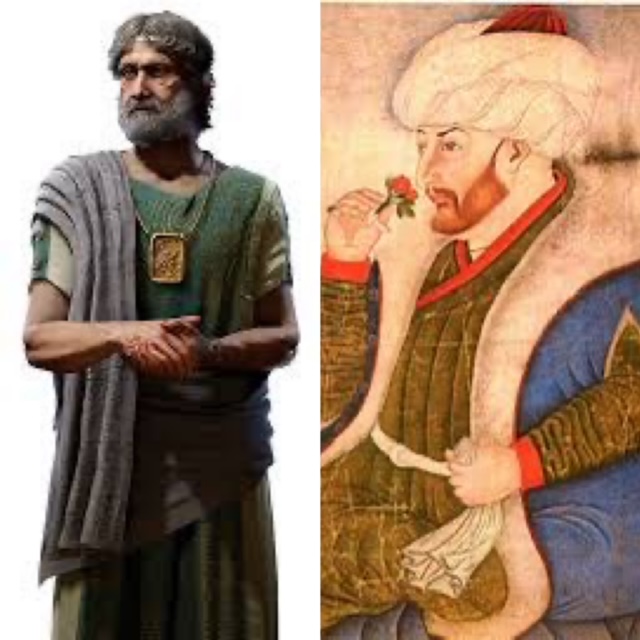
The world has never known perfect democracies or leaders, but history provides remarkable examples of successful popular rule. The father of Greek democracy, Pericles, a great statesman, implemented radical reforms in the interests of the people, granted authority to the Assembly, restricted the power of the aristocracy, and created opportunities for unprecedented development in science and art. He surrounded himself with the most famous intellectuals. Pericles was characterized by personal modesty and restraint; he did not allow himself or his family privileges. He even brought his own son to trial for abusing his father’s position. (A remarkable example not only for the current president.)
Any citizen could address him with a request or expression of dissatisfaction; he often had to listen to insults, but he did not lose his composure. According to legend, once a disgruntled citizen spat at Pericles, and although the ruler of the country possessed great physical strength and was an experienced warrior, he merely apologized for any distress caused. His critics enjoyed unrestricted freedom. Democracy had opponents, and they expressed their views freely. The great Plato preferred enlightened monarchy under the guidance of a philosopher-ruler.
Autocratic rule can also provide evidence of successful development for a country. Mehmed II, the Sultan of the Ottoman Empire, at the age of 18, defeated the Crusade, and at 21, he captured Constantinople, subjugating Byzantium and creating the most powerful empire of his time. He considered his state the successor to the Roman Empire and patronized education, science, and the arts. In 1478, he enacted a law on freedom of religion and incorporated Greeks and Slavs into the ruling structures.
Mehmed was highly educated, valued literature, art, and architecture, preserved Christian monuments, created the largest libraries, the “House of Wisdom,” where texts were translated from Greek, Latin, Hebrew, Sanskrit, Persian, Syriac, and commented upon. He was a polyglot, wrote poetry, and philosophical reflections. Every morning, three philosophers came to him, speaking with him in Latin, Greek, and Arabic. Nothing delighted him more, contemporaries wrote, than the study of history, geography, and literature. His heroes were Alexander the Great, Pompey, and Caesar.
Advocates of militant democracy often talk about pluralism, tolerance for other traditions and cultures, but they do not want to recognize the diversity of the world view, the non-reducibility of interests and values to one model. Cruel lessons from history and even recent times have not helped recognize this truth. It is appropriate to recall that Obama’s attempts to ignite the “Arab Spring” and establish democracy through riots and revolutions led to mass casualties and the strengthening of authoritarian regimes.
Fighters for rights and freedoms and democracy are not always satisfied. The current brazen interference in Israel’s internal problems is one example. Veteran of high politics Chuck Schumer, leader of the Democratic majority, called for a change of government in a friendly country in the Senate, essentially calling for a coup d’état. How can other countries be accused of similar actions after this? Minority leader Mitch McConnell called Schumer’s speech “unprecedented caricatured hypocrisy.” But President Biden praised him. It is unlikely that Schumer was primarily concerned with Israeli democracy; he will not be able to hold onto his position by supporting the rights of the Jewish state. There is no need to talk about a sense of shame for the experienced politician, but it seems that this time Schumer miscalculated, even liberal Jews are shocked by his shameful position.
Many see the cause of the failures of American domestic and foreign policy in the gerontology of leadership, the immutability of the establishment, hindering the advancement of young forces. But here are two other, younger, contenders for state leadership: the conspiracy-obsessed Robert Kennedy and an even more otherworldly figure in politics, the scandalous rapper who fancied himself a thinker, Kanye West.
Ambitious candidates from new generations are visible, but none of them can be taken seriously yet. And it is even more challenging to imagine anyone from the “progressives” in high politics or positions of power, even among members of Congress. Under them, the old guard will be remembered with nostalgia.
It’s impossible to rationally explain such leadership degradation in a country with the best universities, powerful centers for studying politics, and gigantic investments in promoting leaders. But, if we set aside mysticism, we are left to suppose that a person with reason and conscience will not enter today’s politics, and if they do, they will be stopped in their tracks.
An ambitious leader doesn’t necessarily have to have read Pericles, Churchill, or Lincoln, but they are undoubtedly familiar with Machiavelli’s “The Prince” and his methods of achieving goals and retaining power. Leaders in high politics are aware of the fates of Caesar, Alexander II, Lincoln, Mahatma Gandhi, Indira and Rajiv Gandhi, Kennedy, Yitzhak Rabin, Anwar Sadat, Salvador Allende, Benazir Bhutto, and the list continues to grow. Turbulent times and weak power are a disaster for the people but also a threat to rulers.
The creation of political and civil turmoil involves carriers of various, often opposing beliefs and interests, and autocrats and populist democrats alike fuel the mood, hoping that such an atmosphere will help them achieve their goals. One must remember the warning of Michel de Montaigne, the great French Enlightenment thinker: “The fruits of turmoil never come to those who caused it… Others will be the ones to catch the fish.”
Today, there is neither Kennedy nor Reagan, and society is not prepared for rational dialogue and compromises. The time of turmoil and chaos undermines trust in democracy and breeds an illusion of leader-saviors. “Leaders who scare with blood… are more trusted than politicians promising prosperity and well-being,” wrote George Orwell.
According to polls, the most important condition to strengthen the authority of democracy is worthy leaders. But history shows that they emerge during fatal trials, during crises and disasters. They say you have to hit rock bottom to understand where you are and what to do. Poor consolation.
Adrift Without a Rudder
Turbulent times affect all aspects of public life, but most of all, they affect the state of public consciousness, giving rise to anxiety, uncertainty, confusion, leading to cynicism and apathy or, conversely, to embitterment and animosity.
According to CNN/Kaiser Foundation, 90% of Americans acknowledge that the country is in a mental health crisis. The number of people seeking professional help is increasing year by year and has grown by almost 40% in 2 years. America has the largest army of psychiatrists, psychologists, social workers in the world. And this is not counting religious support, various healers, gurus, “life coaches,” fortune tellers, consultants, and a huge flow of “self-help” literature, mass healing “marathons” of desires, motivations, inspirations.
Leaders also try their hand at psychotherapy, reassuring and promising to overcome difficulties and achieve universal well-being. With the current experience, there’s little faith left, but when leaders speak of disasters, if rejected in elections, it’s taken seriously. The press often quotes Trump, painting a picture of global chaos and a “bloody bath” if he loses. Biden promises the downfall of democracy and apocalypse if not re-elected. Whoever is elected, peace remains elusive.
Leaders are supposed to be an example of resilience and calmness, but Biden, as reported by the pro-Democrat MSNBC, is “angry and anxious… He yelled and cursed at a meeting in the White House.” There’s reason to be angry – the president’s approval rating is at 38%, lower than that of losing candidates Trump – 48%, Bush – 39%, Carter – 43%. Biden has a tough road ahead: the streets and the left wing of his party demand a halt to Israel, while the state interest lies in ending the terrorist enclave in a region vital to America.
It’s not difficult to imagine how such a situation is reflected in the public consciousness. Experts talk about three interconnected processes. First and foremost, drug use, stimulated by the social atmosphere and the expansion and legalization of drugs. From light drugs, the transition to more harmful ones is inevitable. Illegal trade has not only not decreased but has grown, with new powerful and more dangerous drugs appearing on the market. All approaches have been tried – softening penalties, enlightenment, attempts at rehabilitation, and harsh punitive measures, with California imposing a 20-year prison sentence for selling fentanyl.
But the expensive system of therapy for drug addiction is ineffective and wasteful. The number of deaths from overdoses has reached unprecedented levels – over 100,000 per year. This is five times more than in 2002. The highest mortality rates are among men aged 35-44.
Medical statistics note a catastrophic increase in mental disorders among young people, especially schoolchildren and university students. According to government agencies, 42% of high school seniors “constantly feel sad and hopeless,” and 22% “seriously consider suicide.” The number of Americans aged 10-24 with mental anomalies has increased by 52.2% since 2000. The connection between this catastrophe and the departure from classical educational models towards politicization and liberal ideology cannot be ignored. Social media have a particularly harmful influence on the mental state of young people, exacerbating aggression, hatred, bullying, the spread of pornography, and sexual perversions.
The current social atmosphere exacerbates mental disorders – depression, schizophrenia, paranoia, bipolar affective disorders, manic states. People with these conditions live 20-25 years less than the national average, with only 20% employed. Most of them are homeless or in prison.
America spends almost as much on treating mental illnesses and drug addiction as the rest of the world combined. Debates are ongoing at all levels, with new initiatives, approaches, and campaigns, but the results are dismal.
One can understand the “Mental Health Tsunami in Israel,” much talked about and written about – not a day of peace since the founding of the country, continuous terror, hostile neighbors. And here’s October 7, the most terrifying day for Jews after the Holocaust. Hundreds of thousands of Israelis experience post-traumatic stress disorder, depression, insomnia.
Americans clearly do not face such external threats, and internal difficulties are incomparable with the conditions of life in most countries in the world. However, according to the latest “World Happiness Index” (a survey on overall life satisfaction), among more than 140 countries, Israel ranks 5th, while the USA ranks 23rd. How life has come to such a point is a question that defies logic and common sense.
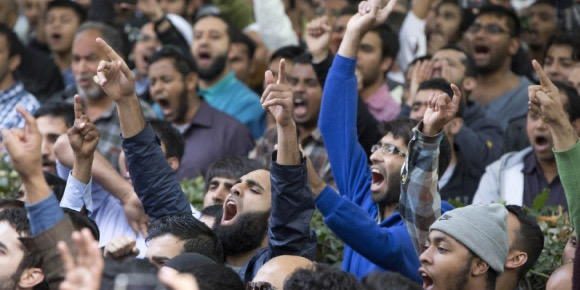
In addition to the anomalies described in clinical manuals and diagnoses, deviant and antisocial behavior is constantly on the rise. On the streets, in transport, in stores, there are explosions of emotions, scandals, often accompanied by physical violence. The country constantly witnesses massive protests, rallies, which sow discord and hatred, traumatizing the psyche of participants and eliciting equally fierce reactions.
Americans, who had a reputation for being pragmatic, sensible people, have fallen prey to conspiracy theories about the “Deep State,” political assassinations, behind-the-scenes conspiracies, Zionist provocations funded by the Rothschilds and Rockefellers (not Jews, anti-Israel), Soros (Jewish anti-Zionist). There is record-level distrust in institutions, leaders, media, and experts. The wild QAnon movement has gained widespread popularity, with its members convinced that a global government of pedophiles, in which Hillary Clinton and a Washington pizzeria play key roles, controls world events.
In such a state, the thinking of Ayn Rand, America’s most famous political philosopher, find new supporters and continuators, demanding restrictions on voting rights for those deprived of rational thinking and not contributing to the public good. According to Ayn Rand, rational decisions are not products of mass consciousness and participation but are the result of knowledge, experience, and the efforts of the creative elite. More often than not, these decisions do not align with the desires and moods of the majority. It turns out the majority impedes the development of democracy. But democracy is the rule of the people, the expression of the will of the majority; the rule and privileges of the elite are the usurpation of power, and how to resolve this contradiction is unknown.
Biblical Moses had to deal with an uncontrollable crowd unwilling to sacrifice for the future, demanding instant gratification, always ready for protests and riots. But he relied on the will and help of God; the Almighty gave him instructions and actively participated in the course of events.
Behind the modern leader, more often than not, stands the devil, pushing towards temptation and abuse of power. Not everyone can resist. If a leader is ready to honestly speak about the true state of affairs, who will elect him? Willingly or unwillingly, one must lie and manipulate.
The arsenal for meeting with voters has long been worked out: “I love Chicago, Philadelphia, Oklahoma, Texas,” and so on down the list of cities and states; one must remember about parents, honest workers, pick up a black child, thank war and labor veterans, talk about personal hardships endured, joke with self-irony, drink beer, and visit a cheap restaurant. And promise, promise, promise.
The hope and support of the current leader primarily lie with the party, sponsors, and lobbyists whose interests he must protect. One billion dollars has a greater influence on election outcomes than many thousands of fellow citizens. Well-paid PR and propaganda will attract supporters and push opponents aside, directing public opinion in the right direction.
Supporters of democracy argue that its strength lies not in the merits of leaders but in the effectiveness of institutions and popular support. But institutions are not trusted, public consciousness is confused, there is no unity of will and readiness for necessary changes, and what changes are needed cannot be agreed upon.
In anticipation of enlightenment and salvation, one can once again recall Shakespeare: “Times force to be steadfast”. (“King Lear”).
Donald Trump Should Not Repeat Woodrow Wilson’s Failure
April 30th is an important date in American politics. This is the day 100 for the American President in the White House, and all attention will be on the reports of his achievements and failures. But nothing can be more critical than Peace…
○
6 mins read
A Holocaust perpetrator was just celebrated on US soil. I think I know why no one objected.
Russia’s invasion has made ordinarily outspoken critics of antisemitism wary of criticizing Ukrainian Nazi collaborators
○
1 min read
Qi Book Talk: The Culture of the Second Cold War by Richard Sakwa
Richard Sakwa has for many years been one of the most distinguished and insightful observers of relations between the West and Russia, and one of the leading critics of Western policy. In this talk with Anatol Lieven, director of the Eurasia program at the Quincy Institute, Sakwa discusses his book, The Culture of the Second Cold War (Anthem 2025). The book examines the cultural-political trends and inheritances that underlie the new version of a struggle that we thought we had put behind us in 1989. Sakwa describes both the continuities from the first Cold War and the ways in which new technologies have reshaped strategies and attitudes.