The Carnegie Endowment for International Peace has warned of Russia’s increasing “international isolation” in a statement on the closure of their Moscow center by the Russian Ministry of Justice on April 8.
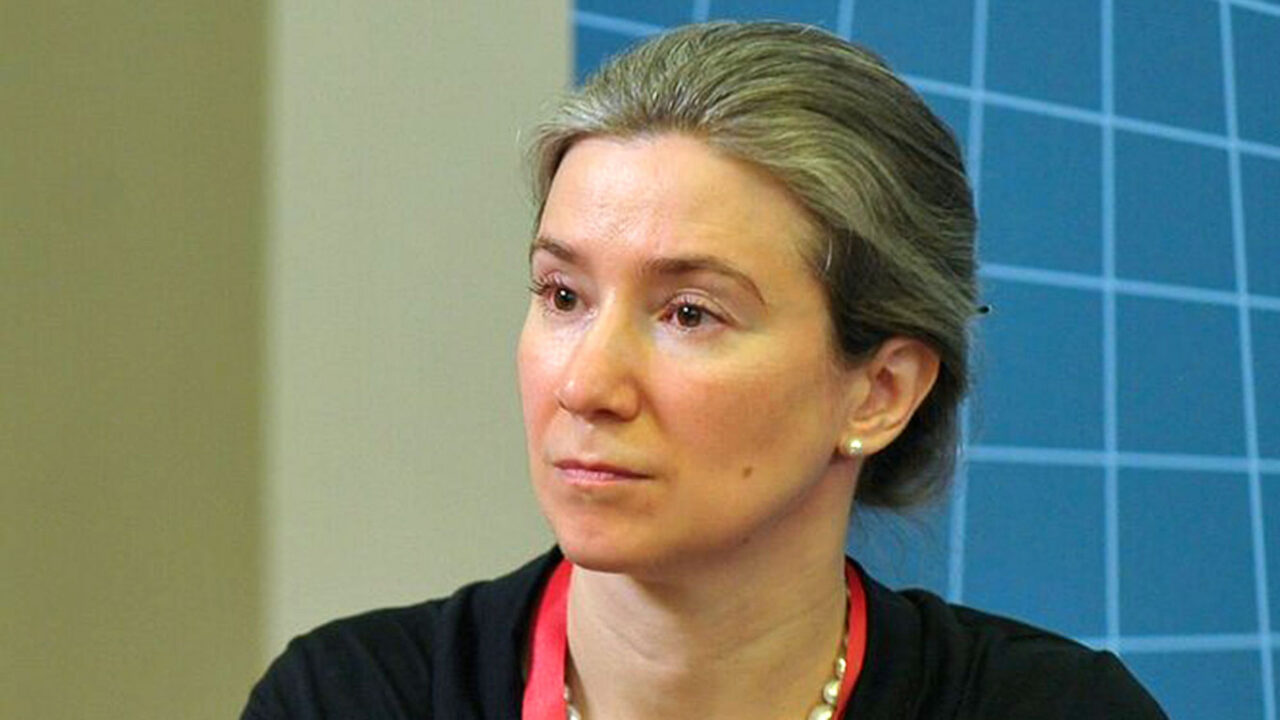
Political scientist Yekaterina Schulmann.
Writing on social media Monday, Carnegie said they “regretted” the Russian government’s decision, but pledged that their staff would continue their research.
The Russian government shuttered the think tank after claiming they had “discovered violations of the Russian legislation”, but didn’t provide further details.
The head of Moscow Carnegie Centre, Dmitry Trenin, declined to comment on the closure Tuesday, calling it a “sensitive topic.” Andrei Kolesnikov, a top Carnegie analyst, told The Moscow Times he was staying in Russia, and didn’t plan to leave anytime soon.
Meanwhile, non-resident Carnegie scholar and economist Andrei Movchan said nobody from the Moscow center had contacted him about the think tank’s demise.
After twenty-eight years, the Carnegie Endowment for International Peace was forced last week to close its Moscow center at the direction of the government of the Russian Federation. pic.twitter.com/TgR4dT9MmC
Carnegie’s demise is just one of a series of closures affecting international organizations in Russia, as global tensions continue to rise following Moscow’s invasion of Ukraine.
The shift has prompted a wave of political scientists to leave Russia.
Ekaterina Schulmann, a famous Russian political scientist and a prominent public figure, announced last week that she would be living in Berlin for a year as a Robert Bosch Foundation Fellow.
The process of accepting Schulmann as a fellow was sped up due to “all sorts of extraordinary circumstances,” she said on April 12, during her weekly YouTube show, Status.
“Otherwise, the correspondence would have gone on for another year.”
Days later, on April 15, Schulmann was labeled a “foreign agent” by the Russian government, a legal term carrying connotations of Soviet-era spying.
Political scientist Alyona Vandysheva, who partnered with anti-corruption organization Transparency International and previously taught law and anti-corruption at Russia’s renowned Higher School of Economics (HSE), has also left the country.
Vandysheva said she “didn’t feel safe” in Russia and decided to relocate to Georgia.
“I was afraid that my work for Transparency would lead to some kind of repressive measures against me,” she told St Petersburg news outlet Rotonda on March 29.
Russian journalist, sociologist and Carnegie contributor Konstantin Gaaze has also left Russia.
“I’m glad I left, I’m glad that I’m saving my mental health,” he said on an episode of Kavachai (“Coffee-tea” in Ukrainian and Russian), a podcast run by Ukrainian and Russian journalists about the war in Ukraine.
Echoing worries about safety, a renowned social scientist and a public speaker Grigory Yudin refused to comment on his plans to leave Russia saying, “only [Russia’s Federal Security Service, the] FSB asks such questions.”
Donald Trump Should Not Repeat Woodrow Wilson’s Failure
April 30th is an important date in American politics. This is the day 100 for the American President in the White House, and all attention will be on the reports of his achievements and failures. But nothing can be more critical than Peace…
○
6 mins read
A Holocaust perpetrator was just celebrated on US soil. I think I know why no one objected.
Russia’s invasion has made ordinarily outspoken critics of antisemitism wary of criticizing Ukrainian Nazi collaborators
○
1 min read
Qi Book Talk: The Culture of the Second Cold War by Richard Sakwa
Richard Sakwa has for many years been one of the most distinguished and insightful observers of relations between the West and Russia, and one of the leading critics of Western policy. In this talk with Anatol Lieven, director of the Eurasia program at the Quincy Institute, Sakwa discusses his book, The Culture of the Second Cold War (Anthem 2025). The book examines the cultural-political trends and inheritances that underlie the new version of a struggle that we thought we had put behind us in 1989. Sakwa describes both the continuities from the first Cold War and the ways in which new technologies have reshaped strategies and attitudes.