Putin Ally Issues Nuclear Warning Over Ukraine’s New F-16s
Putin Ally Issues Nuclear Warning Over Ukraine’s New F-16s
○
3 mins read
Russia has issued a warning to the West over the planned delivery of F-16 fighter jets to Ukraine from Belgium this year.
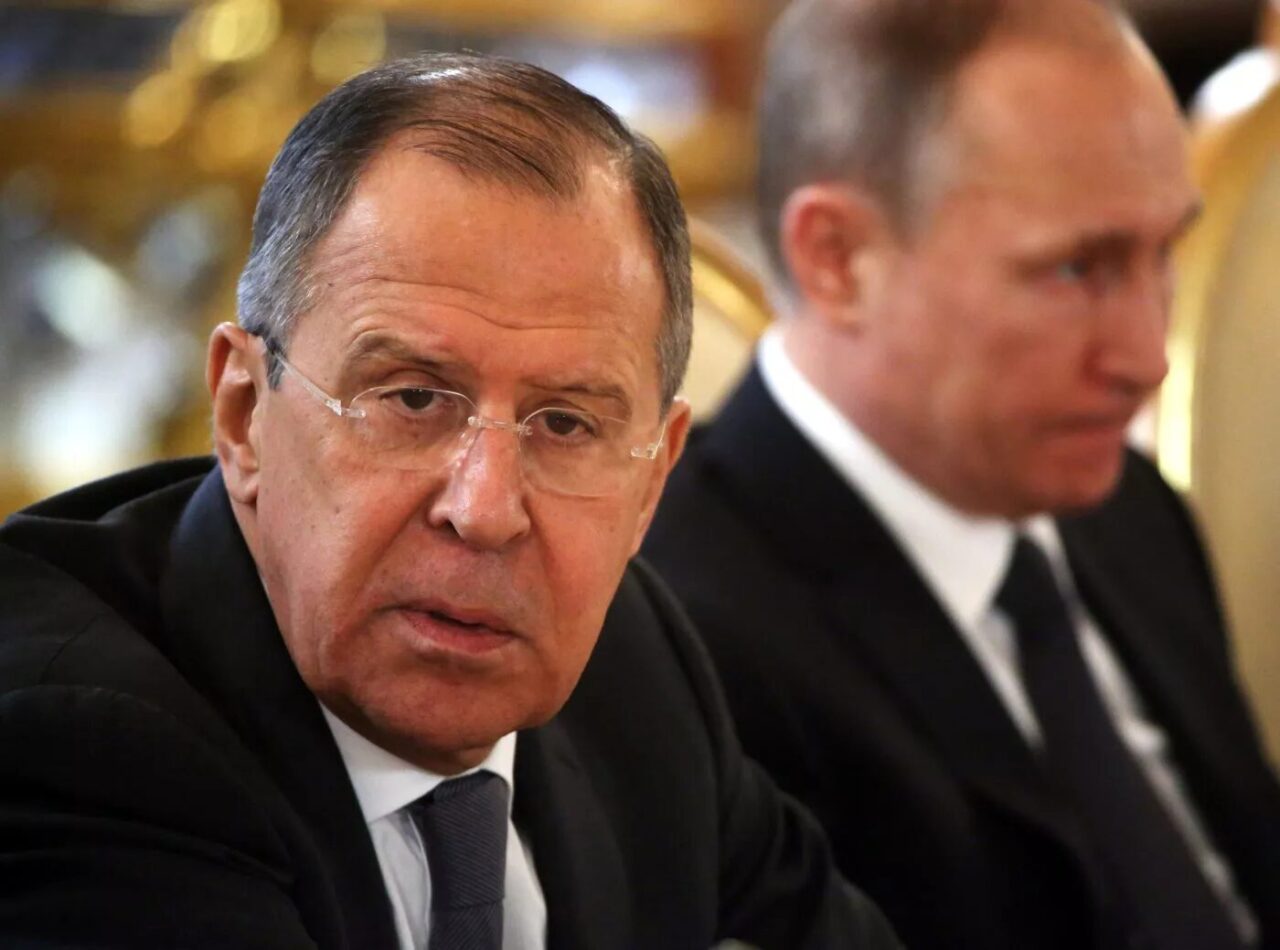
Russian Foreign Minister Sergei Lavrov, left, and President Vladimir Putin, right, attend talks at the Grand Kremlin Palace in Moscow on April 5, 2017. Lavrov has issued a warning to the West over the planned delivery of F-16 fighter jets to Ukraine from Belgium. MIKHAIL SVETLOV/GETTY IMAGES
Moscow will perceive the delivery of the aircraft as a “signal action” by NATO “in the nuclear sphere,” Russian Foreign Minister Sergei Lavrov said in an interview with state-run news agency RIA Novosti published on Wednesday.
His remarks come after Belgium pledged on Tuesday to deliver a first batch of F-16s to Ukraine this year. The two nations signed a security agreement this week that includes supplying a total of 30 of the U.S.-built fighter jets to Ukraine to ramp up its defenses amid the ongoing war launched by Russia.
“They are trying to tell us that the United States and NATO would stop at nothing in Ukraine,” Lavrov said. “Nevertheless, we hope that the Russian-Belarusian drills on the use of non-strategic nuclear weapons that are underway now will knock some sense into our opponents by reminding them about the catastrophic consequences of further nuclear escalation.”
Lavrov added: “These aircraft will be destroyed, like other types of weapons supplied by NATO countries to Ukraine.”
Newsweek has contacted Russia’s Defense Ministry for comment by email.
Belgium vowed to supply Ukraine with all 30 F-16s before 2028. Last year, Belgium, alongside Denmark, Norway and the Netherlands, announced that it would be sending Ukraine an unspecified number of the aircraft.
Belgian Prime Minister Alexander De Croo said at a press briefing with Ukrainian President Volodymyr Zelensky on Tuesday that his country would provide Ukraine with the F-16 jets “as soon as possible.”
“Our aim is to be able to provide first aircraft before the end of this year, 2024,” he said. “We will do everything in our capacity to deliver some planes already this year.”
“Everything which is covered by this agreement is very clear: it is for utilization by the Ukrainian defense forces on Ukraine territory,” he said.
There has been a growing chorus of calls for Ukraine to be authorized to use Western weapons to attack targets inside Russia, more than two years into the war launched by Moscow in February 2022.
“Putin has only one influence mechanism, that is the destruction of life. He is not capable of anything else,” Zelensky said Tuesday. “A sufficient power of weaponry is crucial so that we can physically defend [ourselves] against Russia’s terror.”
“They are shooting at you, and you cannot shoot back at them because you do not have the permission [from Western allies],” he added.
Donald Trump Should Not Repeat Woodrow Wilson’s Failure
April 30th is an important date in American politics. This is the day 100 for the American President in the White House, and all attention will be on the reports of his achievements and failures. But nothing can be more critical than Peace…
○
6 mins read
A Holocaust perpetrator was just celebrated on US soil. I think I know why no one objected.
Russia’s invasion has made ordinarily outspoken critics of antisemitism wary of criticizing Ukrainian Nazi collaborators
○
1 min read
Qi Book Talk: The Culture of the Second Cold War by Richard Sakwa
Richard Sakwa has for many years been one of the most distinguished and insightful observers of relations between the West and Russia, and one of the leading critics of Western policy. In this talk with Anatol Lieven, director of the Eurasia program at the Quincy Institute, Sakwa discusses his book, The Culture of the Second Cold War (Anthem 2025). The book examines the cultural-political trends and inheritances that underlie the new version of a struggle that we thought we had put behind us in 1989. Sakwa describes both the continuities from the first Cold War and the ways in which new technologies have reshaped strategies and attitudes.