

○
10 mins read
NATO’s ‘proxy war’ blues: How the US-led campaign to use Ukraine to ‘cripple’ Russia has failed
Moscow has overcome Western economic sanctions and honed a bigger and more effective military through 18 months of combat

10 mins read
Moscow has overcome Western economic sanctions and honed a bigger and more effective military through 18 months of combat
3 mins read
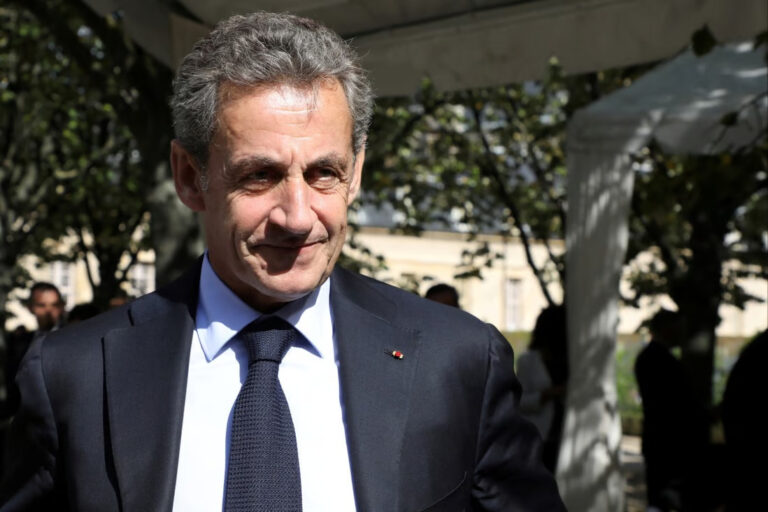
Nicolas Sarkozy said Putin was ‘not irrational’ and the conflict could be ended with new referendums in the Russian- occupied territories. Ukraine said the proposal was based on ‘criminal logic’, while a French MP accused Sarkozy of being a ‘Russian influencer’.

2 mins read
The comments were made by Stian Jenssen, chief of staff for NATO Secretary-General Jens Stoltenberg

1 min read
Below is a link to a speech by Columbia University’s Dr. Jeffrey Sachs, the well-known American economist who has made significant contributions to the fields of sustainable development and economic development. He has become an outspoken critic of American policy toward Russia.
1 min read
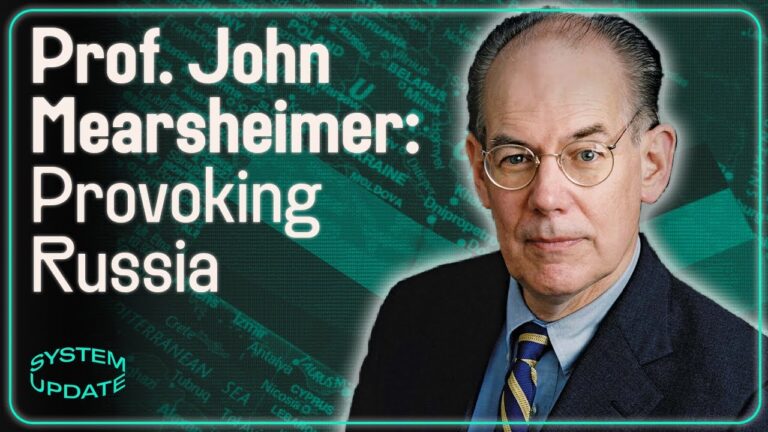
Legendary University of Chicago IR theorist John Mearsheimer joins Pulitzer Prize winner Glenn Greenwald for a discussion of the war in Ukraine.

1 min read
NATO summit failure and further Biden escalation w/ Jeffrey Sachs (Live)

7 mins read
Now that the dust has settled on the recent NATO summit in Vilnius, it is worth considering some of its longer-term implications.

10 mins read
The dysfunction of the Atlantic military alliance over Ukrainian membership was just the most public manifestation of the debacle that was the Vilnius summit.

7 mins read
When the Cold War ended in 1989 and the Soviet Union peacefully dissolved at the end of 1991, the US led- Atlantic Alliance was a coherent, clearly defined organization of 16 member states. The second tier was clearly seen to be composed of Britain, Germany and France, along with Italy and they could generally be relied upon to support US policies, at least in theory, with occasional efforts to influence Washington away from risks of confrontation with the Soviet Union.

9 mins read
The proxy war on Russia is the centre piece of Biden’s foreign policy of uniting the world’s ‘democracies’ against ‘autocracies’, particularly China and Russia. He boasts repeatedly of uniting US allies, most in NATO, as never before. Though the real unity is spotty at best, until recently, the rhetoric seemed to work. No longer. At its recent Vilnius Summit, NATO’s disunity bubbled over, though not for the reasons most discussed in the press. The real reasons are rooted in developments that threaten to unravel not only Biden’s strategy, but also NATO.