The Magnitsky Hoax: The U.S. Sanctioned Russia to Protect Britain’s Offshore Crime Center HSBC, as the U.S. Senate Exposed that Bank’s War Against America. Part 1
The Magnitsky Hoax: The U.S. Sanctioned Russia to Protect Britain’s Offshore Crime Center HSBC, as the U.S. Senate Exposed that Bank’s War Against America. Part 1
○
9 mins read
By Anton Chaitkin
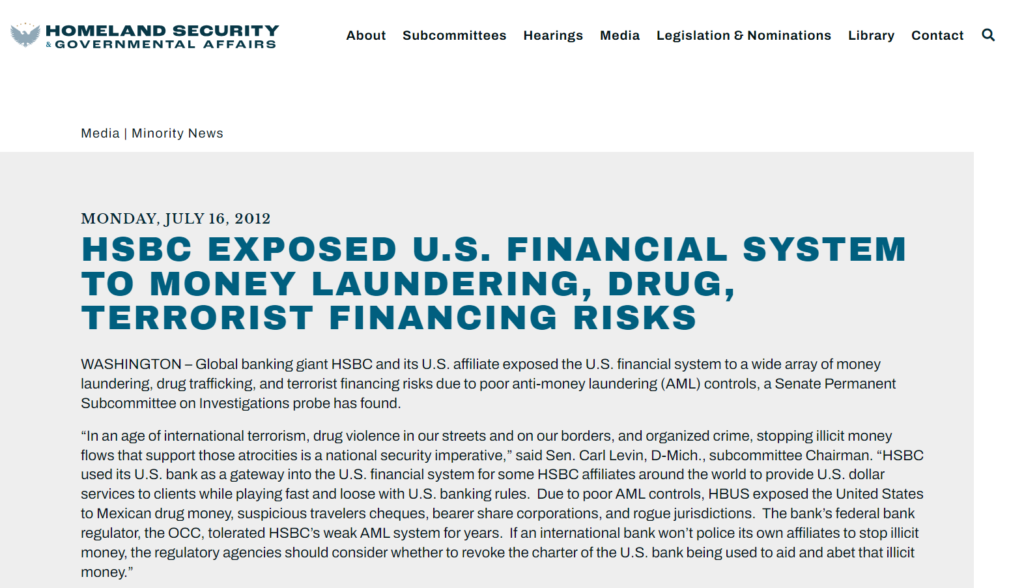
A 2012 U.S. Senate investigation documented that the British bank HSBC laundered billions for the Mexican cartel whose narcotics cripple the United States; laundered hundreds of millions for mobsters looting Russia; provided cash flows to terrorists including 9-11 hijackers; and robbed American customers, investors and dying elderly persons.
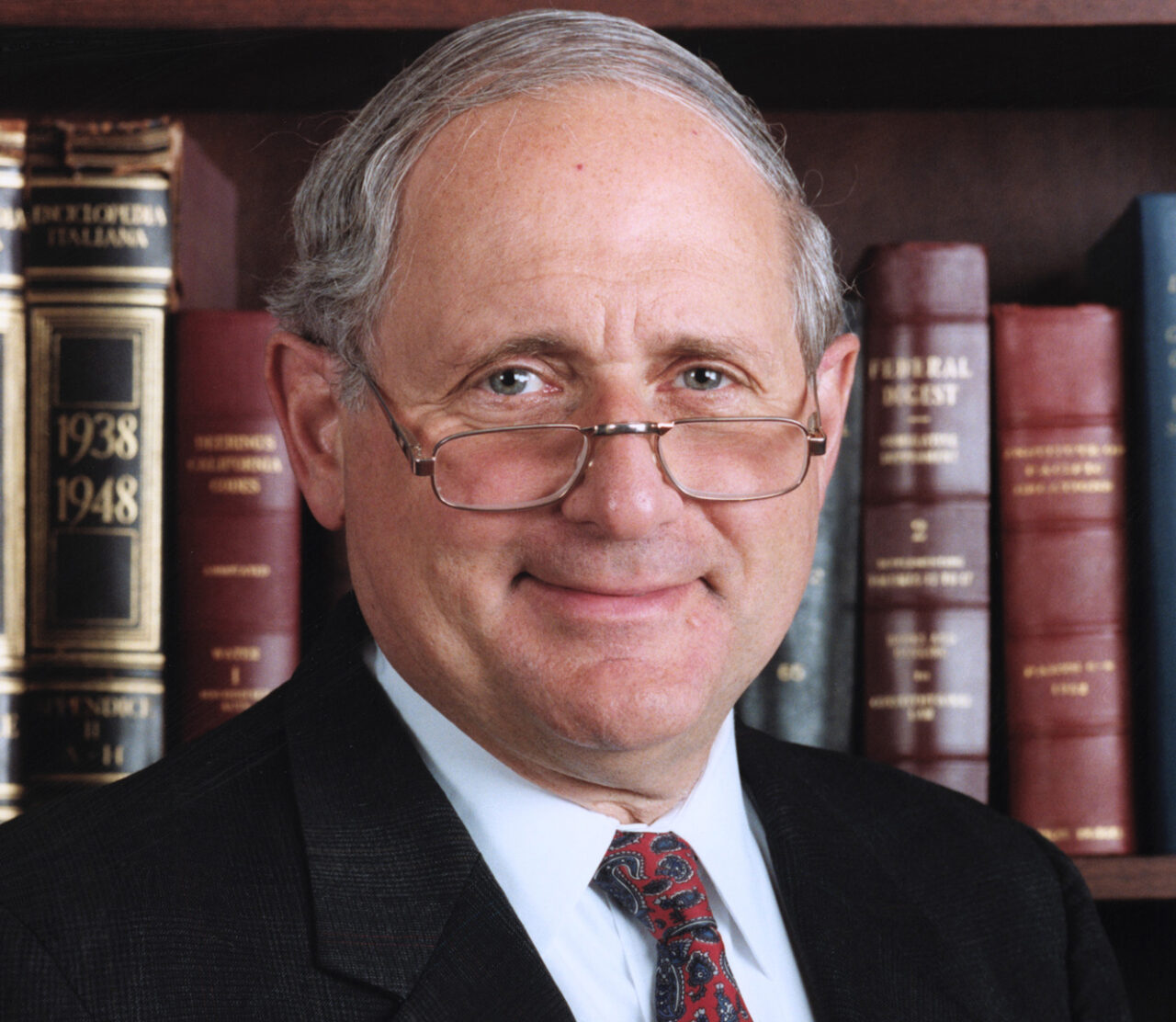
Senator Carl Levin
The U.S. Senate exposure and call for legal action against HSBC was echoed by the Russian government crackdown on the bank’s Moscow subsidiary – the largest looter of Russia. The manager of HSBC’s Moscow unit, William Browder, activated U.S. Congress allies to push through legislation starting sanctions against Russia for prosecuting the bank the Senate was exposing. The “Magnitsky Act” was introduced three days after the Senate’s earth-shaking report1 was issued.
Later in 2012, the Barack Obama administration decided to protect HSBC with minimal penalties; and three days after that, Obama signed the Magnitsky Act into law, initiating economic warfare against Russia.
This was the start of a heightened offensive of the new Cold War, that has since spiraled into a deadly danger to humanity. And the HSBC case had made it clear that in this conflict, the “West” was not promoting actual Western values, but openly criminal globalism.
HSBC – originally the Hongkong and Shanghai Bank – was established in 1865 in Hong Kong, the colonial coastal enclave the British empire had taken from China in the 1839-1842 Opium War. The British bank was notorious as the leading institution in the opium trafficking that continued into the 20th century.
In the 21st century, HSBC again became infamous for many crimes, especially for managing covert cash flows for narcotics cartels.
The Money-Laundering Infrastructure
HSBC’s leaders pulled together crucial pieces of the apparatus used in this later criminal phase by purchasing other institutions from 1999 to 2002.
In May 1999, HSBC announced it would acquire the offshore-vectored interests of billionaire Edmond Safra — the Republic National Bank of New York, and the Swiss bank, Safra Republic Holdings — for $10.3 billion. Safra’s banks concentrated on placing the money of his wealthy clients beyond the reach of tax authorities, and of law enforcers inquiring into the money’s sources.
Safra also specialized in Russian operations. When the Soviet Union collapsed, U.K. Prime Minister Margaret Thatcher and U.S. President George H.S. Bush had helped open up Russia to raw-materials looting and other gangsterism. Safra’s Republic National Bank of New York bought new $100 bills from the New York Federal Reserve Bank and shipped as much as a ton or more of them every night on a flight to Moscow.
Investigative reporter Robert I. Friedman wrote,
“Russian banks…have purchased the $100 bills on behalf of clients, who typically pay for the cash with wire transfers from London bank accounts…. Federal authorities estimate more than $40 billion–all in uncirculated $100 bills…was shipped to Russia [from January 1994 to January, 1996] that far exceeds the total value of all the Russian rubles in circulation….” The cash “is used to finance the Russian mob’s vast and growing international crime syndicate…. The hundreds are also being used to fuel the Russian mob’s flourishing dollar based global drug trade, as well as to buy the requisite villas in Monaco and Cannes…. More than a dozen Russian bankers have been killed since 1994 — one for simply refusing a loan.”2
Safra’s $25 million seed money had established the Hermitage Capital Management company. It was to run complex financial investments in Moscow, under the direction of William Browder, grandson of the former head of the U.S. Communist Party, Earl Browder. Safra’s firm, through Browder, took billions out of Russia via offshore conduits.
In this period, the post-Soviet economy collapsed under Anglo-American-imposed austerity, and by the financial crimes of looters such as Safra. As a result, Russians suffered a sharp population decline.
The 1999 HSBC acquisition deal was put on hold as Republic National Bank of New York was investigated for bilking Japanese investors through complex offshore instruments and accounting tricks. Edmond Safra agreed to take a $450 million smaller personal share in HSBC’s buyout, to cover potential payments to regulators and ruined Japanese investors.3
Death in Monaco, Chaos in Moscow
Edmond Safra was murdered in his fortified Monaco dwelling on December 3, 1999, the day after New York state regulators approved HSBC’s acquisition of Safra’s banks. His dozen machine-gun-armed former Mossad bodyguards had not protected him. Initially, police and media reported that two hooded intruders, suspected to be Russian mafia hit men, had set the arson fire that killed him. The story was later changed to blame Safra’s male nurse, and to paint Safra as a whistleblower.4
The Federal Reserve approved HSBC’s acquisition of Safra’s banks on December 6, 1999, three days after his murder.5
The deal doubled HSBC’s private banking business to about 55,000 international private banking clients with $120 billion of funds under management.6
Through HSBC’s offshore units on Guernsey and the Cayman Islands, HSBC now controlled Hermitage Capital Management. Their Hermitage subsidiary was managed by its Moscow-based founder, William Browder, who was born in the U.S. but became a British citizen (the UK doesn’t tax offshore profits).
Hermitage became by far the largest foreign-owned investment fund in Russia, with (officially) $4 billion under management. Through it, HSBC siphoned more billions out of that bleeding country.7
HSBC had also taken over Republic National Bank’s client relationship with the Al Rajhi bank of Saudi Arabia. Al Rajhi was a central part of the support structure for Osama bin Laden and the al Qaeda terror network, whose 9/11 terror attacks were then a year and a half in the future (see details in Part 2 of this story – the next post).
Another part of the deal was the Republic National Bank of New York’s unit in Mexico, which would give HSBC the beginning of a connection to the underground economy in that country.8
Opium War Against the USA – Preliminaries in Mexico
HSBC moved swiftly to gain a dominant position in Mexico, and the British government acted as its enforcer, just as Lord Palmerston had done with his two opium wars in China. In August 2001, Prime Minister Tony Blair visited Mexico as an advance party for HSBC. Blair and President Vicente Fox discussed promising investment possibilities and Mexico’s new role in the world.9
Under pressure applied through the Mexican government, the bank Grupo Financiero Bital sold itself to HSBC Holdingsa year later. The HSBC deal and earlier transactions by Citigroup and two Spanish banks put essentially the entire Mexican banking system under foreign control.10
It should be noted that, like the old East India Company, HSBC is no mere private corporation. UK government bank regulators and watchdogs over terror financing served simultaneously as HSBC officers.11
According to the U.S. Senate’s subsequent investigation, HSBC’s leaders checked beforehand to make sure they could readily use Bital for large-scale criminal money-laundering:
“HSBC purchased a Mexican bank known as Bital in 2002. A pre-purchase review disclosed that the bank had no functioning [anti-money-laundering] compliance program, despite operating in a country confronting both drug trafficking and money laundering.”12
One week after this ominous acquisition, Denise Holt presented her credentials as the new UK ambassador to Mexico.13 She later served (2011-2021) as a director of HSBC Bank PLC (UK), and as chairman of the HSBC subsidiary, M & S Bank.14
Through Bital and its six million depositors, HSBC now controlled the nerve centers of Mexico’s financial system and its underground economy.15
With these arrangements in place, hyper-violent Mexican narcotics cartels would use
“Mexican and U.S. financial institutions to launder as much as $39 billion each year.”16
HSBC would be the leading bank in this crime, through its New York offices and its Mexican branches (including Bital’s shell company in the Cayman Islands).
How Blood Pumped Up the Bubble
In November 2002, HSBC agreed to pay $16 billion to acquire predatory subprime mortgage lender Household International, the largest U.S. company specializing in bleeding borrowers with poor credit history.17
Just one month before HSBC bought it, Household had agreed to refund $484 million to hundreds of thousands of its victims to settle charges that it deceived borrowers into paying mortgages at up to twice the promised interest rates.18
Crime has been central to HSBC’s existence. The bank’s overall profits for the first half of 2003 increased by $651 million due to revenue through its new predatory lending unit, Household International, and by $272 million from its new money-laundering unit in Mexico. It was a total profit increase of 25% over the previous period, instead of less than 5% without these two acquisitions.19
Through this pivotal acquisition, HSBC gave its blessing to the securitization of subprime mortgages in the USA. This type of mortgage scam took off to the stratosphere after the HSBC buy-in, helping inflate the speculative bubble that crashed the world economy five years later.20
The Great Game in Russia, Played Offshore
In November 2005, Russian authorities revoked HSBC’s Moscow manager William Browder’s visa, sent him back to London and denied him future entry in the interest of “ensuring the security of the State, public order or public health.”
In the first 18 months after Edmond Safra started up Hermitage Capital Management, the fund had grown 800% to $1 billion. Its value collapsed in the late 1990s with Russia’s general economic disaster. But under HSBC’s offshore management, the fund ballooned so that someone putting in $10 million in 1996 would have $230 million by the time Browder was kicked out of Russia. The firm was charged with tax evasion.21
Stephen Green, HSBC’s chief executive since 2003, and Jack Straw, Tony Blair’s Foreign Secretary, lobbied Russia’s government to restore Browder’s lofty status, to no avail.22 Green was promoted to chairman of HSBC in 2006, and would lead the bank through four more years of criminal money-laundering and management of the covert funds of the world’s wealthy. So, UK Prime Minister David Cameron ennobled him as Baron Green of Hurstpierpoint,andappointed him as UK Minister of State for Trade and Investment.23
The U.S. Department of Justice began (September 2008) an investigation of HSBC’s Swiss private banking unit for helping wealthy Americans evade U.S. taxes — hiding $10 billion in offshore accounts undeclared to the Internal Revenue Service.24
Robbing Customers, Investors, the Government and the Elderly
In the two years before the Senate Report came out, HSBC was
fined for knowingly selling $1 billion in worthless securities to their unsophisticated customers;25
sued (for $9 billion) for pumping billions through offshore funnels into Bernard Madoff’s looting scheme;26
slapped with a restraining order to stop arranging customers’ tax-evading offshore transactions27, and compelled to turn over the names of those they did it for28; and
fined and ordered to compensate the survivors after selling unwary residents of nursing homes securities that were calculated to pay off only after they died.29
Джейтон Сэпсфорд, “Сафра принимает меньше наличных, чтобы завершить сделку с Republic”, Wall Street Journal, 10 ноября 1999 года. ↩︎
Джон Личфилд, “Миллиардер, предавший огласке российский скандал с наличными, убит в Монте-Карло”, Independent, 3 декабря 1999 года. Эндрю Энтони, “Странный случай Эдмонда Сафры”, Guardian, 29 октября 2000 года. Доминик Данн, “Смерть в Монако”, Vanity Fair, 1 декабря 2000 года. ↩︎
“Федеральный Резерв одобряет слияние Republic New York и HSBC”, CBSMarketWatch.com, 6 декабря 1999 года. ↩︎
“Блэр начинает свой визит в Мексику”, Deutsche Presse-Agentur, 3 августа 2001 года. О рабских отношениях Висенте Фокса с Блэром и финансистами Лондона см. автобиографию Революция надежды (Viking, 2007). ↩︎
Дэвид Ланноу, “Мексиканский банк Bital выставлен на продажу по мере роста регулятивного давления”, Wall Street Journal, 15 июля 2002 года. Элизабет Малкин, “HSBC покупает пятый по величине банк в Мексике за 1,1 миллиарда долларов США”, New York Times, 21 августа 2002 года. ↩︎
В 1998 году генеральный директор HSBC Кит Уитсон был назначен директором Управления финансового регулирования и надзора, созданного Блэром, и был членом совет директоров FSA до 2003 года, одновременно занимаясь поглощениями Safra и Bital. “Назначения в совет директоров Управления финансового регулирования и надзора“, заявление Министерства финансов Великобритании от 28 ноября 2001 года. http://www.wired-gov.net/wg/wg-news- Между тем сэр Брайан Моффат, директор и заместитель председателя HSBC, одновременно занимал должность директора Английского банка (с 2000 по 2006 год). См. годовой отчет Английского банка за 2006 год. https://www.bankofengland.co.uk/-/media/boe/files/annual-report/2006/boe-2006, в то время как основная криминальная инфраструктура HSBC формировалась и приводилась в действие. Лорд Батлер из Броквелла, директор HSBC с 1998 по 2008 год, пригодился как мастер официального обмана. Лорд Батлер руководил сокрытием сделки Тэтчер и Саудовской Аравии “Аль-Ямама” по поставке оружия для террористов, а также “Обзором Батлера” – сокрытием лжи Тони Блэра о войне в Ираке после провала расследования Хаттона. ↩︎
Посетив Мексику в 2007 году, лорд-мэр Лондона Джон Статтард прокомментировал: “HSBC любезно организовал для нас ужин в своей потрясающей новой национальной штаб-квартире и поразил нас масштабами своей деятельности с 25 000 сотрудников и 1500 филиалами…” Джон Статтард, От Уиттингтона до мирового финансового центр: Лондон и его лорд-мэр; 2008, Лондон, Phillimore & Co, стр. 245. ↩︎
Эрик Портенджер, Джозеф Т. Халлинан и Патрик Барта, “HSBC устанавливает сделку на 16 миллиардов долларов США для Household International”, Wall Street Journal, 15 ноября 2002 года. ↩︎
Э. Скотт Рекард, “Кредитор возместит до 484 миллионов долларов США в рамках урегулирования”, Los Angeles Times, 12 октября 2002 года. ↩︎
Wikileaks получила “частный документ с инструкциями” от 2009 года, в котором ситуация была преподнесена так, как будто HSBC и Hermitage стали жертвами мошенничества со стороны российского правительства. Он был составлен от имени двух подразделений HSBC на острове Гернси и “Global Private Banking” HSBC. “Совместное предприятие HSBC и Hermitage Capital Management” инвестировало в Россию от имени институциональных и индивидуальных инвесторов из Саудовской Аравии, Израиля, Омана, ОАЭ, Ливана, Гонконга, Южной Африки, США, Европы и Южной Америки. В документе компания Hermitage представлена как крупнейший инвестор в ценные бумаги в России с 1996 по 2005 год, более чем в два раза превышающий размер следующего по величине фонда. См. пресс-релиз Wikileaks по адресу: https://ikilwikileaks.org/gifiles/attach/172/172317_Hermitage%20Presentation.pdf↩︎
Ник Кочан, “Неортодоксальное изгнание России”, Guardian, 25 марта 2006 года. Хизер Тиммонс и Эндрю Э. Крамер, “Бык российских инвестиций попал в вынужденную спячку”, New York Times, 25 апреля 2006 года. ↩︎
Барон Грин позже возглавлял Консультативный совет TheCityUK – объединенной политической группы Лондона и правительства – пока скандал с уклонением HSBC от уплаты налогов в Швейцарии не вынудил Грина уйти в отставку. Грин был рукоположен в священники Англиканской церкви. Как известно, во время своих деловых поездок по миру он сочинял проповеди. https://www.referenceforbusiness.com/biography/F-L/Green-Stephen-K-1948.html↩︎
Линнли Браунинг, “Говорят, что США расширяют налоговые расследования”, New York Times, 1 декабря 2008 года. ↩︎
В апреле 2010 г. HSBC согласился выплатить штраф в размере 1,5 млн долларов США, наложенный Агентством по регулированию деятельности финансовых институтов (FINRA), саморегулируемым агентством на Уолл-Стрит, касательно злоупотреблений в отношении клиентов при продаже потерявших стоимость “аукционных ценных бумаг”. Пресс-релиз FINRA от 22 апреля 2010 года. А FINRA оштрафовало HSBC на 375 000 долларов США за неприемлемые продажи “облигаций, обеспеченных пулом ипотек”. Пресс-релиз FINRA от 19 августа 2010 года. ↩︎
HSBC привлекал клиентов через свои офисы в Нью-Йорке и Калифорнии и консультировал их по вопросам уклонения от уплаты налогов путем сокрытия средств на Британских Виргинских островах, в Индии, Сингапуре и Шанхае. В январе 2011 года федеральный судья Филлис Дж. Гамильтон (последовав примеру следователей Министерства юстиции) приказала HSBC раскрыть имена своих клиентов, подозреваемых в уклонении от уплаты налогов через операции HSBC в Индии. Линнли Браунинг, “Говорят, что HSBC оказался в центре расследования по факту уклонения от уплаты налогов”, New York Times, 26 января 2011 года. Линнли Браунинг, “HSBC приказано раскрыть записи о возможном налоговом мошенничестве”, New York Times, 9 апреля 2011 года. ↩︎
В декабре 2011 года Управление финансового регулирования и надзора Великобритании оштрафовало HSBC на 10,5 млн фунтов стерлингов за продажу неподходящих и ненадлежащих финансовых продуктов пожилым клиентам – жильцам домов престарелых. HSBC согласился выплатить пострадавшим компенсацию в размере 29,3 млн фунтов стерлингов в дополнение к штрафу. “Управление финансового регулирования и надзора (FSA) оштрафовало HSBC на 10,5 млн фунтов стерлингов за незаконную продажу продуктов пожилым клиентам”, пресс-релиз FSA от 5 декабря 2011 года. ↩︎
Donald Trump Should Not Repeat Woodrow Wilson’s Failure
April 30th is an important date in American politics. This is the day 100 for the American President in the White House, and all attention will be on the reports of his achievements and failures. But nothing can be more critical than Peace…
○
6 mins read
A Holocaust perpetrator was just celebrated on US soil. I think I know why no one objected.
Russia’s invasion has made ordinarily outspoken critics of antisemitism wary of criticizing Ukrainian Nazi collaborators
○
1 min read
Qi Book Talk: The Culture of the Second Cold War by Richard Sakwa
Richard Sakwa has for many years been one of the most distinguished and insightful observers of relations between the West and Russia, and one of the leading critics of Western policy. In this talk with Anatol Lieven, director of the Eurasia program at the Quincy Institute, Sakwa discusses his book, The Culture of the Second Cold War (Anthem 2025). The book examines the cultural-political trends and inheritances that underlie the new version of a struggle that we thought we had put behind us in 1989. Sakwa describes both the continuities from the first Cold War and the ways in which new technologies have reshaped strategies and attitudes.