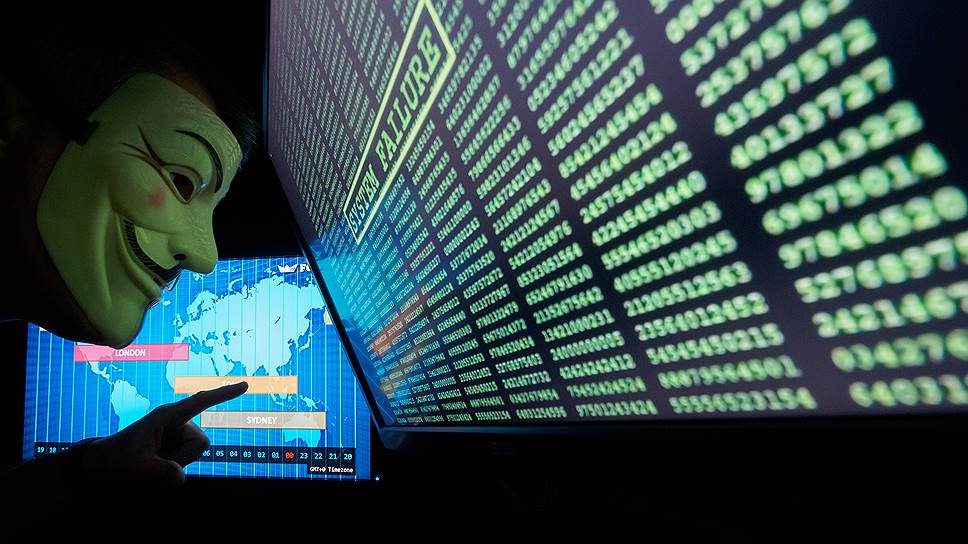
The Russians are coming, again! Poorly understood cybercrimes play perfectly into political agendas
The Russians are coming, again! Poorly understood cybercrimes play perfectly into political agendas
○
5 mins read
By Helen Buyniski Foreign hackers are determined as ever to steal technology, meddle in elections and skew foreign policy, but fear not! The CIA has apparently been authorized to deliver preemptive cyber-strikes based on partisan mythmaking. US, UK and Canadian […]
By Helen Buyniski
Foreign hackers are determined as ever to steal technology, meddle in elections and skew foreign policy,
but fear not! The CIA has apparently been authorized to deliver preemptive cyber-strikes based on
partisan mythmaking.
US, UK and Canadian intelligence dropped a 16-page report on Thursday accusing “Russian hackers” –
specifically APT29, the “Cozy Bear” hacking group of ‘Russiagate’ fame – of targeting unspecified entities
involved in developing the (increasingly controversial) Covid-19 vaccine.
Beware! Russia needs your vaccine! UK, US & Canada say hackers targeting Covid-19 research are
‘almost certainly’ Kremlin-linked
However, the report is fraught with the same factual pitfalls plaguing previous unsubstantiated “Russian
hacking” tales, seemingly designed to capitalize on the general population’s ignorance about cyber-
attacks – or vaccines, for that matter. While Democrat-linked cybersecurity firm CrowdStrike specializes
in attributing state actors to malware attacks, more reputable companies avoid doing so based solely on
the malware used, since hacking groups often exchange tools or even collaborate.
The best, or just best-funded hackers are able to not only cover their tracks effectively but create a fake
trail leading to someone else. The WikiLeaks Vault 7 release in 2017 exposed the disturbing tools the CIA
has at its disposal for simulating foreign cyberattacks, tools that allow the agency to make it seem like
Moscow or Tehran is behind a hack when the real culprits are in Langley, Virginia.
Russia is far from the only country to be accused of such behavior, of course – China was accused of
attempting to steal coronavirus vaccine research back in May, while US and UK intelligence agencies
warned that same month that other “threat groups” were “actively targeting” local governments,
pharmaceutical and research firms, healthcare facilities, and universities for virus-related hacking.
Nor is this latest outbreak of finger-pointing limited to the pandemic. On Thursday, UK foreign minister
Dominic Raab denounced “Russian actors” for “almost certainly” seeking to meddle in the 2019 election
– not by actually breaking any laws, but by “amplifying” documents leaked by other people on Reddit
and circulated around social media in the run-up to December’s contest
British FM Dominic Raab is ‘almost certain’ Russians interfered in election, but you’ll have to take his
word for itBritish FM Dominic Raab is ‘almost certain’ Russians interfered in election, but you’ll have to
take his word for it
Raab didn’t name any of the Russians responsible for circulating the material, perhaps mindful of the
embarrassment that befell his ideological brother-in-arms, Atlantic Council bot-hunter Ben Nimmo, who
accused several real people of being “Russian bots.” Further covering his bases, Raab in the same
statement acknowledged that there was “no evidence of a broad-spectrum Russian campaign against
the General Election.”
Even the most nonspecific shrieking about Russian hackers plotting to steal vaccine data, however,
distracts from the inconvenient reality that the vaccines under development in the UK and US are
performing abysmally. Neither the US company Moderna – initially hailed as the frontrunner despite
never having brought a vaccine to market before – nor the UK’s collaboration between Oxford
University and pharma giant AstraZeneca have produced any encouraging results in their clinical trials.
That didn’t stop the US from ordering 300 million doses of the Oxford jab, though the Trump
administration’s coronavirus czar Anthony Fauci has already begun lamenting the “general anti-science,
anti-authority, anti-vaccine feeling among some people in this country” he fears will keep Americans
away from the needle.
With regard to hacking, however, the world might be more concerned about the CIA than the Russians –
especially following Wednesday’s Yahoo News report that the agency had received carte blanche from
Trump to wage preemptive (i.e. unjustified) cyber-warfare against any individual or organization it could
link to a “handful of adversarial countries.”
According to several former US officials, the CIA has been wielding unprecedented offensive powers
against American civilians only tenuously connected to Washington’s geopolitical rivals since 2018,
checking off at least 12 cyber-attacks on its “wish list” already. Liberated from the tiresome need to
provide “years of signals and dozens of pages of intelligence” justifying raining computer-borne chaos
and destabilization on its victims, the CIA has wrought “a combination of destructive things – stuff is on
fire and exploding – and also public dissemination of data: leaking or things that look like leaking.”
News of the CIA being given carte blanche appears at the same point in the US election cycle as the 2018
report about a similar measure that freed the hands of the Pentagon to conduct its own cyberattacks
without interference from the State Department or any intelligence agencies.
With a hotly anticipated election coming up in November, it’s not hard to imagine how a few well-
placed “leaks” or “destructive things” might convince voters to put aside their concerns about the
administration’s response to the pandemic – or to place it front and center, depending on whether the
CIA has decided it can live with four more years of Trump.
One thing is certain: the “Russian meddling” narrative isn’t going away anytime soon.
Donald Trump Should Not Repeat Woodrow Wilson’s Failure
April 30th is an important date in American politics. This is the day 100 for the American President in the White House, and all attention will be on the reports of his achievements and failures. But nothing can be more critical than Peace…
○
6 mins read
A Holocaust perpetrator was just celebrated on US soil. I think I know why no one objected.
Russia’s invasion has made ordinarily outspoken critics of antisemitism wary of criticizing Ukrainian Nazi collaborators
○
1 min read
Qi Book Talk: The Culture of the Second Cold War by Richard Sakwa
Richard Sakwa has for many years been one of the most distinguished and insightful observers of relations between the West and Russia, and one of the leading critics of Western policy. In this talk with Anatol Lieven, director of the Eurasia program at the Quincy Institute, Sakwa discusses his book, The Culture of the Second Cold War (Anthem 2025). The book examines the cultural-political trends and inheritances that underlie the new version of a struggle that we thought we had put behind us in 1989. Sakwa describes both the continuities from the first Cold War and the ways in which new technologies have reshaped strategies and attitudes.