"What has been will be again, what has been done will be done again; there is nothing new under the sun." — Ecclesiastes 1:9
Often, art provides a more complete and precise impression of people and their time than science. And not necessarily the greatest creations. The art of degradation, decay, anti-aesthetics, and amorality is also a reflection of reality, adequate to its essence and contradictions.
In the mirrors of freedom and progress
Every two years in Venice, the most famous forum of contemporary art in the world – the Biennale – is held. This tradition has been established since 1895. In the early years, works of traditional styles predominated, but from the 1950s, the exhibition became known for showcasing international avant-garde. Usually, each Biennale is dedicated to a special theme: “Plateau of Humanity,” “Dreams and Conflicts,” “Think with Your Senses, Feel with Your Mind,” “Creating Worlds,” “All the Future of the World,” “May You Live in Interesting Times” (a Chinese curse).
Since 1914 and in the post-revolutionary years, Russian art enjoyed immense popularity in Venice. Mikhail Vrubel, Mstislav Dobuzhinsky, Leon Bakst, Boris Kustodiev, Alexander Archipenko, Natalia Goncharova, Mikhail Larionov, Nathan Altman, Igor Grabar, Kazimir Malevich, Kuzma Petrov-Vodkin, Robert Falk, Abram Arkhipov, Alexander Deyneka, Pyotr Konchalovsky, Yuri Pimenov, David Shterenberg, Vera Mukhina, Kukryniksy, Sergei Konenkov, Misha Brusilovsky, Yuri Vasnetsov…
In subsequent years, a noticeable place was occupied by Soviet dissidents persecuted by the authorities, including Ilya Kabakov, Oscar Rabin, Anatoly Zverev, Vitaly Komar, Alexander Melamid, Grisha Bruskin…
The Russian pavilion attracted great attention from the public and the press, and quite deservedly so. It was great art created by genuine masters who rejected the canons and banality but were able to find their convincing means of artistic expression, allowing them to see the world and humanity anew, expanding the aesthetic and intellectual space.
The famous Russian poet Sasha Cherny, in the 1920s, linked the new art of the artist with the biblical literary tradition – the “Song of Songs” of Ecclesiastes: “But I swear! In the twentieth century, after the birth of the messiah, young people will revive your style in Russia.” Like the Bible, the new art reflected all aspects and colors of existence, and although there were deniers and opponents, this period entered brightly into the history of culture.
In the late 19th and early 20th centuries, Russian visual art was closely connected with the West. It wasn’t mere borrowing but genuine mutual enrichment.
During the harsh party dictatorship, innovative searches were practically impossible, but with the thaw and during the years of perestroika, Soviet artists attempted to cross the boundaries set by censorship and socialist realism.
At this time, interest in their work was mainly determined by the political situation associated with changes in the country. However, the creative level of the post-revolutionary period turned out to be unattainable. The same situation persists not only in visual art but also in literature and music.
Russia is no exception here. Contemporary art cannot be compared in artistic level with antiquity, the Renaissance, early modernism, and the avant-garde. Many believe that in visual art, everything ended with the era of Pablo Picasso, Francis Bacon, and Lucian Freud.
What is unattainable in artistic creativity today is actively sought to be compensated for by politicization, PR, and scandals. Perhaps, in no other sphere of creativity, the “new clothes of the king” – the naked king – are tried to be sold as vigorously and expensively as in contemporary art exhibitions. Leftist convictions, liberal ideology, often employing the same methods of self-assertion and suppression of dissent as the totalitarian system did in its time, prevail.
Artists, who are supposed to speak to the world with talent and mastery, compete in political rhetoric, group declarations, and scandals. All of this finds a scientific explanation: various -isms, new vision of the world, aesthetic revolutions. An army of artdealers and art critics has managed to create an atmosphere where anyone who doubts the merits of a masterpiece and the talents of its creator will be proclaimed ignorant, retrograde, conservative, reactionary, stifler of creative freedoms, obscurantist. The non-believer will be likened to Hitler and his fight against degenerate art, equated with Proletkult, Zhdanov, and Khrushchev, who crushed dissidents of socialist realism.
Totalitarian rulers rightly saw non-conformism as resistance to the dominant ideology and a threat to power. In the free world, it’s not ideology but the market, demand, and consumption that rule, and everything that stands in the way of buying and selling is ostracized and anathematized.
The emergence of an international super-rich class has led to the development of demonstrative, status consumption – extravagant spending on goods and services that have no practical, intellectual, or moral necessity, with the aim of showing one’s prestige, success, and exclusivity. To not be a hero of the social chronicle is to disappear, to not exist.
Historically, this is not a new phenomenon, and in the past, not only among the nobility and the wealthy, this phenomenon existed, but in the absence of mass information, the social and psychological impact of demonstrative consumption was limited to a relatively narrow circle of immediate surroundings. Now, the whole world knows about palaces, yachts, private jets, jewels, toilets, expenses on plastic surgeries, entertainment, and leisure, as well as membership in the clubs of the new elite.
In this same vein are works of visual art and everything else that they try to classify in this category. The market for great works of art is extremely limited; it cannot be replenished with copies and works of contemporaries of equal value. And demand creates supply within the possible limits.
Initially, shock value was relatively moderate. Presenting a toilet seat at an exhibition, new or just used. Ordinary household items. Contents of a trash can. Dead fish or a rat…
A glass house brightly lit, with intimate details of the inhabitants’ lives, is modernism. A pile of rocks against glass walls, an invitation to break them with the stones – postmodernism. Naked actors at the entrance of the exhibition hall and on the walls, public display of small and big needs while sitting on a tree, scenes of masochism, press attention guaranteed. And then it goes further: 99 bottles of beer, 9 cans, with 30 grams of the artist’s feces in each, sculptures made of the artist’s own blood, a dirty bed with traces of sperm and blood, nailing the artist’s scrotum to the cobblestones on Red Square, public defecation in a museum…
Vladimir Pozner, an aesthete and intellectual with colossal international experience, in conversation with Irina Antonova, who devoted her long life to serving the visual arts, shares impressions of visiting two simultaneous exhibitions – Russian avant-garde of the 1920s in Paris and the Biennale in Venice. The Paris exhibition is full of artistic discoveries, realistic paintings of existence presented in new forms. And at the same time – the exhibition in Venice, which the intellectual and multilingual Pozner could only describe as God knows what.
Antonova fought all her life for free art and sometimes could even persuade party censorship; she represented the Soviet Union in Venice in bygone years, but here her attempts to defend and explain the newest exhibition were completely ineffective.
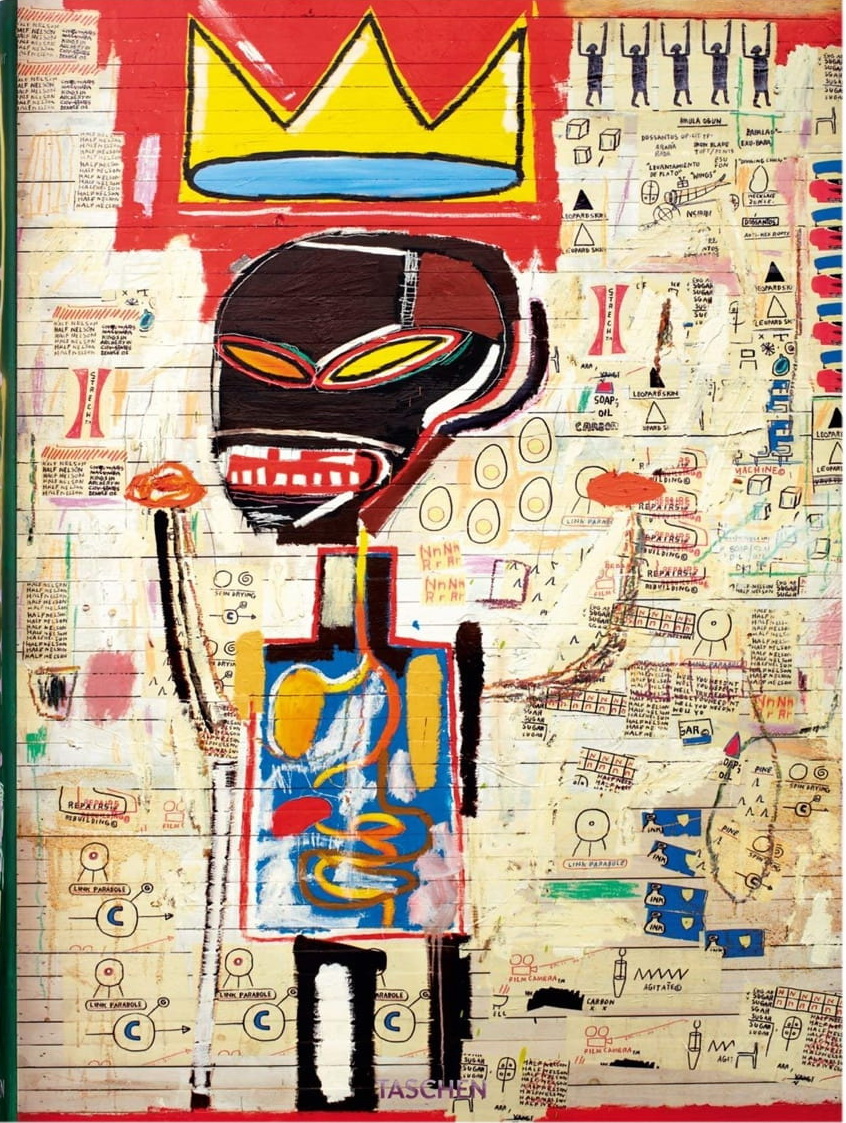
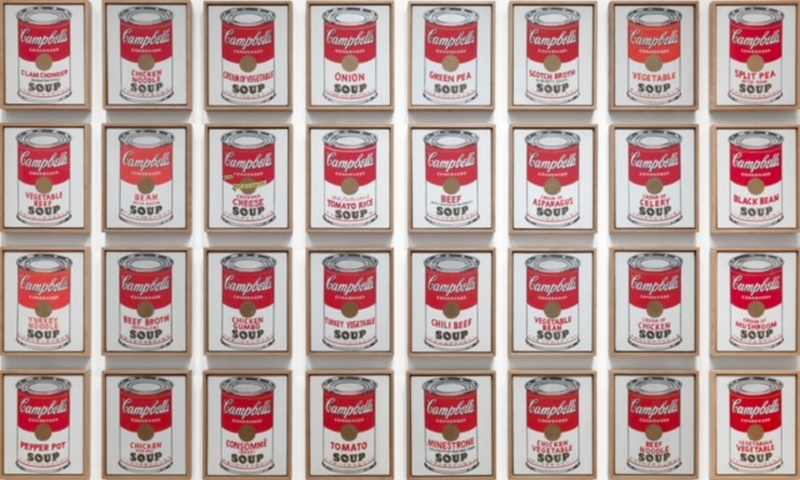
Today, there is no logic or meaning that cannot be disputed. There are arguments in defense of contemporary art in all its manifestations. If the main purpose of art is reflection of reality and self-expression of the artist, then the present world, full of chaos, absurdity, violence, and rage, is adequate to the content of the contemporary artists’ work. One can marvel at the multimillion-dollar value of Warhol’s works and not see in them elementary professional skill, but he managed to show, from 32 cans of Campbell’s soup to portraits of Monroe and Mao, the spiritual poverty of a consumer society. And Basquiat, equally highly valued at auctions, found the opportunity to express alienation, wildness, and rage, dominant in the consciousness and relationships of contemporaries, and his personal tragedy.
Over the past 30 years, the sale of contemporary art has grown 30-fold. The main trading centers are New York, London, Hong Kong, Beijing, Tokyo, Seoul, and until recently, Moscow. In the works of contemporaries, protest themes dominate: criticism of the lifestyle of the elite, income inequality, class division, consumerism, greed… But the main buyers are those to whom it is accessible, those who are the object of their criticism and condemnation and whose tastes they try to cater to.
The emergence of insane Russian money revolutionized the art market. 30-20 years ago, a Russian accent at a social gathering inevitably attracted attention and led to offers to buy works by famous contemporary artists or present them to someone solvent. At prestigious exhibitions, the appearance of Russian oligarchs and their wives and mistresses was a central event. The amount spent was as indicative as a personal jet or yacht. Names like Rybolovlev, Abramovich, Avin, Vekselberg, Deripaska, Kantor, Rotenberg entered the art world, but soon many of them found themselves on the list of those subject to anti-Russian sanctions. Demands for the confiscation of their property and transfer of funds to Ukraine’s restoration are being made.
Despite wars, pandemics, chaos, and grim forecasts, the number of super-rich people in the world is growing, and the image of the universe’s kings demands adaptation in life to envy and imitation. Artists, art dealers, and critics enthusiastically respond to the growing demand.
Best PR – Israel
Although all limits and proprieties have been swept away, creating something sensational, making headlines and TV discussions, is an extremely difficult task despite all the expenses and efforts. The theme of the current forum “Foreigners Everywhere” is interesting and relevant, offering plenty of plots, ideas, and images. The world has never seen such migration and ethnic and cultural mixing. But instead of the expected friendship of nations and multiculturalism, inclusivity, and integration, there is a rise in nationalism, racism, xenophobia, and antisemitism.
As critics note, the exhibition is dominated by a collection of flat banalities and moralizing. The influx of visitors is great, but the main thing is the number of buyers and the sales figures, and in this regard, the forecasts are bleak.
But here comes the first success of the Venice Biennale 2024: the Israeli Pavilion will be closed. Against the backdrop of the current anti-Israeli hysteria, the event is insignificant, but clearly, better PR has not been invented yet. On the door of the Israeli Pavilion, there is a sign: “The artist and curators will open the exhibition when an agreement on a ceasefire and the release of hostages is reached.”
The message and position of the authors of the announcement can be interpreted differently. The first version suggests that Israel should reconcile itself with the failure to achieve its goals, capitulate to the terrorists’ blackmail, inspire them for new provocations, allow Hamas to maintain power, and temporarily appease anti-Semites worldwide. However, there is another interpretation: to encourage the international community to free the hostages and transfer power in Gaza to politicians willing to seek compromise for the sake of peace and coexistence between two neighboring peoples.
Undoubtedly, the artist Ruth Patir, representing Israel at the Biennale, had the second, only sensible and morally justified version of conflict resolution in mind. “I hate this,” she told journalists, “but I believe it’s important. The situation in Gaza is much bigger than I am.” She explained on social media: “I am against cultural boycotts, but since I feel that there are no right answers, I stand with those… and demand an immediate ceasefire and the release of hostages. We can’t tolerate this anymore.”
“Of course, this artistic gesture will be criticized a hundred times over by pro-Palestinian leftists. According to them, Israelis should repent and be boycotted. Venice has already seen this… However, Patir’s refusal to pursue her career in the face of her people’s tragedy is the most important conceptual gesture,” writes a Russian journalist.
Italy’s Minister of Culture, Gennaro Sangiuliano, condemned the demands to ban Israel from participating in the exhibition, calling them “shameful and threatening to freedom of thought and creative expression.”
“The New York Times,” true to its approach to assessing the Israeli-Palestinian conflict, allowed anti-Israeli protesters at the Biennale to speak out. Although attendance at the exhibition site was restricted to artists, curators, art dealers, and critics for security reasons until the official opening, pro-Palestinian supporters not related to art participated in the demonstrations.
The newspaper quotes activists: “This is an appropriate place for protest, we must present different positions,” “There is no Palestinian pavilion here,” “They are showing genocide from 300 years ago (American Indians)… In 300 years, they will show a show about Palestinians here,” “The Israelis agreed to represent Israel during the killings and are now trying to distance themselves from the government,” “I think it’s extremely inspiring to chant ‘Free Palestine’ in front of the pavilions of Israel, the USA, and Germany.”
Israel has been the subject of protests at the Biennale for decades. During this time, hundreds of thousands of people have died in real genocides in many countries, and tens of millions have become refugees. Talk of Palestinian genocide has been going on for decades, but during this time, the population of Gaza has grown fivefold, and the standard of living has been no worse than in other Arab countries. Arabs in Israel enjoy more rights than in Arab countries, with access to Israeli schools, universities, hospitals, political parties, representation in government, and their own press. And even for acts of terror, they are not punished as harshly as in Arab countries. All this is known to Israel’s opponents as well as its friends. Everyone understands that if it were not for Hamas’s carefully planned attack, nothing like this would have happened in Gaza.
The theme of the current exhibition could have allowed artists to reflect on the ongoing ethnic and religious conflicts in various parts of the world, such as Africa, India, China, and the former Soviet republics. However, these issues do not receive as much political and media attention as the conflict surrounding Israel. Artists often join the chorus of Israel’s critics, succumbing to antisemitism and sidelining their creative interests.
For protesters at the Biennale, Israel’s participation becomes an opportunity for free publicity and safe self-expression, even for those who lack great talent or another means of being noticed.
In Manhattan, a multimedia exhibition opened depicting the terrorist attack on a music festival in Israel. However, despite the realistic portrayal of events and their aftermath, this exhibition did not attract press. This may be due to a reluctance to draw attention to a topic that does not fit the commonly accepted line of criticism against Israel.
When learnig is of no use
While artists may live in a world of emotions, institutions of higher learning should adhere to reason, objective knowledge, and civilizational norms. However, on many university campuses, protests against Israel are taking place, including disruptions to the educational process and demands for the dismissal of university leadership.
In New York, Columbia, Harvard, and Yale Universities, students are transitioning to remote learning due to protests. Many protesters have been arrested, including the daughter of Congressman Ilhan Omar. Support for the protests has also been expressed by many politicians, celebrities, and other organizations.
The president of Columbia University Minouche Shafik promises to take action to stop antisemitic activities, but her calls are met with new demonstrations and demands for her resignation. Many politicians, including the Speaker of the House of Representatives Mike Johnson, support calls for the president’s dismissal.
New York Mayor Eric Adams says that while the university has a “proud history of protest, ” students do not have the right to violate university policy and disrupt their studies”. Immediately, attacks on the mayor followed, who until recently was quite popular among liberal youth.
When, after October 7, Hillary Clinton, during a lecture at Columbia University, where she was teaching a course on government policy, said that Israel has the right to respond, it was only the security that saved her from unpleasant consequences. Recently, she was invited to her alma mater, Wellesley College, to open a research center named after her. Clinton was met with protest and accusations of indifference to the fate of Palestinians. Not long ago, she was a rock star every time she appeared in student circles. But her position—that Israel’s cessation of military action would serve Hamas’s interests, allowing for new attacks on Israel—overturned all her merits.
Anti-Israel hysteria has overshadowed all the problems that youth protests, until recently, were fueled by: income inequality, racism, LGBTO and women’s rights, the environment, climate catastrophes, militarization, nuclear proliferation, globalization, police brutality, government control, tuition fees, affirmative action, abortion, and arms sales. The most dangerous of current global conflicts—the Russo-Ukrainian war, which has claimed half a million lives and threatens to escalate into nuclear and third world war—does not receive much students attention. And even if all these conflicts and issues had triggered protests similar to those against Israel, the authorities and university administrations would not tolerate them.
If we look at events from afar, from the lofty heights, we can say that such protests were present before, during the Vietnam War. It is characteristic of youth to seek self-affirmation through radicalism, dissent, opposition, and demonstrative actions. Democracy and a free pluralistic society should learn to live with disagreements and differences of opinion.
But there is a fundamental difference. Its essence, contrary to the manipulations of “We are against Zionism and Israeli policy, not against Jews,” is obvious. Antisemitism in America, as well as around the world, has reached unprecedented levels. Actions that would never be tolerated against Black people and other minorities have become commonplace when directed at Jews, normalized in education, culture, and the media.
It is indicative that only about 10% of students participate in protests. Columbia University has about 5,000 Jewish students—enough to defend themselves, withstand attacks, threats, and insults. And most students and their parents are not inclined to spend time and money on education for the sake of a dead-end conflict that cannot be resolved through shouting and disorder. The situation for Jews is not hopeless; any government and the majority of the population understand the difference between a democratic country, a faithful ally of America, and a regime of fanatics and terrorists, satellites of Iran.
But the will and consciousness of Jewish youth are paralyzed by liberal education, demagoguery about the victims of colonizers and exploiters, and illusions that solidarity with protesters will ensure safety and gratitude.
Illusory consciousness is not unique to youth. Religious Jews believe that salvation from antisemitism will come through prayers and the coming of the Messiah. Secular Jews do not rely on heavenly forces but on education, cultural development, and good deeds, which will overcome fanaticism, hatred, and prejudice.
But history has long proven that education, knowledge, and high intellectual level do not free one from social ignorance and moral idiocy. In Europe, the center of world civilization, which achieved its highest achievements with the active participation of Jews, many intellectuals and highly educated people harbored a pathological hatred of Jews. Fascism did not arise out of nowhere.
America, from its very inception, proclaimed the priorities of freedom and equality. The Founding Fathers were uniquely educated, humanistically thinking individuals, raised on the ideas of the French Enlightenment and free thought, but the country went through the genocide of Native Americans, slavery of Black people. For a long time, there were strict restrictions for Jews in admission to education and employment, hiring, and buying housing; they were victims of attacks and vandalism. A significant portion of politicians, religious leaders, well-known figures in the country shared openly antisemitic beliefs, sympathized with fascism.
But the course of history and the persistent struggle for their rights have brought desired results. Although there were quotas for Jewish students in higher education institutions, no ethnic community has succeeded in obtaining education as much as Jews. In elite schools and universities, Jews, who make up only about 2% of the country’s population, sometimes comprised 50-70% of the student body.
In recent decades, the statistics have changed; now, Asian students, primarily Chinese, have outnumbered others, achieving phenomenal success due to hard work and ambition. As Harvard graduate and professor Alan Dershowitz, the country’s most famous lawyer who is now not allowed into university departments because of his support for Israel, said, Jewish students have become complacent, lost their motivation, and forgotten about their history and the defense of their interests.
When a new wave of antisemitism swept through college campuses, many Jewish students were gripped by the “Stockholm Syndrome”—a feeling of shame and fear, hoping that by joining their haters, they could change their attitudes. Similar sentiments are characteristic of Jewish liberals in general.
It is difficult to say how the efforts of authorities and university administrations will affect the course of events. It is possible that the situation will worsen, leading to the creation of a united resistance front, solidarity with other anti-Israeli and antisemitic left and right-wing groups.
American Jews are shocked by what is happening. European Jews see similarities with the events preceding the Holocaust. Jews with Soviet experience are reminded of the antisemitic campaigns of Stalin’s times, the struggle against Zionism, and the pogrom atmosphere with “Memory” rallies during the collapse of the USSR. Antisemitism was the main motive for immigration for most Soviet Jews. They did not expect such things in the new country.
Donald Trump Should Not Repeat Woodrow Wilson’s Failure
April 30th is an important date in American politics. This is the day 100 for the American President in the White House, and all attention will be on the reports of his achievements and failures. But nothing can be more critical than Peace…
○
6 mins read
A Holocaust perpetrator was just celebrated on US soil. I think I know why no one objected.
Russia’s invasion has made ordinarily outspoken critics of antisemitism wary of criticizing Ukrainian Nazi collaborators
○
1 min read
Qi Book Talk: The Culture of the Second Cold War by Richard Sakwa
Richard Sakwa has for many years been one of the most distinguished and insightful observers of relations between the West and Russia, and one of the leading critics of Western policy. In this talk with Anatol Lieven, director of the Eurasia program at the Quincy Institute, Sakwa discusses his book, The Culture of the Second Cold War (Anthem 2025). The book examines the cultural-political trends and inheritances that underlie the new version of a struggle that we thought we had put behind us in 1989. Sakwa describes both the continuities from the first Cold War and the ways in which new technologies have reshaped strategies and attitudes.