According to a Pew survey, "Americans have a gloomy view of the nation's future and look more positively at the past." The overwhelming majority are dissatisfied with the situation in the country. And evaluating the near future, they see a country that will be in even more difficult conditions than today.
A different world, different sentiments
According to the survey, by 2050, the economy will weaken, the US’s position in the world will be less important, political polarization will be wider, and the gap between the rich and the poor will increase. 58% believe that life for ordinary people today is worse than 50 years ago. Whites are the most pessimistic about the future – 69%; however, other racial groups are not expecting prosperity either – Latinos 60%, Blacks 58%, Asians 55%. Only 19% of Americans are satisfied with the state of the country. Republicans are less confident about the future than Democrats – 56% vs. 66%. But both have reduced their confidence in the future compared to past periods. 71% of whites are pessimistic about moral and ethical standards, among Blacks and Latinos, 50% feel the same. America’s ability to maintain positive relations with other countries is rated very low.
The New York Times continues this theme in the article “More than ever before, teenagers see a grim future.” This primarily concerns the state of schools, politics, and the economy. The newspaper cites survey data, according to which 65% of respondents are concerned about the psychological state of the youth. The same issue features an article “Drugs and alcohol linked to depression in teenagers.” Another article discusses the rise in suicide among university students. According to a Wall Street Journal survey, only 12% of Americans feel “very happy,” down from 30% a few years ago. For this category, the main conditions for a positive self-perception are family well-being, health, and connection with their community. Older generations, especially religious ones, feel happier than the young.
The New York Times published an article by Professor Taylor Harper about the panic moods in the country, related to the expectation of disasters and catastrophes in the near future. Optimism, confidence, and the ability to overcome any difficulties, to go through thorns to the stars have always been considered traits of the national character of Americans. Pessimists, alarmists, misanthropes were ostracized, and their views and moods were usually explained by mental abnormalities. And God forbid expressing such views to students. But Professor Carter, even with reservations about the cycles of history, painted a far from uplifting picture. The author tries from the heights of professorial omniscience to answer a panicking student’s question: “Should I buy a weapon,” who to defend against, who to attack, is unclear, but obviously, things are bad, especially since mass shootings and suicides have become common in the news on college campuses. The article presents a wide range of possible disasters: climate change, artificial intelligence, conflicts between Russia and Ukraine and in the Middle East, which could lead to a world war, the threat of nuclear war, population problems…
The professor hopes that “The belief that humanity is on the path to extinction due to selfishness and violence may be the last impetus for both parties.” Both parties acknowledge the possibility of a man-made apocalypse, but this does not help mutual understanding or unite efforts; opponents are convinced that the other side leads to disaster. The New York Times cannot be accused of trying to present a picture of hopeless existence and future, the newspaper has another mission – to show the achievements of the Democratic government and that only they can ensure future prosperity.
Depressive states of individual and social consciousness are conditioned not only by basic socio-economic conditions but also by factors such as the legalization of drugs, the pervasive spread of social networks and their detrimental effect on mental health, the radical revision of moral norms and traditional views on family, gender relations, national history and culture, utopian views on human nature and society cultivated in schools and universities, which have become citadels of liberal ideology.
Yet even with such a gloomy view of the future, Americans remain active, viable people with a relatively high self-esteem and a sense of national dignity and even superiority. In personal terms, Americans are far from misanthropes. “I am OK,” “I am great,” “I had a terrific day,” “Everything is fine” are not only customary figures of speech but also reflect a positive self-awareness.
Despite the overall gloomy mood, even today there are many data from international surveys on the happiest countries and people. Usually, Scandinavian countries and a number of other small monoethnic countries, not very noticeable and active on the world stage, but showing great care for the well-being of their citizens, with developed systems of social support, good and accessible education and medical care, are at the forefront. All this provides political stability, civil concord, and personal responsibility. America cannot follow this path; it has a different historical destiny, being a multi-ethnic, multicultural country, whose well-being is based on its geopolitical, economic, and military superiority. The national character here is different, prioritizing individualism, competitiveness, self-reliance, limiting the role of the state. The attitude towards social assistance programs, similar to those in Scandinavian and other European countries, is skeptical in America, seeing them as manifestations of a socialist economy and organization of social life.
However, in the last decade, Scandinavian countries, as well as the whole of Europe and America, are increasingly facing problems of mass uncontrolled immigration. The adaptation of people from different cultures and worldviews not only requires significant financial expenditures but also generates sharp internal contradictions: the rise of nationalism, social tension, strengthening of right-wing parties, increase in crime. Together with global problems, all this has intensified pessimistic sentiments and expectations in Europe up to widespread beliefs about the inevitable historical decline of Western civilization. America seems to have resigned itself to this perspective.
And Again, the Jewish Question
Until recently, Israel was consistently ranked among the happiest countries according to public opinion polls. Since the rebirth of the Jewish state, surrounded by hostile neighbors, life in the country has never been calm and prosperous, but its citizens firmly believed that with intellect, knowledge, hard work, and a deep conviction in the moral righteousness of their cause, they would be able to overcome difficulties and prejudices. Israel has achieved phenomenal successes in science, technology, education, medicine, built a democratic state, created a powerful economy and army, while also providing extensive international aid. Israel’s achievements are especially remarkable against the backdrop of the life of its hostile neighbors, who are unable to ensure economic and social well-being, deprived of democratic rights, stuck in medieval ideology and morality.
Israel has overcome international isolation, establishing productive relations not only with the USA and Europe but also with China, India, Russia, countries of Latin America and Africa, and even with a number of Muslim countries.
However, after October 7, the situation changed radically. Today, the absolute majority of the world’s countries condemn Israel’s actions in response to a terrorist attack by Hamas, accusing it of occupation, apartheid, war crimes, and genocide. No arguments of history, law, reason, and morality are accepted by international organizations, primarily the UN, most governments, the intellectual and cultural elite, and the street crowd. Anti-Semitism has proven that there are no forces capable of eradicating millennia-old hatred.
Moreover, Israel finds itself in a deep internal crisis due to political and civil division, governmental chaos, the irreconcilability of liberals-progressives and traditionalists, and tragic mistakes in assessing the intentions and capabilities of its existential enemy.
There is no room for illusions, peacekeeping, or reliance on military, economic, and moral superiority, nor on the help of the international community in resolving the conflict. Terrorists destroy “doves” just as they do “hawks” and non-partisans. Hopes for reconciliation through cooperation and good deeds are forever lost. Palestinians, who for many years earned ten times more in Israel than in Gaza and closely interacted with Jewish families, turned out to be spies and informants, killing and raping their benefactors.
Today, 74% of Israelis have no hope for peace, the highest level in the state’s history. The absolute majority does not believe that recognizing a Palestinian state will solve the problem of terrorism and hostility. However, foreign peacemakers fully realize that agreements with the Palestinians, including the “Two states solution,” are demagoguery and utopia. Yet, powerful forces are interested in maintaining the tension, others must pretend to be active and offer unattainable solutions.
Israelis, by national character, are very energetic, confident, cheerful people, but today they are in depression and anxiety, and this is not a psychological anomaly that can be corrected by visiting a therapist, but a reflection of objective reality. According to Gallup, almost 70% of Israelis today live in a state of anxiety, stress, and sadness, and there are more than enough reasons for that.
Jews of the diaspora are not in as difficult a situation as Israelis, but they, regardless of worldview and way of life, fully feel the seriousness of the anti-Semitic threat. Pro-Palestinian demonstrations are more numerous and have a greater propaganda effect than pro-Israel ones. Acts of anti-Semitic violence, vandalism, calls for the genocide of Jews have increased like never before since the eve of World War II, and governments, even with the will, are unable to effectively counter aggression and hatred towards Jews.
Jews have lost in media, social networks, universities, and on the street, protests by the Zionist Organization of America cannot stop the advancement of anti-Semites in politics and governmental institutions. The Jewish community in America is divided, liberals-reformists still hope for good deeds and friendship with haters and demand suicidal compromises and agreements from Israel. Liberal Jews seek friendship with people of color, though anti-Semitism is particularly aggressive in this environment. The only powerful social support group for the Jewish state is Christian evangelicals, but Jewish liberals see them as retrograde conservatives, and the orthodox reject cooperation, as evangelicals believe that the kingdom of God on Earth will come during the Second Coming, when Jews will accept Christianity.
Today’s anti-Semites explain their views by criticizing Israel and Zionism. But centuries of history reject these explanations. For two thousand years of exile, during persecutions and pogroms, as well as in periods of relative tolerance, hostile attitudes towards Jews, both poor and rich, confined in territorial and mental ghettos or cosmopolitans detached from their roots, did not disappear. There were thaw periods under the Romans, Christians, and Muslims, but sooner or later, everything returned.
Historians and philosophers like to talk about the cycles of history. For Jews, it’s clear that there’s nothing new under the sun, there have been worse times, and darkness thickens before dawn. There is a particularity to the cyclicity of Jewish history. Typically, crises were not limited to Jews alone. The epidemic of hatred inevitably expanded its scope. The most convincing example of recent history is the Holocaust, which was followed by a world war, the most destructive in human history.
Philosophy Instead of Prozac
Politicians and their entourage, depending on the circumstances and their place on the stage, promise both imminent benefits and inevitable disasters. Healers of emotional distress try to help with antidepressant pills and psychotherapy. For many, religion serves as a mighty means of salvation. Once, people sought the help of philosophers in search of the salvation of soul and mind, but today they play an almost invisible role, current rulers do not listen to their advice, and there are no Platos, Aristotles, Hegels, Kants, and Montesquieu’s today.
Nevertheless, since ancient times, philosophers have paid great attention to the meaning and purpose of existence, worldview, the relationship between man and society, and have provided answers to many questions that remain relevant to this day. Since the times of Socrates, philosophers have asserted the virtues of thinking and behavior that ensure a happy life. According to Aristotle, happiness is the realization of potential possibilities and the actualization of a person’s personality. Happiness is the goal and meaning of life, to which all abilities and aspirations of a person should be subordinate. Aristotle found the highest happiness not in the external world, but in the state of the human mind. The school of hedonism was the most influential in ancient Greece and Rome. Epicurus gave it a complete form not only in theory but also in the practical organization of life. The Epicurean way of being and thinking has many followers even in our time.
Judaism and Christianity have placed virtue, justice, and strict requirements for religious duty at the forefront. A carefree, happy life is the reward in the Kingdom of Heaven for labors and sufferings in the earthly realm. The Bible is not only a source of faith, a school of wisdom, great literature but also a convincing philosophical document.
The Bible harbors no illusions about human nature. “The intentions of man’s heart are evil from youth.” (Genesis 8:21); “The thoughts of the heart were always sinful.” (Genesis 6:5). King Solomon writes in Ecclesiastes, the saddest book of the Bible: “In much wisdom is much grief,” “He who increases knowledge increases sorrow,” “The end of joy is grief”…
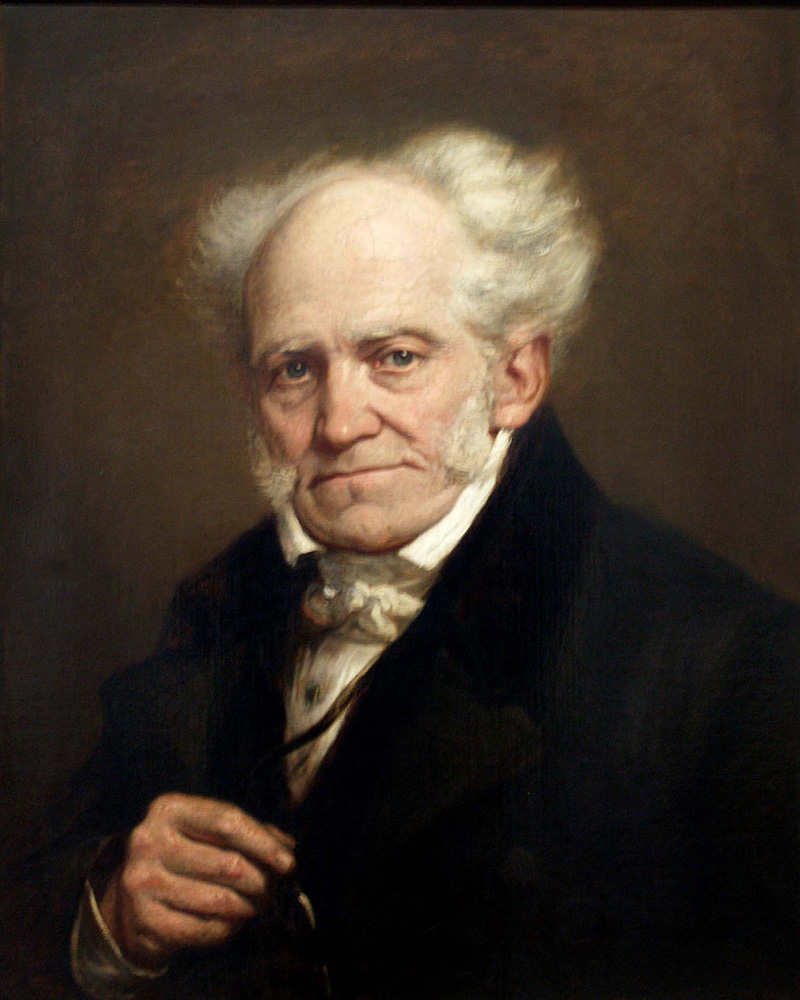
The dialectical nature of philosophical thinking did not overlook pessimism, a joyless view of the essence of human existence. This view was vividly presented in the book by Arthur Schopenhauer “The World as Will and Representation”. Schopenhauer, called the philosopher of pessimism, asserted that we live “in the worst of all possible worlds”. Schopenhauer had great admirers – Tolstoy, Freud, Jung, Einstein, Heidegger, schools of irrationalism and existentialism. Sartre’s famous sentence “Hell is other people” defined the prevailing moods of decadence and despair in pre-war Europe. Kafka’s work is another serious confirmation of the influence of Schopenhauer’s ideas. Tolstoy wrote: “Schopenhauer is a great genius among men”. His “Confession” resonates with the sentiments of the German philosopher.
Schopenhauer grew up in a wealthy, educated family. He was a polyglot and possessed extensive erudition. However, the family had pathological disorders, Schopenhauer was a misanthrope, had paranoid traits, often entered into conflicts, could not build a family, had a poor relationship with religion. He had authorities: Kant, Goethe, Buddhism, but he considered many philosophers charlatans.
According to Schopenhauer, egoism, stupidity, and malice dominate in a person; a smart, kind, honest person is an exception, and for him, life is chaos, suffering, tragedy, a chimera. Women are the cause of evil in the world. Schopenhauer believed in the priority of the white race, was against Judaism, but had great respect for the culture of ancient Egypt and India.
After the defeat of fascism, decades of peaceful and prosperous life, Schopenhauer was almost forgotten. The philosophy of pessimism does not fit with the liberal worldview and school education, where complementary notions about the nature of man and society dominate. But when the joyful expectation of world unity and prosperity was replaced by new threats of impending disasters, Schopenhauer found new followers.
America has always cultivated optimism and humanism throughout its history, but the founding fathers were realists and based their politics on a perfectly adequate approach to the relationship between man and state. The founding fathers were decisively influenced by the political philosophy of Thomas Hobbes, his theory of the social contract, which largely served as the foundation for the American Constitution. Although Hobbes was not a proponent of democracy, “the power of the mob”, multiparty systems, and believed that the best form of government was a monarchy with absolute power, he recognized the principle of universal equality of people.
However, he asserted that man is corrupt, behaves like a wild beast in the jungle, distrustful and dishonest, unjust, aggressive, envious, vain, hypocritical. It’s not about equality of virtues, but equality in sins and vices. To put an end to the “war of all against all,” he proposed that citizens limit their rights to freedom, handing them over to the state, which should regulate relationships in society based on the “social contract”.
The movement from Puritanism, pragmatism, a realistic view of the world and people to liberal fantasies gave rise to notions of “people of good will”, a universal brotherhood of humanity, and a common striving for happiness, cooperation, mutual aid, having little in common with the diversity of traditions, values, and interests of a world full of antagonisms and contradictions.
Optimistic moods cannot be based only on education and beliefs; they must be supported and justified by reality. Thinking reflects the conditions of existence, otherwise, it turns into speculative chimeras and speculations. As the simple but truthful Eastern saying goes, “No matter how much you say ‘halva,’ it won’t make your mouth sweeter.”
Donald Trump Should Not Repeat Woodrow Wilson’s Failure
April 30th is an important date in American politics. This is the day 100 for the American President in the White House, and all attention will be on the reports of his achievements and failures. But nothing can be more critical than Peace…
○
6 mins read
A Holocaust perpetrator was just celebrated on US soil. I think I know why no one objected.
Russia’s invasion has made ordinarily outspoken critics of antisemitism wary of criticizing Ukrainian Nazi collaborators
○
1 min read
Qi Book Talk: The Culture of the Second Cold War by Richard Sakwa
Richard Sakwa has for many years been one of the most distinguished and insightful observers of relations between the West and Russia, and one of the leading critics of Western policy. In this talk with Anatol Lieven, director of the Eurasia program at the Quincy Institute, Sakwa discusses his book, The Culture of the Second Cold War (Anthem 2025). The book examines the cultural-political trends and inheritances that underlie the new version of a struggle that we thought we had put behind us in 1989. Sakwa describes both the continuities from the first Cold War and the ways in which new technologies have reshaped strategies and attitudes.