Two Titans: Winston Churchill and the Passing of Henry Kissinger
Two Titans: Winston Churchill and the Passing of Henry Kissinger
○
5 mins read
By Martin Sieff
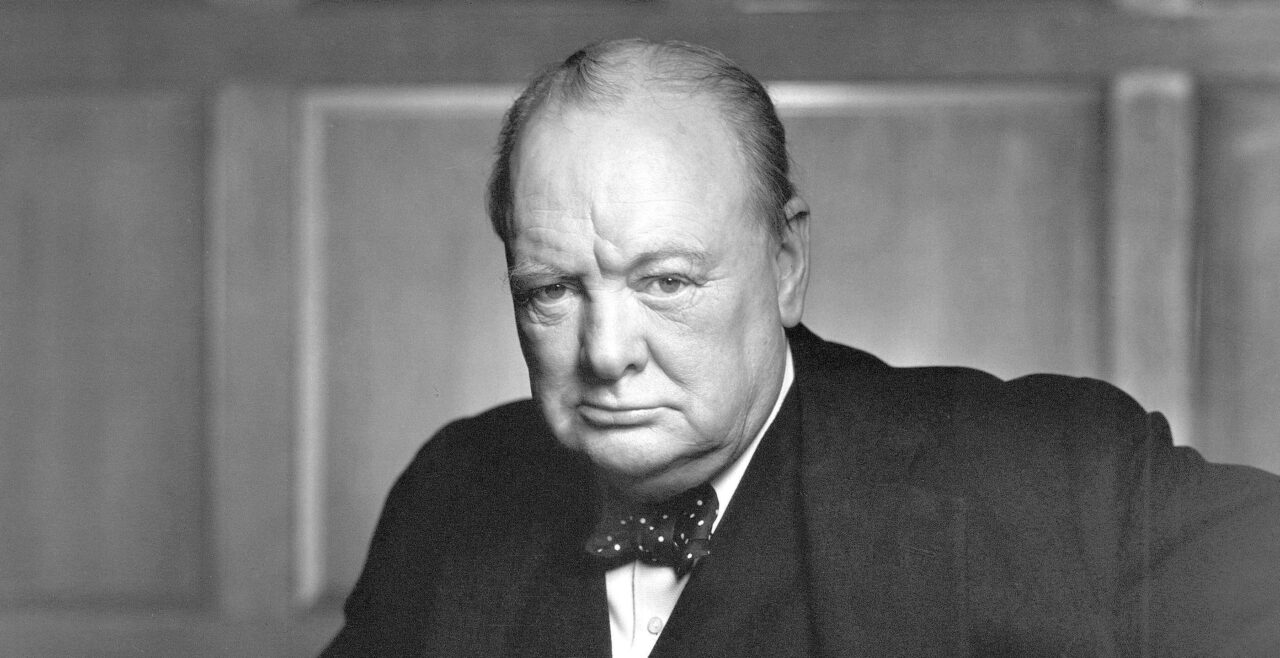
Winston Churchill dominated the grand strategy debates and policies of the British Empire, the world's great superpower through the first half of the 20th century. Henry Kissinger dominated the grand strategy of the world's great superpower the United States through the half century from 1969 almost to his death. Both of them reshaped the world. Both of them literally saved their nations and societies from destruction at crucial moments in their history. Yet both of them lived to see their principles, visions and achievements abandoned by later generations who pretended to revere them.
Both men were serving soldiers – Kissinger, though he is never given credit for it, more bravely and fundamentally than Churchill. Churchill is revered as a historian. In fact, he was a bloated self-aggrandizing embarrassment as one. Kissinger by contrast produced three volumes of memoirs and a definitive work on the principles and history of Diplomacy over the past 400 years that will be read as long as Sun Tzu and Machiavelli.
Churchill was excessively, mindlessly loved and revered and still is. Kissinger was reviled to an even more extraordinary degree. Both of them had appalling dark sides and the deaths of scores of millions on their records – It did not bother the consciences of either of them.
Churchill blithely presided over the starvation of at least 3 million Bengalis in India in 1943 – the real figure was probably 10 million, many Indian historians believe that was totally avoidable and unnecessary. The poor Bengalis also suffered a million dead needlessly because Kissinger simply wanted to “look tough” backing Pakistan in its genocidal attempt to suppress the Bangladeshi independence movement, killing a million people for nothing.
Churchill already recognized the crucial importance of alliance with Stalin through the 1930s to contain and eventually defeat Hitler. As Soviet Ambassador to London Ivan Maisky’s diaries of the time document, the fact that Stalin had just exterminated 10 million innocent Ukrainians and millions of Russians never caused Churchill a moment’s hesitation or regret. Kissinger showed a similar strong stomach in romancing and engaging China’s Mao Zedong.
Yet everything else that both men did appears insignificant compared with their defining achievements.
Churchill in 1940 rallied and saved Britain and brought crucial time for the United States to prepare for war against the diabolical assault on all human decency by Adolf Hitler and his Nazi Germany. Kissinger prevented the entire extinction of the West by wooing China to the US and Western side in 1969-72 to contain, roll back and eventually implode the Soviet Union.
Churchill won a world war against impossible odds. Kissinger prevented one when it seemed impossible to do so. Kissinger had actually fought on the ground in Europe in a world war. He had no desire whatsoever to risk another one.
Both of them also recognized that constructive cooperation with Russia was the key to a peaceful, prosperous, stable and successful world. Kissinger always treated the leaders of the Soviet Union and Modern Russia with honor, trust and respect. He was alarmed by the revival of Russia under Vladimir Putin, but he understood it and respected it.
Churchill, even when Britain’s survival was still hanging by a slender thread in June 1941, approved the diversion of crucial military aid and supplies to the Soviet Union as much as possible. He acknowledged publicly it was the Red Army that tore the guts out of the Nazi Wehrmacht. After Stalin’s death, when Churchill was almost 80, he was the first to call for summit meetings with the next Soviet rulers to remove the threat of global nuclear war. US President Dwight Eisenhower and his secretary of state John Foster Dulles disagreed. They were wrong.
Churchill held high government office for 24 years out of an incredible 55 in active political life. Kissinger only held major office for eight years but remained enormously influential for more than half a century afterwards. Both of them lived incredibly long lives.
Churchill was revered by pious British and American Christians although he was a free-thinking skeptic whose only star was his own destiny. Kissinger was hated and distrusted for his Jewish background when it was always irrelevant to him. When he was sworn in as secretary of state in 1973, a Jewish Bible could not be found at once and it was proposed to delay the ceremony for an hour to find one. Henry would have none of it. He was eager to grasp the reins of power and public glory. A regular Christian King James Version was good enough for him. It was all the same.
One of Kissinger’s closest colleagues and lieutenants as secretary of state told me decades later, “After half a century in America, Henry still can’t make up his mind whether he is American or German.” Modern democratic decent Germans understood and exulted. He was one of them. This was a Good Thing.
When Winston Churchill died, as a small, feisty teenage boy off the streets of Northern Ireland, I climbed on to the living room table of my parents’ home to get as close as I could to the 14-inch screen of our modest – but it was a miracle at the time that opened up the world – black and white television screen to watch the amazing state funeral. I could not get close enough. An amazing age – the age of the Glory of Britain – was passing forever and everybody knew it.
Modern Americans are too prejudiced, too ignorant and too plain dumb to realize what the passing of Henry Kissinger means for them: But it is equally epochal. A voice of wisdom, a voice of limitless experience, a voice that sought to avoid the unimaginable, inconceivable horrors of unlimited war between thermonuclear superpowers has forever left our scene. And to echo Churchill’s 1930s lament on Lord Cromer, we will not see his like again, although our need is great.
Donald Trump Should Not Repeat Woodrow Wilson’s Failure
April 30th is an important date in American politics. This is the day 100 for the American President in the White House, and all attention will be on the reports of his achievements and failures. But nothing can be more critical than Peace…
○
6 mins read
A Holocaust perpetrator was just celebrated on US soil. I think I know why no one objected.
Russia’s invasion has made ordinarily outspoken critics of antisemitism wary of criticizing Ukrainian Nazi collaborators
○
1 min read
Qi Book Talk: The Culture of the Second Cold War by Richard Sakwa
Richard Sakwa has for many years been one of the most distinguished and insightful observers of relations between the West and Russia, and one of the leading critics of Western policy. In this talk with Anatol Lieven, director of the Eurasia program at the Quincy Institute, Sakwa discusses his book, The Culture of the Second Cold War (Anthem 2025). The book examines the cultural-political trends and inheritances that underlie the new version of a struggle that we thought we had put behind us in 1989. Sakwa describes both the continuities from the first Cold War and the ways in which new technologies have reshaped strategies and attitudes.