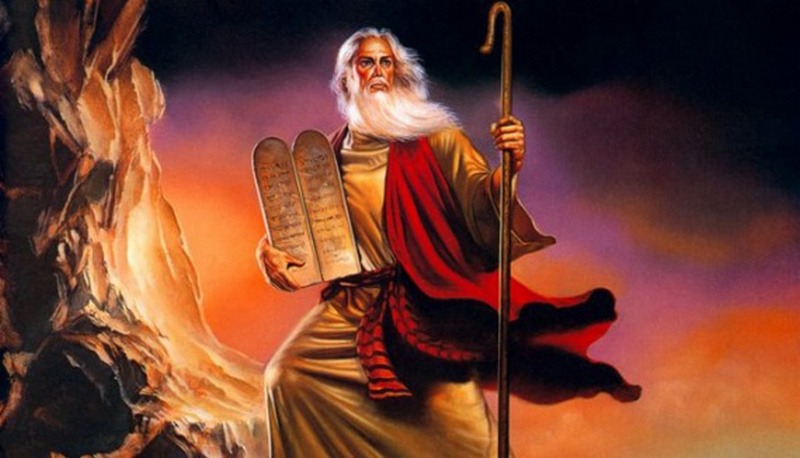
Truth is, first of all, is that you are having a headache — М. Bulgakov, The Master and Margarita.
The dialog between Pontius Pilate and Yeshua in Bulgakov’s novel is the most famous and debated in Russian literature. It is interpreted both from the materialistic point of view: truth is always concrete, here and now, and from the religious-idealistic point of view: truth is before you if you are ready to accept it and follow it. There is general agreement that the path to truth is difficult, and that truth is not always attractive or comforting.
Farewell to Reason
Believer and non-believer alike would agree with Yeshua that the only thing a person reliably knows and does not require proof is that he has pain and that a sick head sees the world differently than a healthy one.
From my student days it is forever remembered: “Being determines consciousness” (Marx); “One thinks differently in huts than in palaces.” (Feuerbach). There is evidence before the eyes of contemporaries of how quickly beliefs can change when circumstances change. Yesterday’s party nomenklatura, the guardians of communism, have turned into an oligarchy, a world of money power, permissiveness and lawlessness. Or, as in other contexts, yesterday’s victims of discrimination and racism, having gained power and influence, suppress the rights and freedoms of others.
The Bible links lifestyle with the possibility of knowing the truth. “For sinners there is no truth, no mercy, no knowledge.”, Hosea 4:11; “Ignorance of the truth is the punishment for sins.”, Isaiah 1:39.
The present world lives without prophets and finds the solution to the questions of existence in science and information: “Knowledge is power”, “Experience is the criterion of truth”, or in agnosticism and relativism: everything is relative, depends on the point of view, the truth is incomprehensible, subjective, unprovable. Conspiracy theories successfully compete with the assessments of Nobel laureates and expert commissions.
The fatal contradiction of democracy: the voice of the majority is not the voice of God, the minority, the intellectual elite, is always closer to knowledge and understanding. But it is hard to say which is more dangerous: the ignorance and prejudice of the masses, or the self-interest of the knowledgeable and skillful.
Each age creates its own worldview and picture of the world. Dynamic changes of paradigms, beliefs and convictions also occur within epochs. Not so long ago, globalization, multiculturalism, the ideology of liberalism and democracy, civil rights and freedoms, the possibility of a world without war, in cooperation and harmony, seemed the undeniable definitions of the age. “The End of History,” the gospel of Francis Fukuyama promising the reign of God on Earth, the prophecies of Yuval Harari and Bill Gates were taken as undeniable truth for university graduates; there was little doubt that enlightenment and economics would leave no one behind and convince skeptics and opponents.
Today these expectations look utopian. They were refuted not in scientific discussions, not in the debates of politicians, but by the real development of events. Instead of progress, peace and prosperity, cold and hot wars threatening nuclear apocalypse, growing threats of famine, epidemics, climate catastrophes, demographic upheavals, coups and conspiracies, regime changes, trade wars, wars for influence, growth of nationalism, xenophobia, extremism, class contradictions, uncontrollable and unpredictable technological cataclysms.
Pessimists and misanthropes see the era as a time of chaos and absurdity, hostility, the collapse of faith in authority and icons, moral and intellectual degradation. Idealists and optimists would call the era a time of dramatic trials on the road through thorns to the stars. There can be no compromise here; such perceptions require no proof.
In academic literature, the time of uncertainty and unpredictability found a definition – postmodernism. The key principles of this approach are the rejection of the priority of reason, logic, knowledge, and system analysis. Emotions and beliefs substitute for evidence and determine the selection of facts and their interpretation. Statistics, opinion polls, expert assessments do not convince if they contradict beliefs and interests. It is impossible to distinguish between the real, the virtual and the imaginary.
The word, spoken or written, is incapable of describing and conveying semantic content and its connotations. In the words of the poet Fyodor Tyutchev, who had never heard of postmodernism, “A thought uttered is a lie”; “We cannot predict how our word will come back to us”.
Postmodernism by definition reflects modernity, but its roots can be found in antiquity. Aristotle: “The method of persuasion depends on the character of the speaker, on the mood of the listener, and on the speech itself.”
Postmodernism has opened a wide road for “post-truth” – fake news, propaganda, conspiracy, manipulation of public opinion. This is most vividly demonstrated in the symbiosis between media and politics. Republican Senator Gordon Humphrey told Congress in 1990 that “Nothing could be better for the country than if everyone broke their television sets…filling their brains with garbage.” At that time the statement was perceived as extravagant, now that television is not much better than the internet and social media, reflecting the scale of intellectual and moral catastrophe.
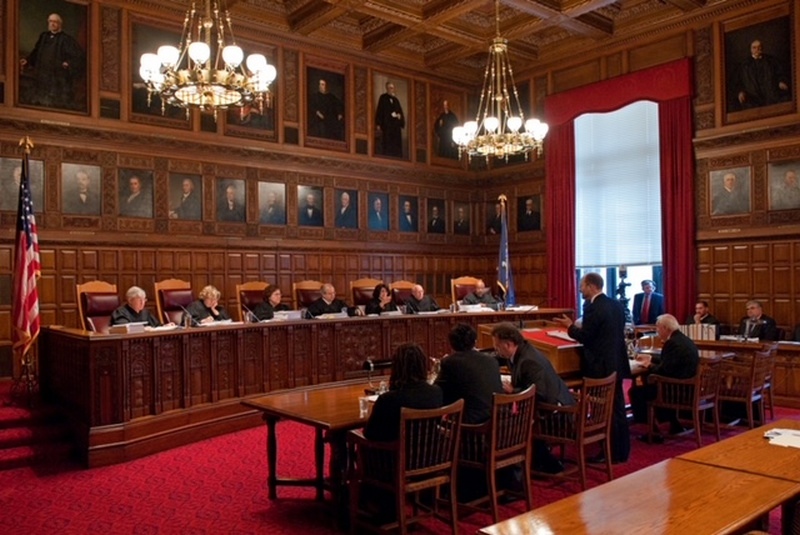
Legislation and the judicial system remained the last bastion against the avalanche of disinformation and manipulation. But the triumphant march of post-truth has not left them behind either.
Law and truth
In rejecting monarchs and dictators, a democratic society has placed its hopes for the search for truth in the law and the judicial system.
Since the days of Hobbes and Locke, the social contract has recognized that even bad law is better than lawlessness and arbitrariness. Constitutions and legal codes regulated the competence and prerogatives of courts and established their high responsibility.
Cases of prejudice, corruption, discrimination, erroneous decisions can never be excluded, at all times money matters, the ability to spend millions on expensive lawyers often determines the outcome of a trial. But the system as a whole has proven to be an effective one.
In recent years, the credibility of the judiciary has declined catastrophically. In 2020, 67% of Americans trusted it; in 2021, 54%; and in 2022, 47%. Trust in the Supreme Court is 40%. Recent data is at an all-time low.
Trials often lead to a deepening of the civil division, polarization of society, and a decrease in trust in state institutions. Such is the effect of decisions on immigration, abortion, gun sales, free speech, affirmative action, schooling, and election results. Arguments that to some are undeniable truth and justice, to others absurd and lawless.
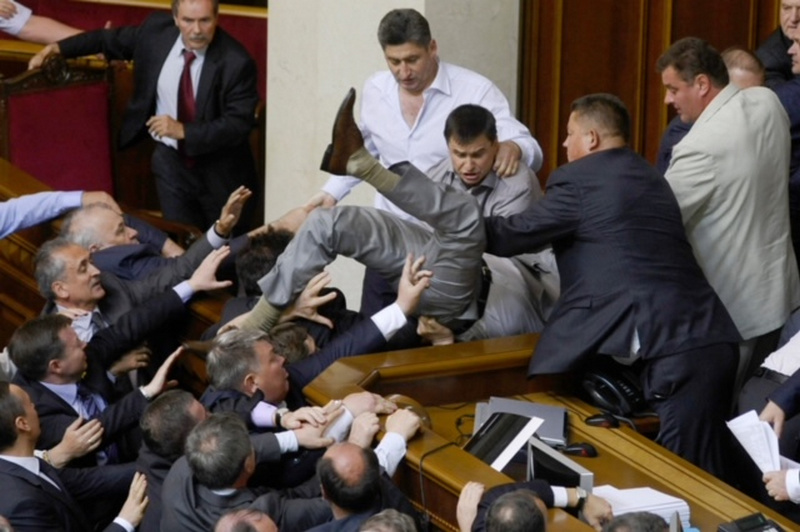
The most acute problem is the use of legislation in political interests, the difference in approaches and decisions of courts depending on personal positions and external pressure – governmental authorities, public associations, social groups, the street and the crowd.
Opponents are convinced that double standards were used in court rulings on the Black Lives Matter riots, the January 6, presidential election. Contradictions have reached a climax in the evaluation of the judicial approach to Presidents Trump and Biden.
For supporters of the Democratic Party, the Trump trial has shown undeniably that no one is above the law. But half the country sees this decision as a political massacre, a mockery of justice, a shameful show, an attempt to stop the election of a hated president for a second term.
Even in the liberal media, there have been many publications that the only reason this process was enacted was because of Trump. It’s hard to imagine how the prosecution’s key witnesses with the moral credentials of Stormy Daniels and Michael Cohen could otherwise be credible. And that the trial could have taken place in a city, a base stronghold of the Democratic Party, where a judge who acquitted Trump would never have been re-elected and jurors who didn’t support the indictment would have had no life.
Trump’s trial will take up a lot of space in legal history and public discourse. Everyone has an opinion, and I have my own version. Once at the home of an acquaintance of mine in Washington, D.C., a fiery Soviet dissident and Republican Party activist, I saw Daniela Steele’s books, in my mind a trash, little in keeping with my acquaintance’s elitist appearance and interests. I decided it was her way of resting from her busy life, and next time I bought a book by this author for her. Revealed on the way on the train, the story is about a famous pop singer, angelic in morals and virtue, but her chauffeur-guard decided not to miss an opportunity to improve his well-being and blackmailed her with a sexual harassment charge. She went to a lawyer who said – you have to pay, the scandal will cost more.
Trump is definitely no angel, but he didn’t need a scandal in his presidential campaign. This version was not even considered. The court allowed a porn star and a lawyer discredited by repeated lies to decide the fate of the presidential election.
In the current atmosphere, no one is immune to bias. The situation is similar for Biden and his family members. Opponents are convinced that only Biden’s presence in power saves them from punishment for corruption.
I’m far from sympathetic to Hunter Biden, and I’m in favor of banning gun sales, but I was shocked by the court’s decision – up to 25 years in prison and a 750000 fine. But there can be no doubt that the real punishment will be much milder, and that there will be a theory that the current trial provides an opportunity to avoid a more serious trial for business in Ukraine, ruinous for Joe Biden’s reputation.
Political bias is evident in Congress, the media, educational institutions, civic associations, even in religious life. The propaganda pressure is only increasing; “Only that which is empty from within rattles,” Shakespeare said, and in such an atmosphere, sensible dialog and consensus are impossible.
Even more chaotic is the assessment of international politics. It’s especially hard to separate public and private interest, conspiracy and fake propaganda from the real situation here. Political demagoguery and manipulation in no other area has reached such heights as in foreign policy.
American interests are global in nature and are based on the world’s most powerful economy, technology, armed forces and military-industrial complex, diplomatic and intelligence services, information and disinformation capabilities. There is no war, no international or internal conflict, no regime change in which America maintains neutrality. America does not intend to give up its status and prerogatives and will oppose it, no matter from whom the attempt at change comes, from outside or inside.
The system always defeats the individual. Trump’s battle with the system looks like Don Quixote heroism. But any system does not last forever, and fails in the face of deadlocked internal contradictions and civil division.
The moment of truth is not yet today. No predictions or polls will reveal the developments. In big politics, Trump is a loner, and his own party is not always his ally, but today he is being actively helped by the Democratic Party and President Biden, which gives him a serious chance of victory.
“The darkness of low truths is dearer to us than the deception that exalts us.” A. Pushkin.
Pushkin’s lines are discussed in Dostoevsky’s novel The Teenager: “I only know one thing for sure: that for a long time to come this thought will remain one of the main points of contention between people.” Dostoevsky saw the resolution of eternal questions in religion, but today what is a sadom sin for one, a legal right for another, not to mention issues not so aggravated. Don’t like religion, go to another church or synagogue, atheist or agnostic. Or live in sin, but do not forget to repent.
Today it is common to say that faith has replaced rational thinking. For a religious person, miracles performed by unearthly forces are more convincing than scientific and legal evidence. But atheists too have their myths and legends in which they believe, often with the tenacity of fanatics. The place of scripture for them has been taken by party and ideological narratives mass produced by propaganda and conspiracy fantasies.
Everyone has positions and opinions and few doubts, but beliefs are no guarantee of their truth. Leo Tolstoy said it best: “Firm beliefs are the most superficial.” Nietzsche, even more sharply radical as ever, has a radical view: “Beliefs are enemies of truth more dangerous than lies.”
Facts and interpretations are chosen according to beliefs; opponents will always have their facts and evidence. A higher IQ, a place in the academic hierarchy, titles and degrees do not add credibility if they do not confirm the beliefs of the interlocutor.
Beliefs are not the product of individual choice. There is environment, norms, foundations, canons, traditions, upbringing, education, influence of authorities. Man is a social and political herd animal, and conformism is a mechanism of social adaptation, a way to inclusion and recognition, public support. Group affiliation is a decisive factor in the formation of beliefs and worldviews; rejection of community norms is punished by ostracism and loneliness.
Democracy provides greater opportunities for individual choice, opinion, and behavior. At least, that was the case until recently, when the “He who is not with us is against us” attitude prevailed. Neutrality is not recognized, silence does not save, you have to take a stand on the barricades. I am fortunate that my 60-year teaching career is over.
The saying goes that truth is born in argument. Not always, it is not uncommon for disputes to destroy relationships and create animosity. Still, diversity is better than uniformity, and so a free society places special hopes on pluralism and tolerance. But pluralism also has its contradictions.
The history of religion is illustrative. Reform movements reflected the demands of the time and led to pluralism, but inevitably gave rise to division and enmity, religious wars, weakening of the influence and authority of religious ministers and institutions.
Pluralism was fully manifested in the Christian division into many directions and disagreements accompanying it. The truth is in Christ, but everyone has their own truth, from worship to politics to gender relations.
Judaism is seen from the outside as a coherent doctrine, but since antiquity has known radical divergences in theological ideas and application to ways of being. Emancipation and civil liberties and the exit from the ghetto split European Jews. Ashkenazi Jews divided into many denominations: orthodox, modern orthodox, conservative, reformist, reconstructivist, humanistic, cultural Judaism, and many Hasidic groups. Sephardic Jews, due to historical conditions, did without pluralism and were able to preserve to a greater extent their religious and national identity and unity.
The complete and final victory of Jewish pluralism – from unquestionable defense of Israel to accusations of crimes against humanity and denial of the right to exist. There is even more diversity and even more disagreement in the approach to domestic issues. Education, family, sexual relations, all this is a field of irreconcilable conflicts. All have their own understanding of justice and truth, and all refer to the Torah. On the eve of the establishment of the fascist dictatorship, the great thinker Walter Benjamin wrote, “The degenerate Jewish intelligentsia denies Judaism in the name of Judaism.” By our time, this process has only deepened.
Most people today do not expect an answer to the eternal questions of existence from institutions and authorities and rely on their own understanding and reasoning. For most, the view of the world if conflicts with psychological comfort, positive self-esteem, personal interest, recognition will most often yield to conventional wisdom. Cognitive and emotional self-defense rejects discomfiting facts and judgments and will always find a justification for it.
Shimon Hetch, a descendant orthodox rabbi of a synagogue in Brooklyn, told me that his father, in his sermons, harshly rebuked his congregants for their sins and vices with the passion of a biblical prophet. Most of today’s ministers of religion try to create a comfortable atmosphere for the congregation, and the rabbi’s wife urged him to be gentler: “You will lose all the congregants that way”. The rabbi replied, “Don’t worry, they think I’m talking about others.” The number of parishioners has not decreased. The reaction is typical of believers and non-believers.
Recently, the term “alternative facts” has come into common usage. At first, its use sparked a storm of outrage directed at Trump and his supporters. Although the concept has developed a bad reputation, there is a certain logic to its use.
Leftists and rightists, marketers and socialists, orthodox and reformists, liberals and conservatives, CNN and FOX, Supreme Court justices and scientific authorities operate on alternative information and evidence depending on their goals and beliefs. In most cases, there is no need to falsify facts. There are counter-propaganda and PR specialists who can give the same facts the opposite meaning and significance.
Selective approach, leaks, hiding facts are facts of everyday life. Demand gives birth to supply, facts and their interpretation become commodities, and the market ensures their production depending on the interests and needs of the customer.
It was once said that everyone is entitled to their opinion, but not their facts. The right to one’s own facts is now uncontested. Everyone has their own truth and justice, and everyone is embittered and unhappy.
Obviously, alternative facts will find recognition, just as alternative lifestyles and thinking, medicine and sexual orientations do. From here it is one step to recognizing alternative truths.
There are many quotes from high authorities in this article. In times past, quotations from scripture, classics of philosophy, history and literature, prominent statesmen and scientists were powerful arguments in rational debate. Today, alternative judgments and evidence will be found in the same sources and by the same authors, or they will be interpreted differently. Or another author will find other quotes.
In conclusion, another quote from the distant past that is close to the author’s mind and heart is a plea to the Almighty: “Either give me the ability to understand your world, or make the world the way I can understand it.”
Donald Trump Should Not Repeat Woodrow Wilson’s Failure
April 30th is an important date in American politics. This is the day 100 for the American President in the White House, and all attention will be on the reports of his achievements and failures. But nothing can be more critical than Peace…
○
6 mins read
A Holocaust perpetrator was just celebrated on US soil. I think I know why no one objected.
Russia’s invasion has made ordinarily outspoken critics of antisemitism wary of criticizing Ukrainian Nazi collaborators
○
1 min read
Qi Book Talk: The Culture of the Second Cold War by Richard Sakwa
Richard Sakwa has for many years been one of the most distinguished and insightful observers of relations between the West and Russia, and one of the leading critics of Western policy. In this talk with Anatol Lieven, director of the Eurasia program at the Quincy Institute, Sakwa discusses his book, The Culture of the Second Cold War (Anthem 2025). The book examines the cultural-political trends and inheritances that underlie the new version of a struggle that we thought we had put behind us in 1989. Sakwa describes both the continuities from the first Cold War and the ways in which new technologies have reshaped strategies and attitudes.