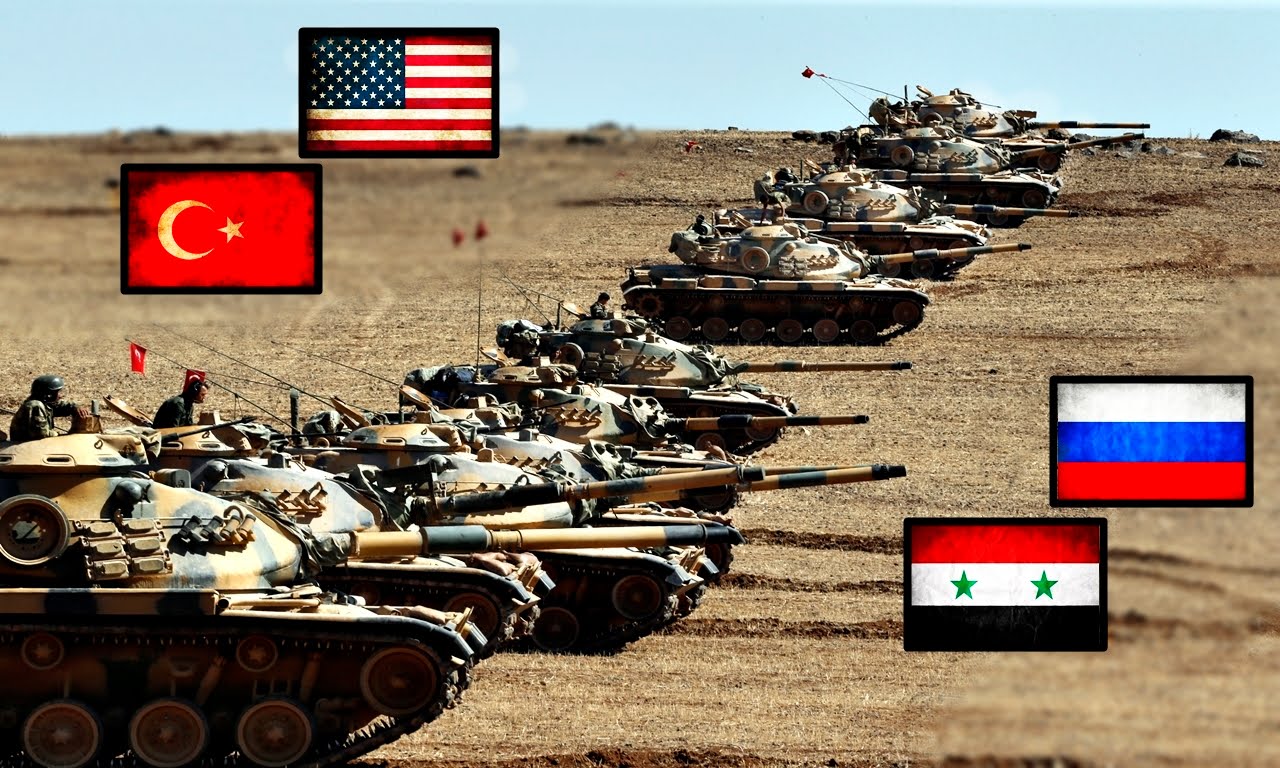
The North Atlantic Treaty Organization was started in the aftermath of the second world war as a coalition of non-Soviet aligned states that actualized itself in the Korean War. Since the fall of the Soviet Union the organization has become what can only be described as the sticky web of globalist force and “diplomacy” holding together the crumbling empire of the post war American Anglosphere.
With the United States being the only real formidable military power in the treaty alliance (besides perhaps Turkey) many Americans have taken issue with the terms of the Organization effectively calling the US to total war if any member state is challenged. This fear was reinforced as NATO expanded into the former Soviet Union despite the former threat that united the members in the first place no longer being solvent The three Baltic states are full members meaning the US goes to war if they feel their borders are threatened. NATO also has recognized Ukraine, Georgia, and Bosnia as aspiring members and seem committed to fully surrounding the borders of the Russian Federation. As America declines domestically and abroad, the expansionist nature of NATO will ultimately become more of a reckless set of bad treaties that lead to unnecessary conflict as opposed to a peace-keeping organization. Russia has noted this and, in a dramatic heightening of diplomatic tensions, ended its NATO mission on October 18th, severing the most relevant line of dialogue between Russia and the Anglosphere. Nations like Georgia have started to notice the growing influence of international politics eroding their customs and traditions. While many are starting to resist, the offer of financial incentives and play in the global economy is often more than enough to break the elected officials of these smaller nations.
This aggressive imperialism by the globalist empire, however, has not gone without response. Since the failure of the Obama administration to foment regime change in Bashar al-Assad’s Syria, the coalition against NATO both in the middle east and globally has bolstered itself. Russia and China have increased their cooperation dramatically as has China with non-NATO aligned Balkan countries like Serbia. On October 18th the Russians and Iranians (who were the primary forces behind fighting ISIS in Iraq and Syria) announced a historic weapons agreement which will see the Iranian military supplied with modern Russian fighter jets and helicopters. In early 2021 Iran also signed a massive $400 billion, 25 year plan with China. This deal will undoubtedly secure Iran as a development hot spot for the greater Chinese Belt and Road initiative across Eurasia and into Europe. This cooperation with Russia and China also loosens the effectiveness of strict US sanctions which attempted to cripple Iran’s oil export industry. With big buyers in China and Russia, Iran can afford to live with US sanctions and not give in to western demands.
Another major force in the multipolar chess game is the CSTO or Collective Security Treaty Organization which is a military cooperation counter to NATO with 6 former soviet states as members (Russia, Armenia, Belarus, Kazakhstan, Kyrgyzstan, and Tajikistan). Russia is the clear power player here and has recently announced over $1 billion of investment into the small Armenian economy. This comes after Russia brokered a ceasefire between Armenia and former CSTO state and Turkish puppet: Azerbaijan. Azerbaijan, while not a member, is a long-time cooperator with NATO and, as stated before, is largely subordinate to the will of member state Turkey. The United States has ramped up its efforts to spend and influence in Central Asia to counter Chinese and Russian soft power but since the failure in Afghanistan it is clear that the winds have shifted in another direction. Russia and China both have better relations with the Taliban government than any NATO member and the two superpowers have recently taken up new naval exercises and are discussing joint patrols around the Sea of Japan. As dozens of hot conflicts seem to be heating up rather than slowing down, the question of a larger global war between NATO (US and Turkey) and Eurasia (China and Russia) comes into focus.
Western Europe, while in many ways militarily irrelevant, still has some say in the direction of NATO. Germany, France, and the UK were three of the most important founding members of the Treaty Organization despite their current ineptitude regarding force projection abroad. At this point these states exist in NATO to use the US to help them against their perceived enemy in Russia. This could change however, especially with the growing anti-NATO sentiment among the French right. Marine Le Pen and other rightist opposition figures have campaigned in the past on leaving both NATO and the EU and that rhetoric has recently flared up again amidst strong disagreements with the US and Anglo countries. The French right in general is far more open to rapprochement with Russia and most other western oppositions and the chance of President Macron being ousted in 2022 truly shakes things up in the growing multipolar repositioning. France has no love for Turkey recently and even Macron has called out the Turkish expansions into Greek waters as well as their military interventions in Libya. Since the US/NATO disaster that was Benghazi in 2011, Libya has been in a hot proxy-civil war. In this case France was supporting the same regime as the Russians and Egyptians against the Turkish backed government supplied with fighters from Syria. As tensions mount it seems that the rift between France and Turkey could lead to a major NATO exit.
As all these players and factions play off one another, the number of flashpoints and chances for greater conflict are increasing. Israel has been more aggressive than ever, dramatically increasing the likelihood of a new war with Syria or even a full war with Iran that would inevitably draw in the United States. China has made more and more bellicose statements with regards to Taiwan while the US has been rapidly increasing their weapons sales to the island. US officials have expressed more interest in bringing Ukraine into the NATO fold and many NATO states openly helped the color revolution attempt in Belarus in 2020. Armenia and Azerbaijan are still in a very unstable ceasefire in what could easily turn into a Russian/Iranian and Turkish proxy conflict. Turkey itself has vowed more aggressive military intervention into Syria as well as aggression towards fellow NATO member Greece, who is both a close ally of France as well as a friend of Russia due to their shared Orthodox faith and Greece’s reliance on Russian tourism. The conflicts in Serbia, Kosovo, and Montenegro have also grown hotter recently with Serbian troops being deployed to the south near Kosovo as well as the violence between Church supporters and western backed agitators in Montenegro at Church events. Many dormant conflicts have risen to the surface again, causing speculation about when a spark may light a much larger fire.
The world finds itself in a position perhaps akin to the early 20th century. Some empires are collapsing, others reforming, others coming to be for the first time. With dozens of weak points and hot conflicts a spark could come from anywhere. It could come from the Balkans like the assassination of Archduke Franz Ferdinand or it could come from high in the Caucus’ mountains. Some would say it could come from the conflict-ridden Himalayan India-China border or somewhere in the South China Sea, regardless, there are global consequences to far too many localized disputes. As retraditionalization and populism have risen and clashed with the secular one world order, the growing specter of multipolarity is bound to face some resistance. While the future is not bleak by any means, worldwide conflict or even war could be in our future.
Donald Trump Should Not Repeat Woodrow Wilson’s Failure
April 30th is an important date in American politics. This is the day 100 for the American President in the White House, and all attention will be on the reports of his achievements and failures. But nothing can be more critical than Peace…
○
6 mins read
A Holocaust perpetrator was just celebrated on US soil. I think I know why no one objected.
Russia’s invasion has made ordinarily outspoken critics of antisemitism wary of criticizing Ukrainian Nazi collaborators
○
1 min read
Qi Book Talk: The Culture of the Second Cold War by Richard Sakwa
Richard Sakwa has for many years been one of the most distinguished and insightful observers of relations between the West and Russia, and one of the leading critics of Western policy. In this talk with Anatol Lieven, director of the Eurasia program at the Quincy Institute, Sakwa discusses his book, The Culture of the Second Cold War (Anthem 2025). The book examines the cultural-political trends and inheritances that underlie the new version of a struggle that we thought we had put behind us in 1989. Sakwa describes both the continuities from the first Cold War and the ways in which new technologies have reshaped strategies and attitudes.