Expert says Ukraine is less united, more factionalized and penetrated by Russian intelligence than we would like to think.
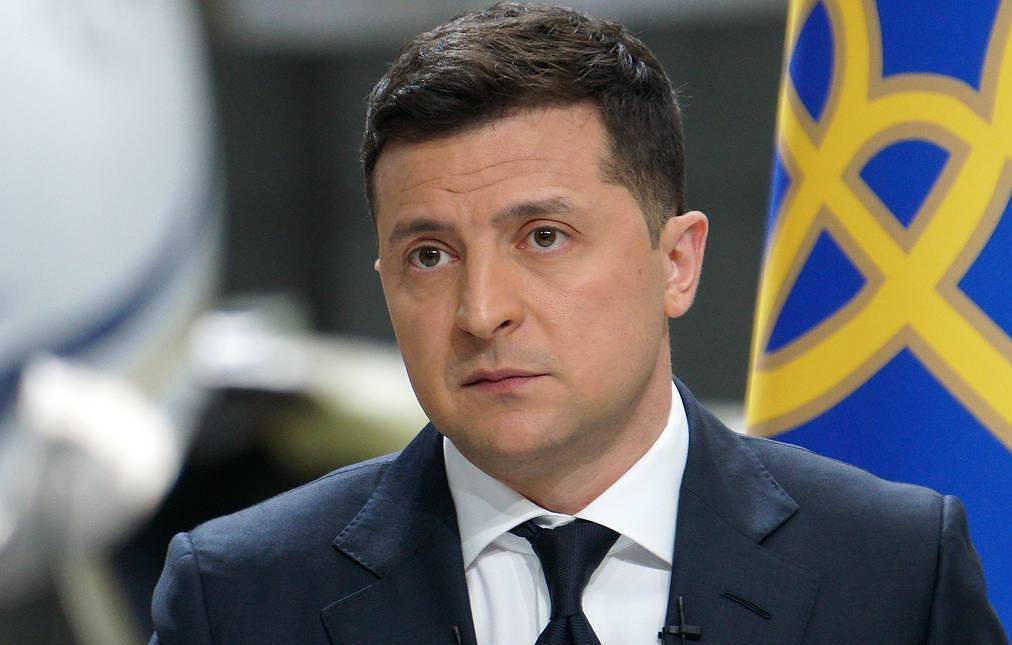
KIEV, UKRAINE MAY 20, 2021: Ukraine's President Volodymyr Zelensky gives a news conference on his two years in office, at the Antonov aircraft factory. Irina Yakovleva/TASS
Óêðàèíà. Êèåâ. Ïðåçèäåíò Óêðàèíû Âëàäèìèð Çåëåíñêèé íà ïðåññ-êîíôåðåíöèè, ïîñâÿùåííîé äâóõëåòèþ ïðåáûâàíèÿ íà äîëæíîñòè ãëàâû ãîñóäàðñòâà. Èðèíà ßêîâëåâà/ÒÀÑÑ
Ukrainian President Volodymyr Zelensky fired two top law enforcement officials Sunday, saying that the pair failed to root out cases of suspected treason in their agencies. In announcing the move, Zelensky also revealed that his government is investigating more than 650 potential cases of treason by security officials.
Experts say these high-profile firings reveal that Ukraine’s government is more penetrated by Russian intelligence than previously assumed.
“Russian intelligence has been rather successful in penetrating the Ukrainian government, particularly in Ukraine’s eastern and southern regions,” said George Beebe of the Quincy Institute.
According to Beebe, this level of penetration is not surprising given that Russian officers have been working to build support in Ukraine since the fall of the Soviet Union. “They know the people, they think they’re operating on home turf, so to speak,” he said. “And there are certainly Ukrainians, particularly in the east and south, who feel unfairly discriminated against by Ukraine’s central government.”
The two former officials — Prosecutor General Iryna Venediktova and security chief Ivan Bakanov — were close with Zelensky but had little to no experience in government. Beebe, who previously headed the CIA’s Russia team, argues that the pair’s lack of bureaucratic know-how doomed them from the start.
“Imagine President Biden appointed a friend from Delaware as head of the CIA who had no experience in intelligence,” he said. “It’s not very surprising that these people haven’t performed well.”
The shakeup has also created questions about Washington’s cooperation with Ukrainian officials, which includes sharing potentially sensitive information related to the war. State Department spokesperson Ned Price played down concerns about corruption and potential information leaks when asked if the U.S. would pause exchanges with the prosecutor general’s office.
“We’ve invested in the institution,” Price said Monday in a press briefing. “There had been a relationship between the prosecutor general and [U.S. officials], but I am confident that that personal relationship can be built [with the incoming prosecutor].”
Beebe showed less confidence in the new appointments, pointing out that both are seen as close allies of Zelensky’s chief of staff, Andriy Yermak.
“There’s good reason to doubt that these new appointees will professionalize these institutions rather than using them to protect and advance their personal and political allies,” he said.
The details of the peace deal presented today by US special envoy Steve Witkoff are consistent with the report in the Financial Times discussed in my previous article and with Larry Sparano in the posted interview. Putin will halt the Russian advance prior to driving Ukrainian soldiers out of all of the territory that has been reincorporated into Russia. It appears to be the case that the borders between Russia and Ukraine will be the current front line, so Putin is withdrawing Russia’s claim to the Russian territories still under Ukrainian occupation.
Russia and the US seem near a Ukraine peace deal. Kyiv’s role may be moot.
President Donald Trump’s hopes of securing a quick Ukraine peace deal hang in the balance after Washington’s envoy, Steve Witkoff, held his fourth Kremlin meeting with Russian President Vladimir Putin Friday.