Europe’s energy crisis will test the resolve of Western governments to curb their addiction to Russian oil and gas.
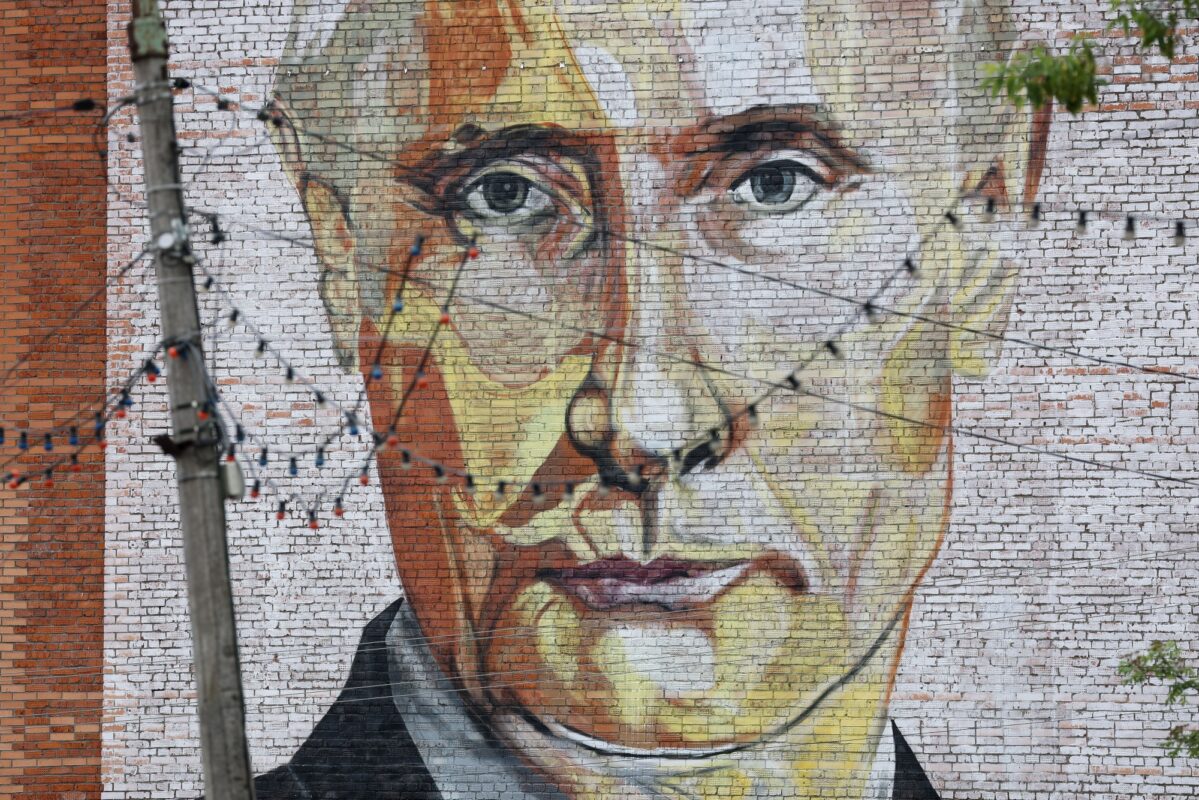
In the energy markets, he's winning.Photographer: Andrey Rudakov/Bloomberg
No matter what indicator you use, Russian President Vladimir Putin is winning in the energy markets. Moscow is milking its oil cash cow, earning hundreds of millions of dollars every day to bankroll the invasion of Ukraine and buy domestic support for the war. Once European sanctions against Russian crude exports kick in from November, the region’s governments will face some tough choices as the energy crisis starts to bite consumers and companies.
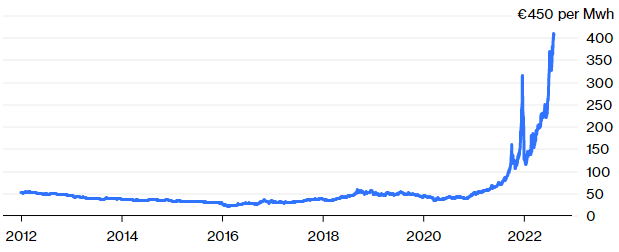
Electricity costs for homes and businesses are set to soar from October, as the surge in oil income allows Putin to sacrifice gas revenue and squeeze supplies to Europe. UK prices are likely to jump by 75%, while in Germany some municipal utilities have already warned prices will increase in excess of 100%. Russia has successfully weaponized energy supplies; Western governments will come under increasing pressure to spend billions either subsidizing household bills or, as is already the case in France, by taking control of power companies.
Power Crisis
The benchmark one-year ahead German electricity contract has surged to an all-time high, about 10 times higher than its pre-crisis level
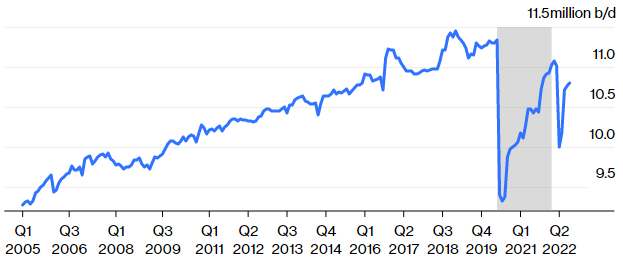
The first indicator showing how Putin has turned the oil tide is Russian crude production. Last month, the country’s output climbed back to near pre-war levels, averaging almost 10.8 million barrels per day, only marginally down from the 11 million pumped in January immediately prior to the invasion of Ukraine. Based on industry estimates, oil production is slightly higher so far this month.
It isn’t a blip: July marked the third consecutive month of oil production recovery, with output up significantly from this year’s low point of 10 million barrels set in April, when European buyers started shunning Russia and Moscow scrambled to find new buyers.
In Recovery
Russian oil production has bounced back after it fell sharply in March and April, nearing the level it was before the invasion of Ukraine
After that initial struggle, Russia has found new customers for the million barrels a day or so that European oil refiners have stopped purchasing due to self-sanctioning. Most of that crude is ending up in Asia — notably India — but also in Turkey and elsewhere in the Middle East. And some is still showing up in Europe, with buyers still purchasing Russian crude ahead of the planned introduction of official sanctions in early November. Everyone who bet that Russian oil production would continue to drop — myself included — got it wrong.
The second indicator is the price of Russian oil. Initially, Moscow was forced to sell its flavors of crude at huge discounts to other varieties to entice buyers. In recent weeks, however, the Kremlin has regained pricing power, taking advantage of a tight market.
ESPO crude, a category of Russian oil from the Far East, is a good example of the new trend. At the low earlier this year, it sold at a discount of more than $20 a barrel to Dubai crude, the regional oil benchmark for Asia. Recently, ESPO crude has changed hands at parity to Dubai. Urals crude, the flagship Russian oil export to Europe, isn’t benefiting as much as ESPO, as its key buyers have traditionally been countries such as Germany rather than India. But it’s also recovering in price, selling recently at $20 to $25 a barrel cheaper than the Brent benchmark, after trading at a discount of almost $35 in early April.
Moscow is finding new commodity traders, often operating from the Middle East and Asia and probably financed by Russian money, willing to buy its crude and ship it to hungry markets. With Brent crude hovering at close to $100 a barrel, and with Russia able to offer smaller discounts, there’s plenty of money coming in to the Kremlin. For now at least, energy sanctions aren’t working.
The final indicator of Russian success is political, rather than market related. Back in March and April, Western policy makers were optimistic that the OPEC cartel, led by Saudi Arabia and the United Arab Emirates, would ditch its alliance with Russia. The opposite has been the case.
Despite a trip by US President Joseph Biden to Riyadh, Putin has retained his influence inside the OPEC+ alliance. Soon after Biden departed from Saudi Arabia, Russian Deputy Prime Minister Alexander Novak, the nation’s point-person managing the relationship with the cartel, flew to the kingdom. A few days later, OPEC+ announced a minuscule oil production increase, keeping pressure on global energy markets.
The oil market victory means Putin can afford to forego revenue by restricting natural gas sales to Europe, putting pressure on Berlin, Paris and London, which are bracing for massive retail energy price increases and potential shortages that may lead to rationing this winter. Moscow is making so much money selling oil it can afford to restrict crude supply to Eastern European nations, too, as it did earlier this week.
A combination of cold weather, surging demand for electricity and soaring prices later this year risks undermining Western support for Ukraine. European politicians who’ve been eager to win international kudos by flaunting their support for Kyiv may be less willing to foot the domestic bill for averting energy poverty among their own voters.
In public, European governments are still resolute in their determination to wean themselves off Russian energy. Privately, they must be acknowledging the hardships that stance threatens to inflict on their economies. Putin is winning the energy battle; let’s hope that leverage isn’t powerful enough to prompt Western politicians to soften their stance in the real war.
Donald Trump Should Not Repeat Woodrow Wilson’s Failure
April 30th is an important date in American politics. This is the day 100 for the American President in the White House, and all attention will be on the reports of his achievements and failures. But nothing can be more critical than Peace…
○
6 mins read
A Holocaust perpetrator was just celebrated on US soil. I think I know why no one objected.
Russia’s invasion has made ordinarily outspoken critics of antisemitism wary of criticizing Ukrainian Nazi collaborators
○
1 min read
Qi Book Talk: The Culture of the Second Cold War by Richard Sakwa
Richard Sakwa has for many years been one of the most distinguished and insightful observers of relations between the West and Russia, and one of the leading critics of Western policy. In this talk with Anatol Lieven, director of the Eurasia program at the Quincy Institute, Sakwa discusses his book, The Culture of the Second Cold War (Anthem 2025). The book examines the cultural-political trends and inheritances that underlie the new version of a struggle that we thought we had put behind us in 1989. Sakwa describes both the continuities from the first Cold War and the ways in which new technologies have reshaped strategies and attitudes.